
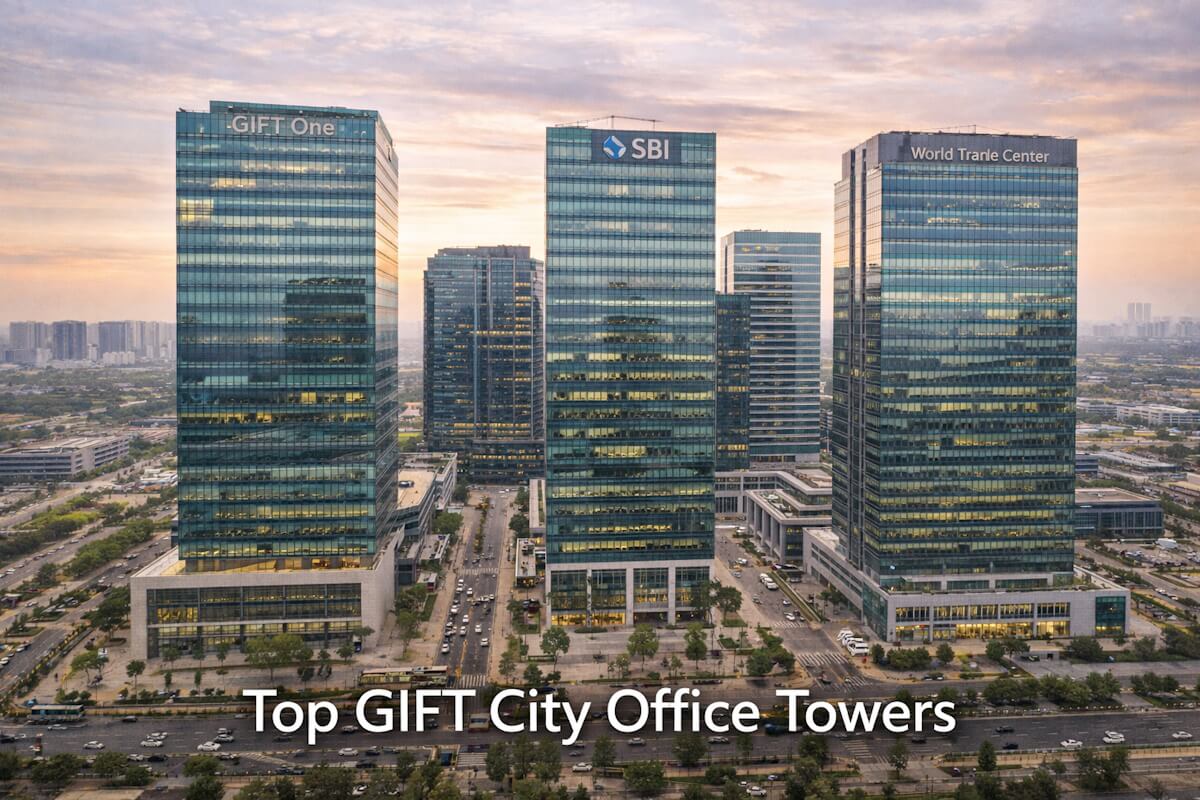
Beyond Aesthetics: Defining the “Best” Investment Tower in GIFT City
For high-net-worth investors, acquiring commercial space in GIFT City is fundamentally different from a typical metro property acquisition. Here, investment success isn’t measured solely by carpet area or location proximity, but by regulatory alignment and tenant stability. The central question is not merely which building looks the most impressive, but which one offers the most robust, long-term GIFT City leasing potential anchored by compliance and institutional demand.
The decision of which tower to commit capital to is a strategic assessment involving deep dives into IFSC regulations, the developer’s operational track record, and the specific needs of the financial institutions driving demand. Since the core value proposition of this emerging financial ecosystem is its regulatory framework, the property itself must facilitate the complex business models of SEZ and IFSC entities. Choosing the best tower in GIFT City requires looking past promotional materials and focusing instead on critical investment metrics that guarantee high tenant stickiness and reliable rental income.
Critical Factors in GIFT City Office Tower Comparison
When conducting a serious GIFT City office tower comparison, investors must adopt the mindset of a potential institutional tenant. What do they prioritize? Compliance, infrastructure redundancy, and the specific zoning that dictates their tax benefits and operational ease. These factors drastically separate towers in terms of viability and return.
The Regulatory Bifurcation: IFSC vs. Non-IFSC Spaces
The single most important differentiating factor for any commercial asset in GIFT City is its regulatory status. GIFT City is divided into the Special Economic Zone (SEZ), which houses the International Financial Services Centre (IFSC), and the Domestic Tariff Area (DTA).
Why IFSC Status Matters for Investment
Properties designated for IFSC operations command higher demand and stability. Financial entities, insurance brokers, and fund managers operating from these premises enjoy significant tax exemptions and regulatory advantages granted by the IFSCA. If your chosen property cannot house these regulated entities, your pool of premium, sticky tenants shrinks significantly.
What to evaluate: Confirm the property’s specific designation. Is it permitted for IFSC operations? Does the developer have a track record of smooth regulatory compliance? Misalignments here lead to stranded assets or reliance on lower-yield DTA tenants, undermining the core investment thesis of GIFT City.
Tenant Profile and Stickiness: Securing Long-Term Leases
The true measure of the best tower in GIFT City lies in the quality of its tenancy. Institutional tenants–such as global banks, FPIs, and major insurance players–are highly desirable because their relocation costs are prohibitive, leading to longer lock-in periods and reduced vacancy risk.
Analyzing Anchor Tenants and Sector Focus
Look for towers that have successfully onboarded major anchor tenants (especially in fintech, banking, and aircraft leasing). These tenants validate the building’s infrastructure, compliance, and developer stability. A high concentration of regulated financial services firms suggests robust long-term demand and premium rents, directly influencing the overall GIFT City leasing potential.
Before moving forward with an investment, it is crucial to analyze the specific regulatory alignment of potential projects. Are you investing in a property that appeals to domestic firms or one engineered for global financial players? For investors seeking tailored guidance on this complex regulatory landscape, we highly recommend reviewing our exclusive investor guide.
Infrastructure and Design: Facilitating Global Financial Operations
Global financial operations demand more than standard office infrastructure. They require superior security, redundancy, and efficiency, which significantly influence long-term property valuation and lease rates. When comparing projects, the details of the building’s core systems are paramount.
Floor Plate Efficiency and Customization
Financial institutions often require expansive, column-free floor plates to accommodate modern, dense trading desks and secure data centers. A poorly designed floor plan can dramatically reduce the usable area, making the space less attractive to large occupiers. The ability to seamlessly integrate high-density data cabling and HVAC systems is a non-negotiable requirement for high-value tenants.
Developer Track Record and Property Management
In a burgeoning financial center like GIFT City, the developer’s ability to maintain high operational standards is key to maintaining asset value. The best tower in GIFT City is often backed by a developer with a proven history of managing Grade A commercial assets and providing institutional-quality property management. Poor maintenance or unresponsive building management can quickly destabilize tenant relationships and raise vacancy rates.
Redundancy and Business Continuity Planning
Assess the infrastructure redundancy measures: dual power feeds, 100% power backup, high-speed fiber optic connectivity from multiple providers, and advanced security protocols. These features are mission-critical for financial service providers and directly translate into greater confidence and stickiness for tenants, ensuring continuous GIFT City leasing potential.
Maximizing ROI: Analyzing Long-Term Leasing Potential Drivers
The objective of investing in a commercial asset is generating superior ROI, typically a blend of rental yield and capital appreciation. In GIFT City, this balance is heavily influenced by the regulatory ecosystem and the resulting tenant demand.
The Yield vs. Appreciation Trade-off in GIFT City
While some investors target quick capital gains, the mature strategy in a special economic zone focuses on reliable, high rental yields derived from long-term leases with highly capitalized international firms. Towers that successfully attract these regulated entities generally offer lower risk and higher long-term stability.
If you are optimizing for the highest possible rental yield, you must prioritize infrastructure and SEZ compliance over generic location appeal. If your investment strategy involves optimizing your own tax liability, you need a precise understanding of the tax incentives attached to the specific type of commercial property you acquire. Investors serious about optimizing their portfolio should speak with a GIFT City expert who understands these nuances.
Schedule an Investment Consultation to Calculate Personalized ROI Estimates
Tax Incentives and Compliance Alignment for Tenants
Tenant stability is maximized when the property aligns perfectly with the tenant’s compliance and tax strategy. For IFSC units, the various tax holidays and regulatory relaxations are the primary drivers for choosing GIFT City. Therefore, the long-term success of the tower depends on the continued integrity of its regulatory permissions and infrastructure support.
Investors must ensure that the building’s operations do not jeopardize the tenant’s IFSC status. A deep understanding of these regulatory requirements helps evaluate risk and justifies premium lease rates, ensuring superior GIFT City leasing potential over generic commercial spaces in nearby Ahmedabad or Gandhinagar.
For investors seeking clarity on which specific sectors are driving future growth in this hub, a comprehensive market view is essential. This deeper analysis is detailed further in our exclusive investor guide which outlines emerging demand trends and potential high-growth areas.
Market Dynamics and Risk Mitigation
No investment is without risk, and commercial real estate in a developing financial district requires careful consideration of demand-supply dynamics and vacancy mitigation.
Demand Forecasts: Which Sectors Are Expanding?
The current demand surge in GIFT City is driven by FinTech, fund management (AIFs/VCFs), and global financial services. The best tower in GIFT City is one that has strategically positioned its floor plates and infrastructure to meet the needs of these growing sectors. Over-reliance on a single industry vertical can increase risk; a diversified tenant base across finance, insurance, and technology offers greater stability.
Addressing Vacancy Risk and Competition
As more towers enter the market, competition for anchor tenants intensifies. Risk mitigation strategies include investing in projects with high pre-leasing commitments and focusing on properties managed by developers with clear institutional relationships. Vacancy risk is often lower in towers certified for critical IFSC operations due to the specialized nature of that demand.
Furthermore, evaluating the total supply pipeline is key. Is the area nearing oversupply for generic office space, or is demand still concentrated in highly specialized SEZ facilities? Smart investors focus where the supply is inelastic—that is, specialized IFSC space.
Explore GIFT City Projects Optimized for Institutional Tenancy
Investor Due Diligence: Asking the Right Questions
Once you have shortlisted potential assets, the due diligence phase shifts from broad market analysis to specific project scrutiny. This is where many less-experienced investors make costly errors.
Lease Status and Lock-in Periods of Anchor Tenants
Never take stated lease commitments at face value. Request verified details on the actual lease agreements of key tenants. Institutional leases typically include longer lock-in periods (5+ years) and clearly defined escalation clauses. These details are vital for projecting guaranteed long-term cash flow and confirming the robustness of the GIFT City leasing potential.
Understanding Common Area Maintenance (CAM) and Hidden Costs
High-end commercial buildings often come with substantial Common Area Maintenance (CAM) charges. Ensure you have a clear understanding of what is included (security, power backup, common area utilities) and what is not. Unforeseen CAM hikes can dramatically depress net rental yields. The best tower in GIFT City should offer transparent and competitive CAM structures that are standard for Grade A institutional real estate in India.
We often find that NRI and foreign investors overlook the complexities of tax compliance specific to SEZ investments. Proper structuring of the acquisition vehicle and the lease agreement is paramount to leveraging the tax advantages. This is a critical advisory area where expert guidance minimizes future regulatory headaches.
Exit Strategy and Liquidity Considerations
While GIFT City is positioned for long-term growth, investors must consider the eventual exit. Assets with stable, high-value tenant profiles and clear regulatory compliance are significantly more liquid and attractive to institutional buyers (e.g., REITs, large funds) when it comes time to sell. Assess the feasibility of selling your asset to another institutional investor who values stabilized cash flow rather than relying on individual buyers.
Moving Forward: Investment Justification in GIFT City
Selecting the optimal commercial asset in GIFT City is an exercise in regulatory precision, not guesswork. The best tower in GIFT City is consistently the one that best serves the unique operational and compliance needs of IFSC entities, thus guaranteeing the highest probability of stable, escalating rents over the next decade. If the building’s infrastructure and legal framework support global banking operations, your investment thesis holds strong.
Our role at Gift City Realty is to help investors cut through the complexity, providing granular data on regulatory status, tenant pipelines, and true operational costs across competing projects. By focusing on fundamental investment principles rather than hype, we ensure capital deployment aligns with maximum, sustainable GIFT City leasing potential.
Frequently Asked Questions (FAQs)
What is the difference in returns between SEZ (IFSC) and DTA commercial properties?
Generally, SEZ properties designated for IFSC units attract higher-quality tenants (global institutions) willing to pay a premium for compliance and tax advantages. While initial capital expenditure might be higher, the stable, long-term rental yield and reduced vacancy risk often lead to better risk-adjusted returns compared to DTA commercial spaces, which serve general domestic market needs.
How significant is the developer’s reputation when comparing towers?
Developer reputation is critical. A strong developer ensures not only timely project delivery but also the quality of post-construction property management, regulatory approvals, and the ability to attract major anchor tenants. These factors are crucial for maintaining premium lease rates and protecting the long-term asset value in any high-stakes GIFT City office tower comparison.
Are rental yields guaranteed in GIFT City?
No investment offers guaranteed yields. However, the regulatory incentives provided to IFSC units (tax holidays, exemptions) create a powerful incentive for tenants to commit to long-term leases, significantly stabilizing and enhancing potential rental income compared to standard Indian commercial real estate.
Should I prioritize location within GIFT City when choosing the best tower?
Location within GIFT City is less important than regulatory status (SEZ vs. DTA) and infrastructure quality. Given the integrated planning, proximity is less critical than ensuring the building meets IFSC technical specifications. Focus on the regulatory zone first, and then on the quality of the developer and amenities.