
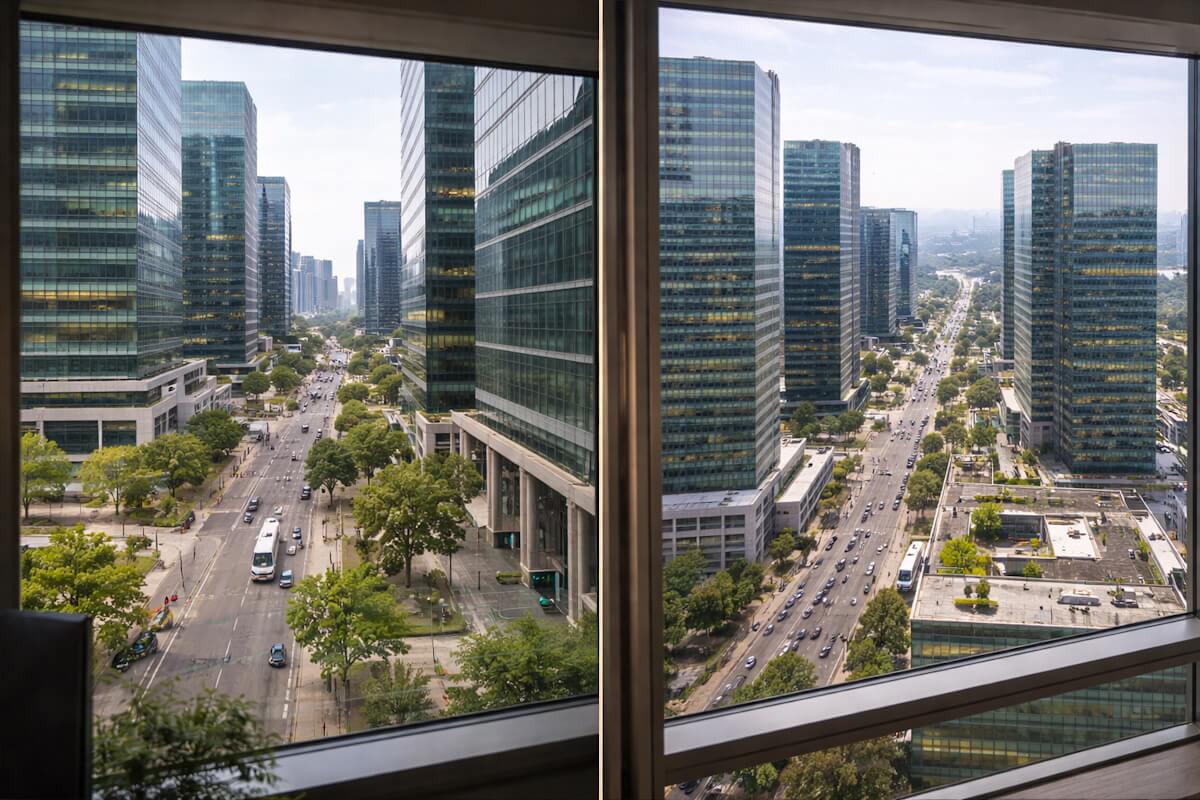
Navigating Floor Selection Investment in GIFT City Commercial Real Estate
For high-net-worth investors, acquiring commercial assets in GIFT City is fundamentally a risk-adjusted return calculation. While property type, developer credibility, and IFSC/SEZ status drive the macro decision, micro-level choices like selecting the right floor can significantly impact leasing velocity, tenant stickiness, and ultimate ROI.
When evaluating the opportunity to purchase GIFT City office floors, investors often fixate on the visible elements: the building’s aesthetics or the panoramic view. However, seasoned commercial real estate investors understand that the difference between a lower floor and a higher floor office isn’t just aesthetic; it’s operational, financial, and regulatory. This guide offers a deep dive into the investment rationale behind floor selection, helping you maximize yield and minimize leasing risk in this unique financial ecosystem.
The Core Investment Calculus: Price vs. Premium
The first critical evaluation involves pricing. Developers invariably assign a premium to higher floors, typically citing better natural light, reduced street noise, and superior views. The investor’s job is to ascertain whether this premium is justified by an equivalent, reliable uplift in rental yield, or if it merely represents non-recoverable capital expenditure.
Pricing Mechanics and Investor Expectations
In most commercial markets, the value gradient runs upwards. However, in a specialized zone like GIFT City, where tenancy is primarily driven by institutional need (banks, funds, technology firms servicing the IFSC), the value driver shifts from visual appeal to operational efficiency. When comparing floor selection investment GIFT City, you must analyze whether the tenant base you are targeting values prestige or speed.
The “Prestige Premium” Trap
A higher floor office commands attention, which appeals to boutique wealth management firms or corporate headquarters seeking visibility. But if the average lease rate increase on the 20th floor is 15% over the 5th floor, yet the maintenance costs are disproportionately higher, the net yield gain may be marginal or negative. Investors must demand clear comparative yield projections based on realistic market comparables, not just developer asking prices.
We provide specialized guidance comparing the capital deployment efficiency across specific projects in GIFT City. To understand the current market valuation and intrinsic value drivers of various floor levels, you should Start your investment journey in GIFT City now.
The Hidden Operating Cost of Higher Floors
The operational resilience and total cost of ownership (TCO) are significantly influenced by verticality. Higher floors are inherently more reliant on building infrastructure—specifically, HVAC, elevators, and vertical transport systems. This translates directly into higher investor costs.
Vertical Transportation Dependence
High-rise buildings face heightened common area maintenance (CAM) charges, largely driven by elevator maintenance, energy consumption, and backup power requirements. Investing in a lower floor vs higher floor office means assessing your tolerance for exposure to these variable operating expenses. If the building infrastructure fails, a low-floor tenant faces minor inconvenience; a high-floor tenant faces immediate operational paralysis. This heightened operational risk must be factored into the ROI equation.
What Investors Should Evaluate: Analyze the developer’s historical CAM data for comparable buildings and stress-test your projected yield against a 15–20% increase in operational expenditure. Reliability, not luxury, dictates long-term commercial returns.
Demand Drivers and Targeted Tenant Profiles
The decision between investing in a lower floor vs higher floor office space must be determined by the likely tenant mix in GIFT City. Different institutional tenants have distinct operational needs that dictate their willingness to pay and their required floor level.
Lower Floors: Speed, Access, and Operational Efficiency
For tenants who require frequent ingress and egress, secure physical access, or proximity to ground-level banking and service infrastructure, GIFT City office floors located in the lower tiers are highly desirable. This includes primary banking branches, logistics control centres, data storage facilities, or firms requiring dedicated, rapid street access for clients and personnel.
Regulatory and Institutional Requirements
Certain IFSC institutions, especially those handling high-security operations, often prefer proximity to the core services and ground floor security features. A lower floor minimizes reliance on vertical systems, enhancing business continuity. These tenants prioritize functionality and accessibility over view, offering stability to the rental income stream.
If you are looking to specifically target high-demand institutional tenants within the IFSC framework, we can provide detailed demand profiles and suitable property recommendations. Request Property Details for vetted commercial spaces optimized for institutional leasing.
Higher Floors: Prestige, Views, and Corporate Identity
Conversely, higher GIFT City office floors appeal strongly to corporate executive offices, CXO suites, specialized consultancy firms, and those whose primary business function involves high-level client meetings where image and setting are paramount. These tenants view the investment in a high-rise office as a strategic branding exercise.
Natural Light and Employee Retention
While often overlooked in ROI analysis, superior natural light and expansive views associated with higher floors can influence tenant decision-making by contributing to employee wellness and retention—a critical factor for competitive firms operating within the SEZ. This softer benefit can justify a slightly higher rental rate for a flagship tenant, provided the firm has the budget stability to sustain the premium.
Investment Caution: While the headline rent might be higher, the pool of tenants willing to pay the highest premium for a view is smaller. This can lead to increased vacancy risk during market downturns compared to the steady demand for efficient, lower-level space.
Analyzing Rental Yield and Liquidity
Ultimately, the objective of investing in GIFT City office floors is superior long-term, risk-adjusted returns. Floor selection investment GIFT City affects both the stability of the yield (through vacancy rates) and the velocity of capital return (liquidity/re-sale).
Yield Stability and Tenant Stickiness
Stability is often achieved through robust tenant demand. Lower floors generally offer better yield stability because their utility is broader. A lower floor vs higher floor office is typically easier and faster to lease out, reducing investor exposure to long vacancy cycles. This increased market depth is a strong mitigant against short-term market corrections.
Lease Term Variance
Evaluate potential lease structures. Tenants demanding higher floors often seek shorter, more flexible leases due to evolving corporate needs, potentially increasing administrative turnover costs for the investor. Tenants occupying efficient lower floors often commit to longer, institutionally backed leases, enhancing net operating income (NOI) consistency.
Understanding which floor levels offer the best balance of return and risk is crucial. Schedule an Investment Consultation with our senior advisors to explore projected cash flows based on floor level and tenant type in GIFT City.
Liquidity and Re-sale Premium
Liquidity—the speed and ease with which an asset can be sold—is a major factor for institutional buyers. Assets with universally high utility often sell faster. When it comes to GIFT City office floors, re-sale liquidity often depends on the buyer profile.
- Broad Market Liquidity: Lower floors appeal to the widest range of potential buyers, including those focused purely on yield and efficiency, making them highly liquid.
- Niche Buyer Liquidity: Higher floors appeal to a smaller, more specific group of HNIs or corporate headquarters willing to pay a prestige premium. While this premium can be high, the sales cycle can be longer, potentially reducing liquidity.
Decision Metric: If capital appreciation driven by prestige is your goal, target the top floors. If rapid, dependable capital redeployment is paramount, favour middle to lower floors that attract high volume investor interest.
Practical Risk Mitigation and Floor Selection Strategy
Beyond the simple height distinction, shrewd investors must look at the specific floor plate configuration, the building’s physical resilience, and the developer’s execution history—all factors that impact floor selection investment GIFT City.
Developer Track Record and Building Configuration
The quality of execution is amplified in high-rise commercial structures. Investors must verify the developer’s commitment to premium infrastructure that supports higher floors, including redundant power systems, high-speed fiber connectivity, and smart building management systems. Shoddy infrastructure disproportionately affects higher floor tenants, leading to higher complaints and potential lease termination.
The Usable Area Dilemma
Focus not just on the carpet area but on the usable area. In high-rise designs, structural core requirements (massive load-bearing columns, large elevator banks, and utility shafts) can consume a significant portion of higher floor plates. A floor selection investment GIFT City must prioritize efficient layout and minimal spatial waste. Sometimes, a well-designed, mid-rise floor plate offers superior usable space efficiency than a structurally constrained top floor.
The Importance of Floor Plate Size and Adaptability
The most valuable asset is one that can adapt to future tenant requirements, such as subdivision or merging. Assess whether the floor plate on your prospective property supports multiple tenancy types (small, medium, large firms). A flexible floor plate increases your addressable market size, regardless of whether you choose a lower floor vs higher floor office.
The optimal investment strategy often involves diversification across floor levels to balance risk and yield potential. We specialize in structuring portfolio strategies for GIFT City real estate. Speak with a GIFT City Expert today to refine your floor selection criteria against your financial goals.
Strategic Investment Posture in GIFT City
The choice between higher and lower GIFT City office floors is less about a universally correct answer and more about aligning the asset’s attributes with your investment horizon, risk tolerance, and desired tenant profile. If stability and rapid re-lease velocity are key, the functional efficiency of the lower floors often provides better long-term resilience.
If you are targeting premium, flagship tenants and are willing to accept slightly elevated vacancy risk for the possibility of peak rental rates, the top floors offer that opportunity. Remember, commercial investment in GIFT City, driven by IFSC regulations and high institutional demand, rewards calculated decision-making based on operational reality, not purely aesthetic appeal.
Before committing capital, ensure you have modeled multiple scenarios for vacancy, CAM escalation, and potential rental rate compression across different floor levels. This technical due diligence is where specialized real estate advisory becomes indispensable, transforming market observation into a data-driven investment strategy.
Frequently Asked Questions (FAQs) for GIFT City Office Investors
What is the typical rental yield difference between lower and higher GIFT City office floors?
While developers charge a higher premium for top floors, the net rental yield difference is often narrower than the capital premium suggests. Higher floors may achieve a 5–10% higher gross rent, but increased CAM charges and potential for longer vacancy periods can sometimes equalize the net yield, making lower floors comparable in stability.
Does the IFSC status of the building impact floor selection?
Yes. Many IFSC-regulated institutions prioritize security, speed of access, and business continuity. For these critical operations, a lower floor vs higher floor office may be preferred due to reduced reliance on vertical systems, making these ground-level or podium spaces highly competitive.
Is it always riskier to invest in a higher floor office?
It carries a different risk profile. Higher floors face greater systemic risk related to building infrastructure (elevators, power) and potentially greater vacancy risk if the target market of premium tenants is small. However, if successfully leased, they can offer exceptional long-term capital appreciation due to prestige appeal.
How does floor plate efficiency factor into my floor selection investment GIFT City?
Floor plate efficiency is critical. Focus on the ratio of usable carpet area to gross area. Structural requirements for tall buildings can make higher floors less efficient spatially. Assess how easily the floor can be partitioned or adapted for future tenants, which heavily influences liquidity.