
Entering the real estate market in Gujarat through a gift city investment represents a shift from traditional property buying toward a more sophisticated, institutional-grade asset class. As India’s first operational Smart City and International Financial Services Centre (IFSC), GIFT City is not merely a local development but a global financial gateway. For the beginner investor, the challenge lies in looking past the impressive skyline to understand the underlying economic engines that drive long-term value. This environment operates under a distinct set of rules compared to the rest of India, making it imperative to approach the market with a strategic, data-driven mindset.
The primary appeal for investors today is the convergence of world-class infrastructure and unprecedented regulatory support. Whether you are an NRI looking for a stable foothold in the Indian growth story or a domestic HNI seeking to diversify into a high-growth corridor, understanding the nuances of this ecosystem is the first step. Success here is not about timing a speculative bubble, but about aligning your capital with the massive influx of corporate entities and financial institutions that are currently making this city their home. By focusing on the fundamentals of demand, supply, and regulatory advantages, you can position your portfolio for significant appreciation.
Understanding the GIFT City Investment Ecosystem
To evaluate a gift city investment, one must first recognize that the city is divided into two primary zones: the Special Economic Zone (SEZ), which includes the IFSC, and the Domestic Tariff Area (DTA). Each zone serves a different purpose and attracts different types of tenants and owners. The SEZ is designed for companies providing financial and IT services to international clients, while the DTA caters more to the local Indian market and support services. This distinction is critical because it dictates who can occupy the space and what tax benefits apply to the owner.
The Significance of the IFSC Status
The International Financial Services Centre (IFSC) status is what truly sets this location apart from any other real estate market in India. It allows for a dollarized economy within the city limits, attracting global banks, stock exchanges, and insurance firms. For a real estate investor, the presence of these high-value entities ensures a tenant profile that is stable, creditworthy, and capable of paying premium rents. When you consider a gift city investment, you are essentially betting on the success of India’s attempt to compete with financial hubs like Dubai, Singapore, and Hong Kong.
Infrastructure as a Value Multiplier
Unlike many Indian cities where infrastructure lags behind real estate development, GIFT City follows a “plug-and-play” model. The presence of district cooling systems, automated waste collection, and dedicated utility tunnels reduces the operational costs for buildings and enhances the quality of life for residents. As a beginner, you should evaluate how these centralized services impact the maintenance costs and long-term viability of a property. High-quality infrastructure leads to lower vacancy rates and higher retention of premium tenants, which directly boosts your ROI.
Commercial vs. Residential: Choosing Your Entry Point
A frequent question for those new to a gift city investment is whether to prioritize commercial office space or residential apartments. Both asset classes have unique drivers. Commercial real estate is fueled by the rapid setup of Global Capability Centers (GCCs) and fintech startups. On the other hand, the residential sector is currently seeing a surge in demand as the “walk-to-work” concept gains traction among the thousands of professionals commuting to the city daily.
Evaluating Commercial Office Assets
Commercial investments in GIFT City are often seen as the backbone of the city’s economy. With Grade-A office spaces being leased by multinational corporations, investors can often find opportunities for pre-leased units or small-ticket office spaces that offer immediate cash flow. The key metric here is the capitalization rate and the lease term. Long-term leases with built-in escalations provide a hedge against inflation and a predictable income stream that is often higher than traditional residential yields.
Occupancy Trends in the IFSC
The vacancy rates in the IFSC are a critical indicator of market health. As more firms receive licenses from the IFSCA (the unified regulator), the demand for office space continues to outpace supply. For an investor, this means potential for both rental growth and capital appreciation. When looking at a gift city investment in the commercial sector, it is vital to analyze the developer’s track record in managing commercial Grade-A assets, as the quality of facility management significantly impacts the property’s long-term value.
The Rise of Residential Demand
Initially, GIFT City was primarily a commercial hub, but the government has recently eased rules to allow more residential development. This has opened a window for investors to tap into a market with limited supply. The target demographic for residential units includes CXOs, expatriates, and high-income professionals working within the city. For a beginner, residential property often feels more familiar, but it requires a keen understanding of which segments—luxury or mid-range—will see the highest demand as the city grows.
The Walk-to-Work Advantage
The “walk-to-work” culture is a pillar of the city’s master plan. Professionals working in high-pressure financial environments value the convenience of living close to their offices. This lifestyle preference makes residential units within the city more desirable than those in the outskirts of Ahmedabad or Gandhinagar. When making a gift city investment in housing, prioritize projects that are within walking distance of the major commercial towers or the upcoming metro stations to ensure high occupancy rates.
Tax Benefits and ROI Drivers
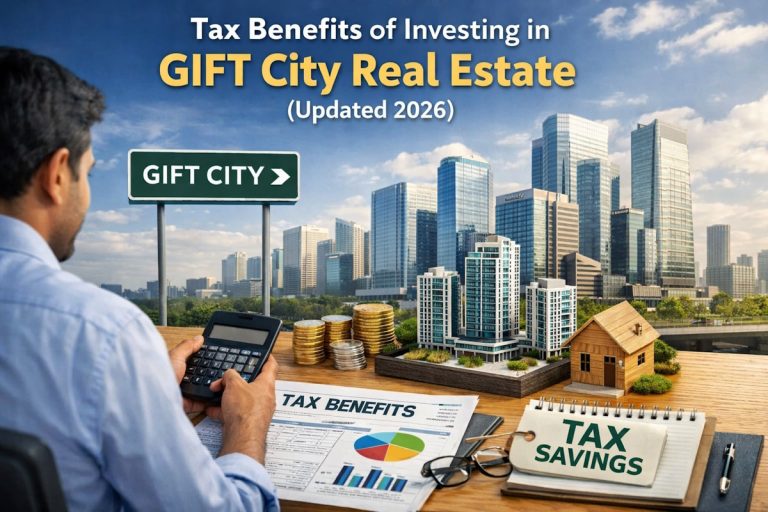
One of the most compelling reasons for a gift city investment is the plethora of tax incentives provided by the Government of India and the Gujarat state government. These incentives are designed to make the city competitive on a global scale and to attract capital from across the world. For a real estate investor, these benefits translate into lower entry costs and higher net returns compared to other Indian metropolitan areas.
Direct Tax Exemptions for Businesses
While the 10-year tax holiday primarily benefits the companies operating within the IFSC, the indirect impact on real estate is profound. When companies save on taxes, they have more capital to spend on premium office spaces and employee relocation. This creates a high-yield environment for property owners. Additionally, investors should look into the specific exemptions on Goods and Services Tax (GST) for services and goods utilized within the SEZ, which can lower the overall development and maintenance costs of a project.
Stamp Duty and Registration Waivers
For a beginner, the upfront costs of real estate can be a hurdle. However, Gujarat has historically offered incentives such as stamp duty and registration fee waivers for certain types of investments within GIFT City. These savings can represent a significant percentage of the total investment, effectively increasing your initial equity in the property. Always verify the current notification status of these waivers with an expert before finalizing your gift city investment, as these policies are subject to periodic updates by the state government.
Long-Term Capital Appreciation
Beyond rental income, the potential for capital appreciation in GIFT City is substantial. As the city matures and more global players like Google, IBM, and various international universities establish their presence, the land value and the value of built-up property are expected to rise. Investors who enter early—the “beginners” of today—stand to benefit the most from the infrastructure completion and the full operationalization of the city’s various phases.
Risk Mitigation for New Investors
Every investment carries risk, and a gift city investment is no exception. For a beginner, the risks often stem from a lack of familiarity with the regulatory environment or over-reliance on marketing brochures. Success requires a disciplined approach to due diligence and a focus on long-term value rather than short-term gains. Understanding these risks early allows you to build a more resilient portfolio.
Developer Due Diligence
The quality of the developer is perhaps the most important factor in a successful real estate investment. In GIFT City, you should look for developers who have experience with large-scale commercial or integrated projects. Check their track record for timely delivery and the quality of their previous constructions. A project that is delayed not only halts your rental income but also ties up your capital in a non-performing asset. Gift City Realty can help you vet these developers to ensure your capital is parked with reputable players.
Regulatory and Compliance Monitoring
The regulatory landscape in GIFT City is governed by the IFSCA, which is separate from the standard Indian regulatory bodies for many financial aspects. While this provides many benefits, it also means that the rules regarding who can buy, sell, or lease can be specific. For instance, there are certain requirements for owning property within the SEZ versus the DTA. Ensuring that your gift city investment is fully compliant with local and federal laws is crucial to avoiding legal complications and ensuring future liquidity.
Managing Liquidity Expectations
Real estate is inherently an illiquid asset. While GIFT City is growing rapidly, the secondary market is still evolving. Investors should approach this market with at least a five-to-seven-year horizon. Selling a property in a specialized hub requires finding the right buyer who understands the city’s value proposition. As the city becomes more crowded and established, liquidity will naturally improve, but early-stage investors must be prepared to hold their assets through the development phases.
Strategic Next Steps for Your Portfolio
Deciding to move forward with a gift city investment is a commitment to India’s future as a global financial powerhouse. The transition from a beginner to a seasoned investor in this market involves continuous learning and staying updated on the latest policy changes. By focusing on high-quality assets, understanding the unique tax advantages, and choosing the right partners, you can mitigate the risks associated with this emerging market.
The window for early-mover advantage is still open, but as institutional interest increases, the barriers to entry will likely rise. Start by defining your objectives—whether it is steady rental yield, long-term capital growth, or a mix of both. Once your goals are clear, the path to selecting the right project in GIFT City becomes much simpler. The combination of government backing, institutional demand, and superior infrastructure makes this one of the most compelling real estate opportunities in Asia today.
Take the time to visit the city, walk through the projects, and talk to those already operating there. There is no substitute for first-hand observation when it comes to high-value real estate. With the right strategy, your first step into GIFT City could be the most impactful decision for your investment portfolio this decade.
FAQs
1. Is GIFT City real estate a good investment for NRIs?
Yes, GIFT City is particularly attractive for NRIs due to the dollarized economy in the IFSC, simplified repatriation rules, and the potential for high rental yields from multinational corporate tenants. It offers a transparent regulatory environment that is familiar to those used to international real estate markets.
2. What is the minimum investment for property in GIFT City?
The minimum investment varies significantly between commercial and residential sectors. While small office spaces might start at a more accessible price point, premium residential units and larger commercial floors require more capital. It is best to consult with an advisor to find a project that fits your specific budget and ROI goals.
3. How does the “walk-to-work” concept affect property value?
The walk-to-work concept is a major driver of residential demand. Properties that offer easy access to commercial hubs within the city command higher rents and experience lower vacancy rates, as professionals prioritize convenience and the high-tech lifestyle offered within the city limits.
4. Can I buy property in the GIFT City SEZ as an individual?
There are specific guidelines regarding individual ownership in the SEZ versus the Domestic Tariff Area (DTA). While residential options are becoming more flexible, some commercial investments in the SEZ may require the owner to be a registered entity or meet certain criteria. Always verify the current IFSCA guidelines before proceeding.
5. What are the expected rental yields in GIFT City?
Currently, commercial rental yields in GIFT City are competitive with other major Indian hubs, often ranging from 6% to 9% depending on the asset quality and lease terms. Residential yields are also promising due to the growing demand from professionals relocating to the city for work.