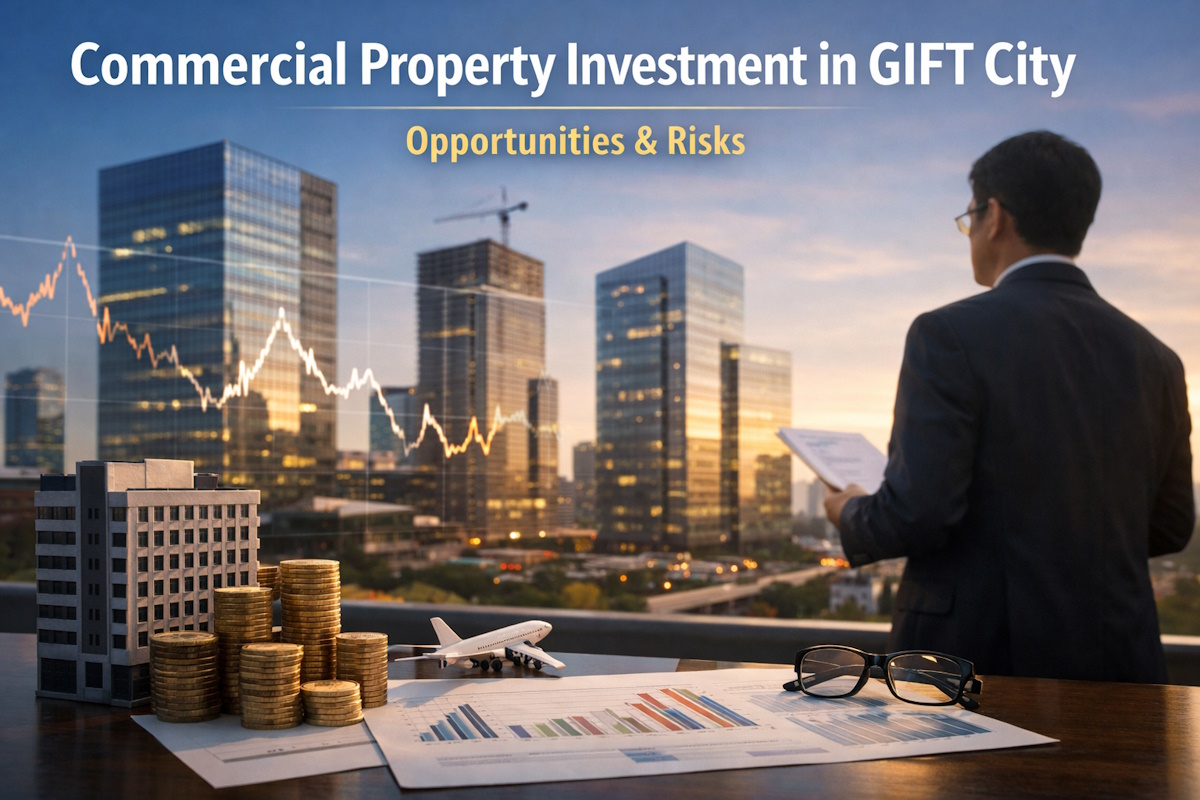
If you are evaluating commercial property in GIFT City, you are probably asking a simple question.
Is this a genuine long term opportunity, or just another early stage real estate market with too much noise around it?
That question matters because GIFT City works very differently from traditional commercial markets like Mumbai, Bangalore, or Gurgaon. The demand drivers are not IT companies, retail chains, or startups. The demand is coming from the IFSC ecosystem.
Banks. Global financial firms. Fintech companies. Trading platforms.
This changes how commercial property behaves here.
Before investing, you need to understand how the ecosystem works, where rental demand actually comes from, and what risks most investors ignore.
Let’s walk through it clearly.
What Commercial Property in GIFT City Actually Means
Commercial property in GIFT City mostly refers to office space inside the International Financial Services Centre (IFSC) and the SEZ commercial zone.
Unlike typical business districts, the city was designed as a financial services hub.
Companies operating here are usually involved in:
• International banking
• Global trading platforms
• Aircraft leasing
• Fund management
• Insurance and reinsurance
• Fintech operations
These companies choose GIFT City primarily because of the tax structure and regulatory framework, not because it is a large metropolitan market.
That distinction matters.
Demand for office space depends heavily on how quickly financial firms expand operations inside the IFSC.
Not on retail footfall. Not on startup activity.
Just financial sector growth.
Why Investors Are Looking at Commercial Property Here
Commercial real estate investors are attracted to GIFT City for three main reasons.
1. Rental Yield Expectations
Commercial yields in major Indian cities often range between 6% to 8% depending on location and tenant quality.
In GIFT City, early investors have been targeting 7% to 9% rental yield from leased office spaces.
The reason is simple.
Companies operating inside IFSC usually take longer lease commitments, especially banks and financial firms.
Long leases provide stability for investors.
But yields vary significantly based on:
• Building quality
• Developer reputation
• Tenant type
• Lease structure
Not every property achieves these numbers.
2. IFSC Tax Advantages
The International Financial Services Centre has a unique tax environment designed to attract global financial firms.
Companies operating inside IFSC may receive benefits like:
• Tax holidays for a defined period
• Reduced corporate tax rates
• Exemptions on certain transactions
These incentives encourage firms to establish offices here, which indirectly supports commercial leasing demand.
More companies entering the IFSC usually means more demand for office space.
But it also means supply expands quickly, since developers respond to that demand.
3. Early Stage Market
GIFT City is still in its early development phase compared to mature commercial hubs.
For investors, early stage markets offer potential for:
• Capital appreciation
• Entry at relatively lower prices
• Access to newly developed Grade A office space
But early markets also bring liquidity risk, which we will discuss shortly.
Who Should Actually Consider Investing in GIFT City Commercial Property
Commercial investment here works best for a certain type of investor.
Not everyone.
You may find it suitable if you are:
Long term investors
Commercial property here performs better with a 7 to 10 year holding mindset.
Short term flipping rarely works well in early stage markets.
NRI investors looking for India based assets
Many NRIs from countries like Australia, Canada, Fiji, France, Germany, Malaysia, New Zealand, Singapore, South Africa, Spain, Thailand, United Arab Emirates, United Kingdom, and the United States are exploring GIFT City because of the IFSC structure.
Financial professionals working abroad often understand the ecosystem better than typical residential investors.
Investors comfortable with institutional tenants
The tenant base here is largely financial companies.
If your strategy prefers corporate tenants rather than small businesses, this market may suit you.
Why Some Investors Stay Away From This Market
Commercial property in GIFT City also raises several concerns.
And these concerns are valid.
Liquidity Risk
One of the biggest questions investors ask is:
Who will buy this property if I want to sell?
Unlike residential property, commercial office units usually have fewer buyers.
In early stage markets like GIFT City, resale demand may take time to develop.
Some investors hold units for years before finding a buyer.
This is normal in new financial districts.
But it requires patience.
Supply Growth
Another reality.
Developers continue launching new office towers inside the city.
If supply grows faster than tenant demand, rental growth can slow down.
This is why building selection becomes very important.
Not all towers attract the same tenant profile.
Grade A developments with better connectivity, amenities, and developer credibility usually lease faster.
Tenant Concentration
Many companies in GIFT City belong to the same financial sector.
This creates concentration risk.
If the sector slows down or regulatory changes affect IFSC activity, leasing demand could temporarily weaken.
Diversified office markets usually have tenants from multiple industries.
GIFT City is still largely finance driven.
Understanding SEZ vs Non-SEZ Commercial Property
Many buyers get confused here.
The difference is not always explained clearly.
SEZ Commercial Space
SEZ office buildings are located inside the Special Economic Zone.
Most IFSC companies prefer SEZ spaces because they are eligible for regulatory benefits.
These spaces typically have:
• Higher compliance requirements
• Stronger tenant demand
• More structured leasing environments
Many institutional tenants specifically look for SEZ office space.
Non-SEZ Commercial Space
Non-SEZ buildings are outside the SEZ boundary but still within GIFT City.
These spaces may attract:
• Domestic companies
• Support services
• Businesses not requiring SEZ benefits
Demand exists, but it is usually less predictable compared to SEZ office space.
Investors often prefer SEZ commercial units for stronger leasing prospects.
Rental Demand Reality
A common misconception is that all commercial units in GIFT City lease quickly.
That is not always the case.
Rental demand depends on:
• Completion status of buildings
• Occupancy growth in the IFSC
• Tenant expansion plans
• Infrastructure readiness
Some towers achieve good occupancy quickly.
Others take time.
Investors should always ask:
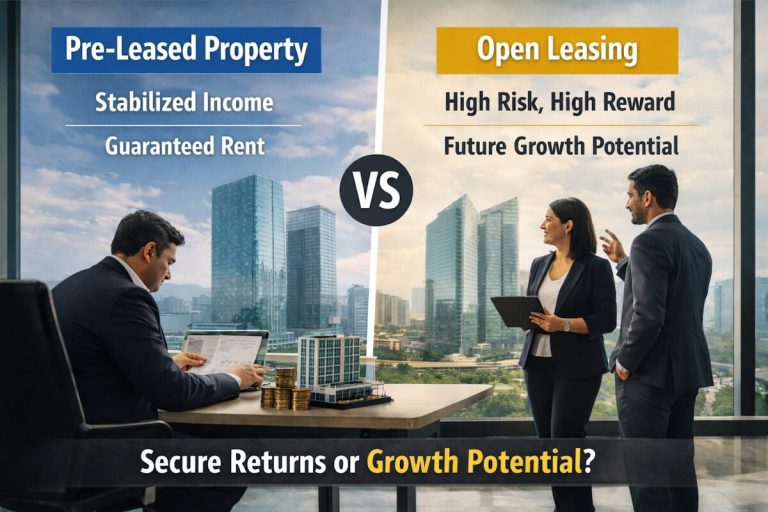
Is the building already leased to tenants, or is it still searching for occupants?
Pre leased units reduce risk significantly.
Costs Investors Often Forget
Commercial property involves more than the purchase price.
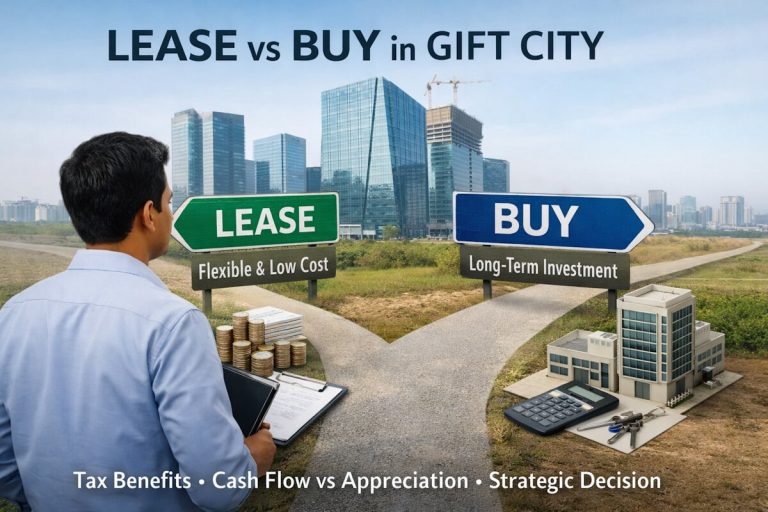
Investors need to factor in:
GST
Commercial property purchases often involve GST during construction stage.
This adds to the overall investment cost.
Maintenance charges
Premium office towers typically charge higher maintenance fees.
Stamp duty and registration
These costs vary by state but still affect the total investment value.
Vacancy periods
If a tenant leaves, rental income pauses until a new tenant signs a lease.
Commercial investments must account for occasional vacancy periods.
Appreciation Expectations
Some investors expect GIFT City commercial property to deliver rapid price appreciation.
That assumption needs context.
Capital appreciation usually depends on three things:
• Growth of IFSC companies
• Limited supply of high quality office space
• Increasing occupancy across towers
If these factors improve steadily, property prices can rise gradually.
Commercial markets rarely move in sudden spikes like residential speculation cycles.
Growth tends to be slower but more stable.
Risks Investors Rarely Think About
There are a few risks that many investors overlook.
Regulatory changes
IFSC operates under specialized financial regulations.
Changes in policies could affect how companies operate in the zone.
Over reliance on one sector
If financial sector growth slows, leasing demand may take longer to absorb new supply.
Developer selection
In early stage cities, developer quality plays a major role.
Buildings with weaker design, limited amenities, or poor maintenance often struggle to attract tenants.
So Is Commercial Property in GIFT City Worth Considering?
That depends entirely on your investment goals.
Commercial property here may make sense if you:
• Want exposure to a financial services hub
• Prefer long term leasing income
• Are comfortable holding property for several years
• Understand the IFSC ecosystem
It may not suit investors looking for:
• Quick resale profits
• Short holding periods
• Highly liquid markets
GIFT City is still growing.
Which means opportunity exists.
But patience is part of the equation.
FAQs
1. Is commercial property in GIFT City a good investment?
It can be suitable for long term investors seeking rental income from financial sector tenants. The market is still developing, so patience and careful project selection are important.
2. What rental yield can investors expect in GIFT City?
Commercial office spaces may target yields between 7% to 9%, though actual returns depend on tenant quality, building occupancy, and lease structure.
3. Is SEZ or Non-SEZ commercial property better for investors?
SEZ office space often attracts stronger tenant demand because many IFSC companies prefer SEZ compliance for regulatory benefits.
4. Can NRIs buy commercial property in GIFT City?
Yes. NRIs can invest in commercial property, subject to RBI and FEMA regulations. Many overseas investors explore this market due to its financial services ecosystem.
5. How long should investors hold commercial property in GIFT City?
A 7 to 10 year investment horizon is generally more practical due to the early stage nature of the market and evolving tenant demand.