
As we approach 2026, the real estate landscape in Gujarat International Finance Tec-City has transitioned from a visionary blueprint into a high-velocity financial ecosystem. For institutional investors and high-net-worth individuals, the central question is no longer whether to invest, but rather which asset class offers the most resilient returns. The commercial property in GIFT City price has seen a steady upward trajectory, driven by the increasing influx of global banks, fintech firms, and multinational corporations entering the International Financial Services Centre (IFSC) and the Special Economic Zone (SEZ).
Deciding between a pre-leased office space and a raw shell unit requires a nuanced understanding of cash flow requirements, tax implications, and risk appetite. While pre-leased properties offer the comfort of immediate yields, raw shell units provide the potential for significant capital gains and customization. This guide serves as a strategic briefing for investors looking to navigate the commercial property in GIFT City price dynamics and determine which investment vehicle aligns with their long-term financial objectives in this unique regulatory environment.
Understanding the Commercial Property in GIFT City Price Landscape for 2026
By 2026, the pricing of commercial assets in GIFT City has moved beyond speculative valuation. Prices are now increasingly dictated by the functional utility of the space and its proximity to key infrastructure like the automated waste collection systems and district cooling hubs. When evaluating the commercial property in GIFT City price, investors must distinguish between the Domestic Tariff Area (DTA) and the SEZ/IFSC zones, as the regulatory benefits in the latter often command a premium due to high demand from global entities.
Supply Dynamics and Pricing Stability
The supply of Grade-A office space has matured, but the demand continues to outpace new completions. This imbalance maintains a floor under the commercial property in GIFT City price, ensuring that well-located projects retain their value. Unlike other commercial hubs in India, GIFT City operates under a single-window clearance system, which reduces construction delays, but the stringent building codes and sustainable infrastructure requirements mean that the cost of development remains high, reflecting in the final purchase price for investors.
The Premium for IFSC-Compliant Buildings
Buildings that meet the specific operational requirements of the IFSC often fetch a higher price point. These structures must support high-speed data connectivity and redundant power systems to cater to international trading and banking operations. Investors should analyze how these technical specifications contribute to the long-term sustainability of the property value compared to standard commercial developments.
Pre-Leased Assets: The Pursuit of Immediate Yield
Pre-leased commercial properties remain the preferred choice for conservative investors and NRIs who prioritize stability. In these transactions, the investor buys a property that already has a tenant in place, usually under a long-term lease agreement. This provides an immediate rental yield, which typically ranges between 6% and 8% in GIFT City, depending on the tenant profile and the initial commercial property in GIFT City price paid at the time of acquisition.
Assessing Tenant Quality and Lease Terms
The value of a pre-leased asset is intrinsically linked to the creditworthiness of the tenant. In GIFT City, tenants often include Fortune 500 companies, global tech firms, and major financial institutions. A long lock-in period and a clear rent escalation clause are critical factors that mitigate the risk of vacancy and ensure a steady growth in income. Investors should carefully review the lease deed to understand the responsibilities regarding maintenance, property taxes, and insurance.
Security of Cash Flow in the IFSC
One of the primary advantages of pre-leased properties in the IFSC zone is the stability of the rental market. As global companies set up their regional headquarters, they tend to sign long-term commitments, often exceeding nine years. This reduces the turnover cost and provide a predictable ROI that is less sensitive to short-term market fluctuations than residential assets or raw commercial units.
Raw Shell Units: High Risk, High Reward for Value Investors
Investing in a raw shell unit involves purchasing an unfinished space that the owner must either fit out themselves or lease to a tenant who will handle the interiors. While the entry commercial property in GIFT City price for raw shell units is lower than pre-leased assets, it requires a more hands-on approach. The primary appeal here is the potential for higher capital appreciation as the building reaches full occupancy and the surrounding infrastructure matures.
Customization and Tenant Flexibility
Raw shell units allow owners to cater to specific tenant needs. For instance, a fintech startup might require a different layout than a law firm. This flexibility can sometimes lead to higher rental rates once the property is fitted out, especially if the owner invests in premium interiors. However, the period between purchase and finding a tenant can result in zero income, which investors must factor into their liquidity planning.
Capital Appreciation vs. Rental Income
For investors focused on wealth creation rather than monthly income, raw shell units are often the superior choice. As GIFT City approaches its next phase of growth in 2026, the commercial property in GIFT City price for vacant units in prime towers is expected to rise significantly. The ability to sell a “ready-to-move-in” or “ready-to-fit-out” unit in a high-demand tower offers an exit strategy with potentially higher margins than a pre-leased asset where the yield is already baked into the price.
The Impact of IFSC and SEZ Regulations on Valuations
The regulatory framework of GIFT City is a primary driver of property demand. For an investor, the distinction between SEZ and non-SEZ areas is critical. In the SEZ/IFSC zone, businesses enjoy tax holidays and exemption from GST on services, which makes these spaces highly attractive to international tenants. Consequently, the commercial property in GIFT City price in the IFSC zone typically carries a premium over the DTA, reflecting the higher rental demand and the specialized nature of the occupiers.
Tax Implications for Property Owners
Investors must consider the tax treatment of rental income and capital gains within the GIFT City framework. While the businesses operating there have specific tax breaks, the property owners are still subject to standard Indian income tax laws, unless they are structured under specific IFSC entities. Understanding these nuances is vital for calculating the net ROI after taxes, which is the true measure of an investment’s success.
Compliance and Maintenance Standards
Operating a property in a world-class financial center requires adhering to high maintenance standards. Gift City Realty observes that properties managed by professional facility management teams tend to command better commercial property in GIFT City price appreciation. Investors should factor in these operational costs when evaluating raw shell units, as poorly maintained buildings quickly lose their appeal to premium tenants.
Key Factors Influencing ROI and Exit Liquidity
Liquidity is a common concern for real estate investors. In GIFT City, liquidity is improving as the secondary market matures. By 2026, the volume of transactions has increased, making it easier for investors to exit their positions. However, the ease of exit is directly related to the initial commercial property in GIFT City price paid and the quality of the asset. Pre-leased units are generally easier to sell to other yield-seeking investors, while raw shell units depend on the broader demand for office space at the time of sale.
Infrastructure Development and Connectivity
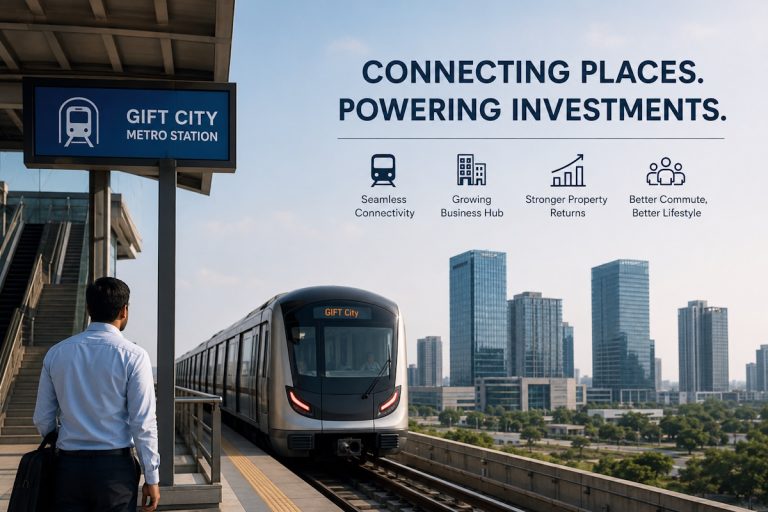
The expansion of the Ahmedabad Metro and the completion of the bridge connecting GIFT City to the airport have a direct impact on property values. Improved connectivity increases the commuter base, making the city a more viable location for a wider range of companies. This infrastructure growth is a key catalyst for the 2026 price surge, as it transforms the city from an isolated financial hub into an integrated part of the larger metropolitan region.
Supply Chain of Grade-A Office Space
Investors should monitor the pipeline of upcoming commercial projects. A sudden surge in supply can lead to a temporary softening of the commercial property in GIFT City price. However, the controlled development model used by the GIFT City authorities ensures that supply is released in a phased manner, which helps in maintaining price stability and preventing the kind of oversupply seen in other Indian commercial markets.
Investor Decision Framework: Pre-Leased vs. Raw Shell
Choosing between these two options depends on your financial goals. If you are an NRI looking for a retirement income or a “worry-free” asset, pre-leased is the clear winner. The commercial property in GIFT City price for pre-leased assets includes a premium for the existing lease, but it saves you the trouble of marketing the property and negotiating with tenants. On the other hand, if you are a growth-oriented investor with a 5 to 7 year horizon, a raw shell unit in a premium tower may offer superior total returns through capital appreciation.
Risk Mitigation Strategies
Regardless of the choice, diversification within GIFT City can mitigate risk. Some investors choose to split their capital between a stable pre-leased unit and a high-growth raw shell unit. This balanced approach provides both immediate liquidity through rent and a high-upside potential for the future. Additionally, working with an advisor who understands the local developer track records can prevent the mistake of investing in a project with poor execution quality.
Evaluating Developer Credibility
In a regulated environment like GIFT City, the developer’s ability to deliver on time and maintain the building is paramount. A project with a lower commercial property in GIFT City price might seem attractive, but if the developer lacks the experience to manage high-spec commercial towers, the long-term ROI will suffer. Always vet the developer’s previous commercial portfolio before committing funds.
Common Pitfalls in GIFT City Commercial Investing
One frequent mistake is ignoring the difference between the gross and net commercial property in GIFT City price. Investors often fail to account for the impact of GST, stamp duty, and the recurring maintenance charges that are unique to the city’s district cooling and utility systems. Furthermore, assuming that every project in the SEZ will automatically find a tenant is a risky strategy. The tenant’s decision is based on more than just tax breaks, they look for floor plate efficiency, lift speeds, and the overall prestige of the address.
Overlooking Lease Renewal Terms
In pre-leased properties, the “yield” is only as good as the next renewal. If the current rent is significantly above the market rate, the tenant might negotiate a lower rate at the end of the term, leading to a “yield shock.” Investors should ensure that the current rent is at or slightly below the market commercial property in GIFT City price to ensure sustainable income growth.
Ignoring the Secondary Market Competition
By 2026, the secondary market is a major competitor for new launches. Investors should compare the price of new units with those available for resale in established towers. Often, a resale unit in a fully operational tower provides better visibility on actual rental income and building management quality than a new launch.
Strategic Guidance for Your 2026 Investment
GIFT City has moved into a phase of mature growth where the commercial property in GIFT City price reflects its status as a global financial hub. Whether you choose the stability of a pre-leased asset or the growth potential of a raw shell unit, the key is to act with a clear understanding of the regulatory landscape and the technical requirements of modern tenants. The window for early-stage pricing has closed, but the era of institutional-grade appreciation is just beginning. By focusing on asset quality and tenant profile, investors can secure a position in one of India’s most promising real estate corridors.
Final Consideration for Institutional Buyers
For institutional buyers or those looking at larger floor plates, the ability to consolidate multiple units is a significant advantage. Raw shell units offer this flexibility more readily than pre-leased ones. As the city continues to attract global talent and capital, the demand for contiguous office space will likely command a higher commercial property in GIFT City price premium, rewarding those who had the foresight to assemble larger holdings during the current growth phase.
Your Next Steps in GIFT City
The transition from analysis to action requires local expertise and access to vetted data. Gift City Realty remains committed to providing the transparency and guidance necessary for sophisticated investors to thrive in this market. Ensure your portfolio is positioned to benefit from the unique advantages of India’s first operational smart city and IFSC.
Frequently Asked Questions
1. What is the typical rental yield for pre-leased commercial property in GIFT City in 2026?
In 2026, typical rental yields for pre-leased commercial units in GIFT City range from 6% to 8%. This depends on the tenant’s profile, the length of the lease, and whether the property is located in the IFSC or DTA zones.
2. How does the commercial property in GIFT City price compare to Mumbai or Bangalore?
While prices in GIFT City have risen, they remain competitive compared to prime areas like BKC in Mumbai or Outer Ring Road in Bangalore. However, the unique tax benefits and world-class infrastructure in GIFT City often lead to higher net ROI for financial services firms.
3. Can NRIs easily invest in raw shell units in the IFSC?
Yes, NRIs can invest in commercial properties in GIFT City. For units in the IFSC, the investment is typically treated as a foreign investment, and transactions may be conducted in foreign currency, offering a hedge against rupee depreciation.
4. Which is better for capital appreciation: pre-leased or raw shell?
Generally, raw shell units offer higher capital appreciation potential because they are often purchased at a lower price point and their value increases as the building matures and is fitted out. Pre-leased units are valued based on their yield, which limits the appreciation to the rate of rent escalation.
5. What happens if my tenant in a pre-leased unit vacates?
If a tenant vacates, you face a period of zero income and the cost of finding a new tenant. However, given the high demand for Grade-A space in GIFT City, vacancy periods are typically shorter than in other commercial hubs, provided the property is well-maintained and centrally located.