
The Strategic Imperative of Balancing Commercial and Residential Assets in GIFT City
Investing in GIFT City, India’s premier International Financial Services Centre (IFSC), requires a fundamentally different mindset than investing in conventional metro real estate. This is not a speculative suburban market driven by infrastructure promises; it is a dedicated, regulatory-driven economic zone. For high-net-worth individuals, founders, and institutional buyers, the core strategic question revolves around how to structure a portfolio that capitalizes on both the immediate rental stability of the commercial sector and the long-term appreciation potential of the planned residential sector.
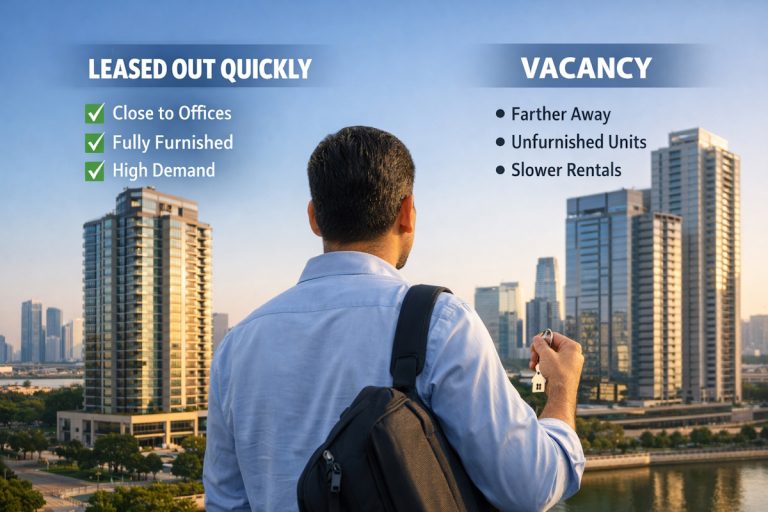
The optimal allocation between the two asset classes—the critical commercial vs residential mix—determines the trajectory of your returns, risk exposure, and liquidity profile. A purely commercial focus might offer immediate, high-yield leases backed by global financial institutions, but it could limit capital growth. Conversely, a purely residential focus targets the captive professional migration, but requires patience as occupancy ramps up. We must analyze how the unique IFSC/SEZ framework influences both sides of this equation to create a truly balanced real estate portfolio India.
The Strategic Imperative of a Balanced Portfolio
In mature markets, diversification is standard risk mitigation. In a developing, controlled financial ecosystem like GIFT City, diversification is essential for capturing all facets of the growth curve. GIFT City’s development is synchronized: commercial demand precedes residential necessity. Ignoring this pipeline effect is a common investor mistake.
Why Pure-Play Strategies Fail in Emerging Zones
A pure commercial strategy, while attractive due to guaranteed SEZ/IFSC demand, exposes the investor to regulatory shifts and sector-specific downturns (e.g., a slowdown in financial services recruitment). Similarly, a pure residential bet relies heavily on the velocity of professional migration and the speed of social infrastructure development. The goal is to smooth out these cyclical volatilities. A thoughtful GIFT City asset balance hedges against these specific risks.
Defining Portfolio Objectives: Income vs. Growth
Before committing capital, investors must clearly define their primary goal. Commercial assets are typically income generators; the returns are front-loaded through rental yields, often secured by long-term leases with international entities. Residential assets, particularly luxury apartments within the planned city center, are generally growth vehicles, focused on capital appreciation driven by the city’s rising status and shrinking available land bank. The ideal commercial vs residential mix should reflect whether the investor prioritizes immediate cash flow or long-term wealth compounding.
We often advise investors to view their GIFT City allocation through the lens of purpose. Income-oriented capital should target pre-leased commercial assets, while capital allocated for long-term legacy creation can embrace the phased growth of high-end residential properties. If you are ready to evaluate properties based on these criteria, it is wise to Start your investment journey in GIFT City with expert advisory support.
How Your Country of Residence Shapes the Commercial vs Residential Mix in GIFT City
The ideal commercial vs residential mix in GIFT City is rarely universal. For NRI and overseas investors, the right balance is strongly influenced by where you live, earn, and report taxes.
Two investors buying the same assets in GIFT City can experience very different outcomes purely because their country of residence changes how income, capital gains, currency movement, and holding periods interact.
Understanding this upfront avoids allocation mistakes that only become visible years later.
Typical Allocation Preferences by Investor Geography
Australia and New Zealand
Investors from these markets often lean slightly toward commercial assets. Stable rental income helps offset volatility in residential-heavy domestic portfolios. Residential exposure in GIFT City is usually added for long-term appreciation rather than yield.
Canada, United Kingdom, and United States
These investors frequently aim for a balanced or near-balanced mix. Commercial assets are treated as income stabilizers, while residential assets are positioned as appreciation plays and future liquidity options. Many intentionally avoid extreme allocations in either direction.
Singapore and Malaysia
Buyers from these regions are accustomed to structured, high-density residential markets. In GIFT City, they often tilt marginally toward residential or mixed-use assets, while still maintaining commercial exposure for income diversification.
United Arab Emirates
UAE-based NRIs commonly favor commercial assets early for cash flow, then add residential units as the city matures. This staged balancing reflects their familiarity with rapid urban development cycles and the importance of rental certainty.
Germany, France, and Spain
European investors typically adopt conservative allocation strategies. They often prioritize stabilized commercial assets first, adding residential exposure only once occupancy trends and lifestyle infrastructure are clearly established.
South Africa and Fiji
Investors from these markets often focus on capital preservation and currency diversification. Residential assets are commonly used for long-term appreciation, while commercial exposure is kept selective to manage regulatory and leasing risk.
Thailand
Thai investors frequently evaluate GIFT City alongside other Asian hubs. Many prefer a diversified mix that includes residential or serviced apartments, supported by selective commercial exposure rather than large office allocations.
Why This Geographic Lens Matters
Your country of residence affects:
- How rental income is taxed after repatriation
- Whether predictable income or capital growth is more valuable to you
- How currency fluctuations impact real returns
- How long you are comfortable holding an asset before exit
A commercial-heavy portfolio that works well for a UK-based professional may not suit a Singapore-based investor focused on appreciation and liquidity. Likewise, a residential-heavy strategy may underperform for someone seeking stable foreign income.
Using the Mix as a Risk Tool, Not a Formula
There is no universally “correct” commercial vs residential mix in GIFT City. The right balance is contextual.
Commercial assets anchor income and reduce volatility. Residential assets provide flexibility, appreciation, and exit optionality. Geography determines which of these matters more to you at different stages of your investment life cycle.
For overseas investors, the smartest portfolios treat GIFT City as a layered allocation. Commercial exposure provides stability. Residential exposure captures the city’s long-term value creation.
The goal is not to mirror what others are doing. The goal is to build a mix that works with your global financial reality, not against it.
Analyzing Commercial Real Estate Dynamics in GIFT City IFSC
Commercial investment in GIFT City is underpinned by two factors: mandatory occupancy for IFSC units and the attractive tax and regulatory regime offered to these financial entities. This creates a uniquely inelastic demand curve.
Core Drivers: Institutional Demand and Regulatory Stability
Commercial spaces here are not generic office parks; they are vital operational centers for banks, insurance firms, fintech, and sovereign wealth funds. The SEZ status grants tax holidays and regulatory ease, making the physical space a necessity, not a luxury. This institutional demand ensures high occupancy rates and drives competitive lease rates, offering superior rental yields compared to conventional Indian markets. The regulatory environment is stable, designed specifically to attract and retain global capital, which, in turn, underwrites the value of the commercial real estate.
Rental Yield vs. Appreciation Profile
Commercial properties generally deliver strong, predictable rental yields (often exceeding 8-10% depending on the asset class and lease terms). However, capital appreciation tends to be steady rather than explosive, unlike high-demand, undersupplied residential markets. When creating a balanced real estate portfolio India, commercial assets serve as the stabilizing anchor, providing consistent passive income and mitigating the overall portfolio volatility.
Risk Mitigation and Lease Structures
Commercial risk is primarily related to tenant quality and lease longevity. Investors should scrutinize the tenancy profile—is it a global entity, a large Indian bank, or a smaller fintech firm? Longer lock-in periods and structured escalation clauses are crucial for de-risking commercial investments. Furthermore, compliance within the IFSC framework is non-negotiable; ensuring the property adheres to all SEZ guidelines is paramount for maintaining tenant trust and lease enforceability. Start your investment journey in GIFT City by understanding these regulatory nuances.
Evaluating Residential Real Estate Potential in GIFT City
The residential proposition in GIFT City is built on exclusivity and captive demand. Residential space is limited, deliberately restricted to ensure high-quality urban planning and control supply, which is a key driver of appreciation.
Demand Profile: CXOs, NRIs, and Professional Migration
Residential demand originates almost exclusively from the high-earning professionals, CXOs, NRIs, and institutional employees working within the IFSC/SEZ perimeter. These tenants demand premium specifications, integrated amenities, and high-security infrastructure. Because GIFT City is a ‘walk-to-work’ environment, the residential sector is geographically insulated from the price volatility of the broader Ahmedabad or Gandhinagar markets.
Liquidity and Exit Strategy
The residential segment, while potentially offering lower initial rental yields than commercial property, often provides greater capital appreciation, especially during the initial phases of city maturation. Liquidity tends to be high in limited-supply, high-demand areas. An effective exit strategy often targets other high-net-worth investors or NRIs looking for tax-efficient assets and premium housing in India. This focus on premium users supports the argument for achieving the right commercial vs residential mix.
The Regulatory Overlap: Tax Benefits for Housing
While the primary tax benefits target commercial entities, residential property investors also benefit indirectly from the city’s overall pro-investor environment. For NRIs and returning Indians, specific tax structures make property ownership in IFSC zones highly attractive. Understanding how depreciation and rental income are treated under IFSC regulations is essential for maximizing the true ROI of the residential component. This requires specialized advice, and you can Start your investment journey in GIFT City by speaking with a tax expert familiar with IFSC regulations.
Structuring the Optimal Commercial vs Residential Mix
Defining the appropriate allocation is less about a fixed percentage and more about aligning assets with the investor’s risk tolerance, age profile, and liquidity requirements. We frequently see serious investors achieve success by targeting a dynamic balance.
The 60/40 Rule and Deviation Factors
A common starting point for a balanced real estate portfolio India in a market like GIFT City is often a 60% commercial to 40% residential split. This ratio provides stable income (60%) to service debt or provide cash flow, while the residential component (40%) drives the majority of the portfolio’s long-term capital growth potential.
However, this is not static. Younger investors with higher risk appetites focused purely on wealth creation might skew closer to 50/50, accepting lower immediate yields for higher appreciation potential. Conversely, retirees or those prioritizing wealth preservation might aim for 70/30, leaning heavily into the stable rental income stream provided by commercial assets. The key to a successful GIFT City asset balance is ensuring the ratio serves the investor, not the market trend.
Tax Efficiency and Cross-Asset Balancing
Tax implications are often the most overlooked factor in setting the commercial vs residential mix. Commercial property often allows for accelerated depreciation benefits, which can offset rental income taxes. Conversely, the tax treatment of capital gains on residential property needs careful planning, especially for NRI investors. Strategic balancing allows investors to utilize losses or depreciation from one segment to optimize the taxable income from the other, thus enhancing the net ROI of the entire portfolio. This holistic view is crucial for high-value transactions. Start your investment journey in GIFT City with a full financial modeling exercise.
As you evaluate assets, remember that the supply restriction in the residential sector acts as a powerful lever for future price growth. The scarcity element makes residential a vital part of the appreciation strategy, even if the current yield is lower than that of commercial units. This dynamic ensures that a balanced real estate portfolio India maintains robust overall returns.
Beyond the Asset Type: Developer and Location Due Diligence
The strategic allocation between asset types only works if the underlying assets are sound. Investment in GIFT City must be highly selective, given the concentration of high-quality developers and specialized regulatory compliance requirements.
Assessing Project Quality and Completion Risk
Whether you choose commercial or residential, the developer’s track record within regulated zones like GIFT City is non-negotiable. Institutional tenants demand Grade A specifications, high-efficiency systems, and adherence to international building standards. Residential buyers demand similar quality in construction and amenities. Vetting the developer minimizes completion risk and ensures the asset remains viable for high-paying corporate tenants or premium residential occupants.
A poorly executed residential project, even in a high-demand zone, can severely dampen liquidity and yield. Likewise, a commercial building that fails to meet stringent IFSC standards will struggle to attract marquee tenants. This due diligence transcends the commercial vs residential mix—it is foundational to all investments here.
Valuation Benchmarking and Realistic ROI
In GIFT City, valuation must reflect the unique regulatory and demand environment. Commercial valuations are heavily reliant on lease quality and remaining SEZ tenure, while residential valuations are based on expected professional migration and scarcity. Investors should insist on transparent benchmarking against comparable assets within the GIFT City master plan, not against properties in Ahmedabad. We specialize in providing this localized valuation data for clients looking for a clear GIFT City asset balance. Start your investment journey in GIFT City with comparative market analysis provided by Gift City Realty.
Making the Decision: The Next Step in Your GIFT City Investment
The decision to invest in GIFT City real estate is fundamentally sound; the decision on the optimal commercial vs residential mix requires tailored strategic thinking. The current environment strongly favors a hybrid approach that secures immediate stable cash flow through commercial assets while reserving sufficient capital to benefit from the capital appreciation driven by the limited residential supply.
A successful strategy is highly personalized and evolves with the market maturity of the IFSC. As the city approaches full capacity, the drivers of appreciation and yield will shift, necessitating periodic portfolio reviews. Our role at Gift City Realty is to provide the data, insights, and vetted property options required to make these nuanced decisions, ensuring your balanced real estate portfolio India performs optimally over the long term. Trust only those advisors who understand both the regulatory framework and the underlying commercial logic of the IFSC ecosystem. Start your investment journey in GIFT City today.
Frequently Asked Questions (FAQs)
Is commercial or residential property safer in GIFT City?
The safety profile differs. Commercial property in GIFT City is often safer regarding income stability due to long-term leases with institutional tenants, making it reliable for predictable cash flow. Residential property carries less income safety but potentially higher capital appreciation, acting as a strong hedge against inflation and a driver of long-term wealth.
How does the IFSC status affect the commercial vs residential mix?
The IFSC status fundamentally drives commercial demand by mandating a physical presence for financial entities to avail of tax incentives. This institutional backing makes commercial investment highly attractive for yield. Residential demand is a direct consequence of this commercial activity, creating a captive, premium tenant pool and justifying its inclusion in a GIFT City asset balance.
What initial rental yields can I expect from commercial assets in GIFT City?
Initial rental yields for premium commercial assets, especially pre-leased spaces to high-quality tenants, typically range significantly higher than conventional metropolitan real estate, often beginning in the 8% to 10% range, depending on the lock-in period, tenant quality, and specific location within the SEZ.
Should NRIs prioritize residential investment for tax benefits?
NRIs often find residential investment appealing due to favorable tax treatments concerning capital gains and repatriation, particularly concerning specific clauses related to SEZ housing. However, the overall investment justification must remain ROI-driven. Tax efficiency should be the optimizer, not the primary driver of the initial commercial vs residential mix decision.