If you had asked global investors ten years ago to name an international finance hub in India, Gujarat would not have been the first answer.
Mumbai would come up. Maybe Bengaluru for tech.
Yet today, conversations around cross-border finance, global banking desks, fintech regulation, and offshore financial services increasingly include one name — GIFT City.
Located between Ahmedabad and Gandhinagar, Gujarat International Finance Tec-City is not just another commercial zone. It was designed with a very specific goal: bring global financial activity into India without the friction that traditionally pushes businesses to Singapore, Dubai, or London.
But what does that actually mean in practical terms?
How does one city change a state’s global business presence?
And more importantly, why are international companies suddenly setting up operations here?
Let’s break it down.
Gujarat’s Global Ambition Finally Has a Financial Gateway
For decades, Gujarat has been known for trade and manufacturing.
Ports. Chemicals. Textiles. Pharmaceuticals. Diamonds.
Entrepreneurs from the state built businesses across the world. Yet the financial infrastructure that supports global business mostly stayed outside Gujarat.
International finance hubs developed elsewhere.
That gap is exactly what GIFT City was meant to solve.
The idea was simple on paper but complex in execution: create a financial zone in India where global businesses could operate under internationally competitive regulations.
Not just another IT park.
A functioning international financial ecosystem.
Today the International Financial Services Centre (IFSC) inside GIFT City is where this ambition becomes visible.
Banks, exchanges, insurance firms, fintech companies, aircraft leasing firms, and global asset managers are setting up operations inside the zone.
For Gujarat, that changes the narrative.
It shifts the state from being known purely for manufacturing and trade to becoming a participant in global finance.
What Makes GIFT City Different From Other Indian Business Districts
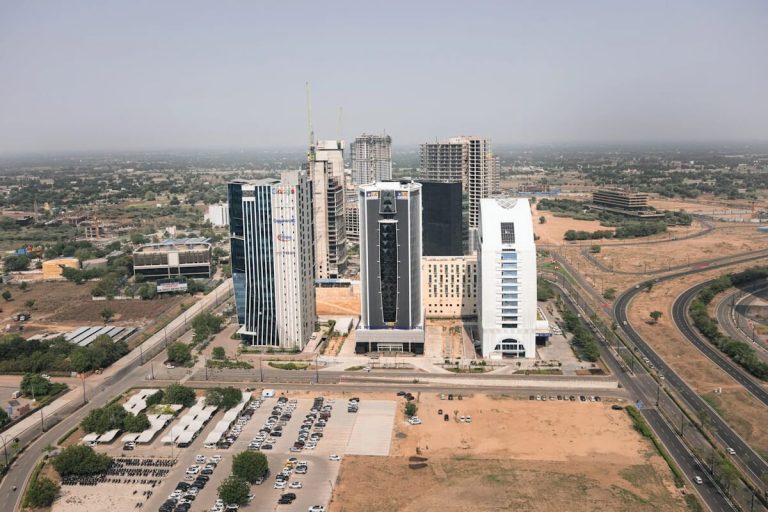
At first glance, GIFT City looks like any modern commercial district.
Glass towers. Wide roads. Corporate offices.
But the real difference sits in its regulatory structure.
The financial zone inside GIFT City operates under the International Financial Services Centre (IFSC) framework. This allows companies to conduct cross-border financial activities directly from India.
Think about services like:
- Offshore banking
- Global derivatives trading
- Aircraft leasing
- International wealth management
- Global insurance operations
- Fintech experimentation under regulatory sandbox environments
These activities traditionally happen in places like Singapore, Dubai, London, or Hong Kong.
The IFSC model allows similar operations to take place within India.
This is why global financial institutions are gradually opening offices here.
Not for local clients.
For international business.
The IFSC Advantage That Global Firms Are Looking At
A key driver behind this shift is the regulatory framework created by the International Financial Services Centres Authority (IFSCA).
IFSCA acts as the unified regulator for all financial services within the IFSC.
Banks, insurance firms, capital markets, and fintech platforms fall under one regulatory umbrella inside GIFT City.
This simplifies compliance for international firms.
Another reason global companies are looking at GIFT City is taxation.
Several tax incentives are available for IFSC units, including:
- Tax holidays for certain financial businesses
- No securities transaction tax
- No commodity transaction tax
- Relaxed capital account rules
- Foreign currency transactions allowed
For global financial institutions comparing locations, these factors matter.
A lot.
The difference between a viable financial hub and an empty office district often comes down to regulatory clarity.
How International Banks Are Using GIFT City
Walk through the IFSC zone today and you will see offices of several global banks.
These are not symbolic presences.
Many of these institutions run specific international operations from their GIFT City branches.
Activities include:
- Offshore lending desks
- Trade finance services
- Global treasury operations
- Foreign currency transactions
The goal is simple.
Serve international clients from an Indian base.
This creates something Gujarat historically did not have — a gateway for cross-border finance.
For businesses operating through Gujarat’s ports and industrial clusters, having a global financial center nearby starts to make strategic sense.
The Rise of Global Capital Markets Inside GIFT City
Another major shift is happening in capital markets.
Two international exchanges operate within GIFT City:
- India International Exchange (India INX)
- NSE International Exchange (NSE IX)
These platforms allow global investors to trade derivatives and financial instruments linked to Indian markets.
Previously, many of these trades occurred in offshore markets.
Now, part of that activity is moving to Gujarat.
This matters for two reasons.
First, it brings international liquidity into India.
Second, it places Gujarat on the global finance map.
Not as a manufacturing state.
But as a financial destination.
Aircraft Leasing: A Quiet Industry Growing Fast
One of the most interesting developments in GIFT City is the aircraft leasing ecosystem.
Until recently, most aircraft leased by Indian airlines were financed through companies based in Ireland, Singapore, or Dubai.
India had very little presence in the global aircraft leasing market.
That is starting to change.
GIFT City’s IFSC regulations allow aircraft leasing companies to operate from India with competitive tax structures.
Several leasing firms have already registered operations here.
Why does this matter?
India is one of the fastest-growing aviation markets in the world.
If aircraft leasing shifts partly into GIFT City, Gujarat becomes connected to a massive global industry.
Not many people talk about it yet.
But it could become one of the most important financial activities in the zone.
Fintech and Digital Finance Are Finding Space Here Too
The financial world is changing quickly. Payments technology, blockchain systems, digital banking platforms, and cross-border fintech products are reshaping how finance operates.
GIFT City is positioning itself as a testing ground for many of these technologies. Through the IFSCA regulatory sandbox, fintech companies can experiment with new financial products under controlled conditions.
This setup attracts startups and global fintech firms that want to build cross-border financial solutions while working within a regulated environment.
As a result, you begin to see a different mix of companies inside the city. Traditional banks operate alongside insurance giants, fintech startups, and global asset managers.
Slowly, the environment starts to resemble a real financial ecosystem rather than just another office district.
Why NRIs and Global Investors Are Paying Attention
For non-resident Indians and international investors, GIFT City presents an interesting option.
Many financial services offered here are designed specifically for cross-border activity.
NRIs living in Australia, Canada, Fiji, France, Germany, Malaysia, New Zealand, Singapore, South Africa, Spain, Thailand, United Arab Emirates, United Kingdom, and the United States are already familiar with global financial hubs.
Cities where international banking, wealth management, and investment services operate smoothly.
GIFT City is trying to bring a similar environment to India.
For NRIs looking to connect their international finances with Indian markets, that becomes attractive.
Not immediately.
But gradually.
The Real Estate Impact of a Global Financial Hub
Whenever a financial center grows, property markets around it change. Office space demand increases first, and residential demand usually rises gradually as professionals begin relocating to the area.
Support industries start appearing alongside that growth.
In GIFT City, commercial real estate development came first. Office towers, financial institutions, and core infrastructure were the priority in the early stages.
Residential development is now starting to catch up.
This matters if you are evaluating property investment in the area. Demand drivers are closely tied to how financial services expand inside the city.
If IFSC activity continues growing, the surrounding property ecosystem tends to grow with it.
If the pace slows, real estate momentum can take longer to build.
Everything here is closely linked.
Challenges That Still Exist
While GIFT City has made impressive progress, it is still early in its lifecycle compared to global finance hubs.
Cities like Singapore or London built their financial ecosystems over decades.
GIFT City is still building.
Some challenges remain:
- Global awareness of the IFSC is still growing
- Liquidity in international exchanges is improving but not yet at global scale
- Infrastructure expansion is ongoing
- The residential ecosystem is still developing
None of these issues are unusual for a new financial district.
But they shape expectations.
The transformation of Gujarat’s global business presence will happen gradually, not overnight.
What This Means for Gujarat’s Global Identity
For most of modern economic history, Gujarat’s identity in global markets came from industry. Manufacturing exports, trading networks, and port logistics shaped how the world viewed the state.
GIFT City introduces a different layer. Financial services, international capital markets, and global banking operations are slowly becoming part of Gujarat’s identity.
This shift does not replace Gujarat’s traditional strengths. It complements them.
Imagine a state that handles manufacturing, trade, logistics, and international finance within one ecosystem. That is the long-term vision behind GIFT City.
If the development continues the way policymakers intend, Gujarat’s role in global business conversations could expand far beyond what it has been historically.
Not just as a production hub, but as a financial gateway.
FAQs
1. What is the main purpose of GIFT City?
GIFT City was created to establish an International Financial Services Centre in India where global financial institutions can conduct cross-border financial activities under competitive regulations.
2. How does GIFT City help Gujarat become more globally connected?
By hosting international banks, financial exchanges, insurance firms, and fintech companies, GIFT City links Gujarat directly with global financial markets.
3. What industries are growing inside GIFT City?
Major sectors include international banking, capital markets trading, aircraft leasing, insurance services, fintech development, and global asset management.
4. Why are global financial companies opening offices in GIFT City?
They benefit from the IFSC regulatory structure, tax incentives, simplified compliance rules, and the ability to operate in foreign currencies.
5. Is GIFT City already a major global finance hub?
It is still developing. The ecosystem is expanding quickly, but reaching the scale of cities like Singapore or London will take time.