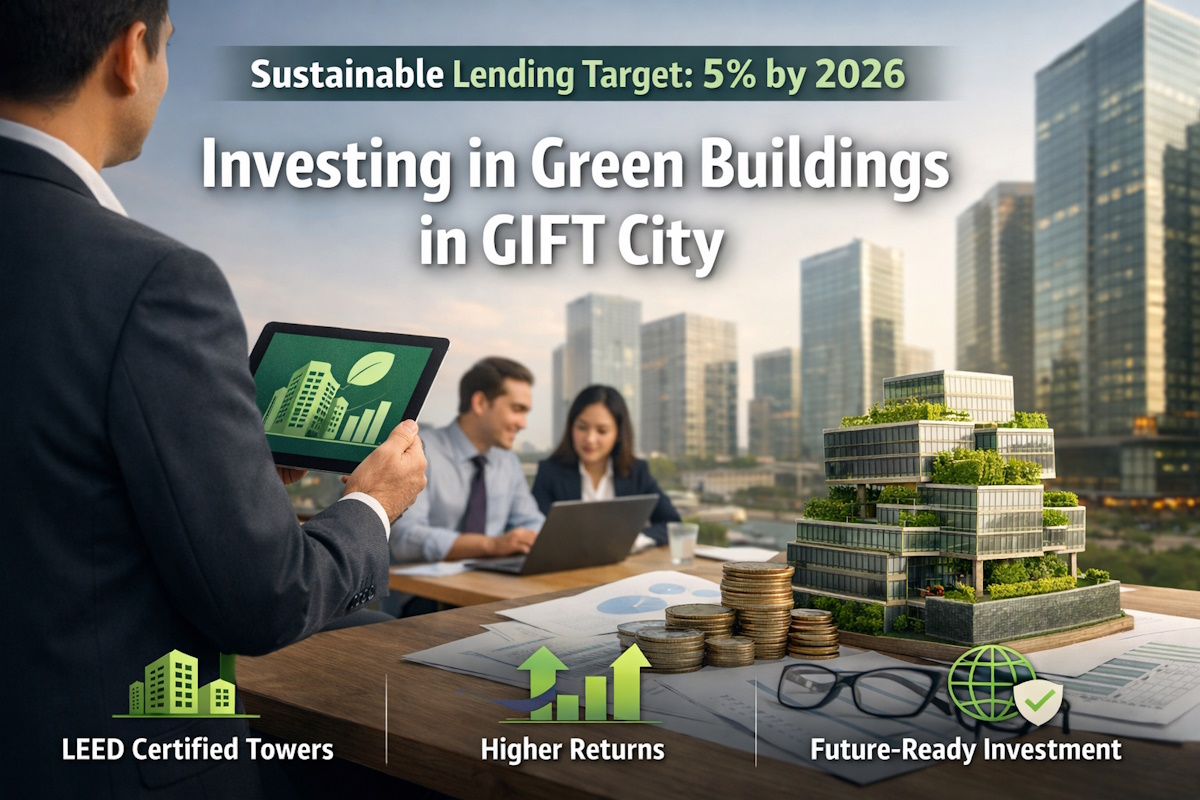
The Shift in Institutional Capital: Why the 5% Rule Matters to You
For the seasoned real estate investor, GIFT City has always been about more than just square footage. It is a play on India’s regulatory evolution and its emergence as a global financial hub. However, a significant policy shift is currently redrawing the map of value within the International Financial Services Centre (IFSC). The International Financial Services Centres Authority (IFSCA) has introduced a framework that moves sustainability from a marketing buzzword to a core financial requirement. This is not just about corporate social responsibility; it is about the mechanics of capital flow.
The introduction of the IFSCA sustainable lending framework 2026 marks a turning point for property valuations in the zone. By mandating that regulated financial institutions direct a specific portion of their lending toward sustainable activities, the authority is effectively creating a tiered market. Investors who understand the implications of these mandates today will be positioned to capture the alpha that comes from owning assets that global banks and MNCs are literally required to occupy or fund. This article analyzes how these mandates are driving up the value of LEED-certified towers and why green buildings in GIFT City represent the most resilient investment path.
Decoding the IFSCA Sustainable Lending Framework 2026
The regulatory environment in GIFT City is designed to mirror the world’s most sophisticated financial markets. In line with global trends toward decarbonization, the IFSCA has set a clear roadmap for banks and non-banking financial companies (NBFCs) operating within the IFSC. The framework requires these entities to have a board-approved policy on sustainable lending and, more importantly, sets a target for 5% of their total lending to be directed toward sustainable sectors by the financial year 2026-27.
The Connectivity Between Lending Targets and Real Estate
Real estate is one of the largest recipients of institutional lending. Under the IFSCA sustainable lending framework 2026, financial institutions will be actively seeking “green” projects to meet their 5% mandate. For an investor, this translates to better liquidity and more favorable financing terms for properties that meet these criteria. If a developer is building a LEED-certified tower, they are more likely to secure cheaper debt, which lowers the overall project cost and enhances the long-term viability of the development.
Direct Impact on Capital Availability
As we approach the 2026 deadline, the competition among banks to fund sustainable assets will intensify. This creates a supply-demand imbalance for high-quality, ESG-compliant commercial and residential spaces. When capital is incentivized to move toward a specific asset class, the valuation of those assets naturally rises. Investors holding non-compliant assets may find themselves in a liquidity trap where refinancing becomes more expensive or difficult because their property does not help the lender meet its regulatory quotas.
Why LEED-Certified Towers Command an Investment Premium
The certification from Leadership in Energy and Environmental Design (LEED) is the international gold standard for healthy, highly efficient, and cost-saving green buildings. In the context of GIFT City, LEED certification is no longer an optional luxury. It is a prerequisite for attracting the caliber of tenants that drive high rental yields. Global banks, law firms, and tech giants have their own internal ESG mandates that often prohibit them from leasing space in buildings that do not meet specific sustainability benchmarks.
Driving Higher Rental Yields through Green Buildings
The ROI for green buildings in GIFT City is consistently outperforming conventional structures. Data suggests that LEED-certified office spaces can command a rental premium of 10% to 15% over non-certified buildings in the same micro-market. For the investor, this means a direct increase in the cap rate. Furthermore, these buildings tend to have lower vacancy rates. MNCs are willing to sign longer leases in sustainable towers to ensure they meet their own global reporting requirements, providing the investor with stable, long-term cash flow.
Operational Efficiency and Net Operating Income (NOI)
Green buildings are designed to be resource-efficient. Lower electricity consumption through optimized HVAC systems and better insulation, along with advanced water recycling, significantly reduces common area maintenance (CAM) costs. While these costs are often passed to the tenant, a lower total cost of occupancy allows the landlord to maintain higher base rents without making the space unaffordable. This efficiency directly protects the Net Operating Income (NOI) of the property, which is the primary driver of commercial real estate valuation.
Long-Term Appreciation and Exit Strategy
When it comes time to exit the investment, the pool of buyers for a LEED-certified tower is significantly larger. Institutional buyers, such as Real Estate Investment Trusts (REITs) and sovereign wealth funds, are increasingly restricted from buying assets that are not ESG-compliant. By investing in sustainable towers today, you are ensuring that your exit strategy remains robust, as you will be selling an asset that fits the portfolio requirements of the world’s largest buyers.
ESG Compliance in GIFT City Property: A Risk Mitigation Strategy
Every investment involves risk, but in a rapidly evolving regulatory landscape like GIFT City, the biggest risk is “stranded asset” risk. A stranded asset is a property that has become obsolete due to changes in regulations, environmental standards, or market preferences. As the IFSCA sustainable lending framework 2026 becomes the baseline, buildings that ignore these standards will face accelerated depreciation.
Future-Proofing Against Regulatory Obsolescence
The IFSCA is likely to tighten these regulations further as India moves toward its net-zero goals. An investment in an ESG-compliant property is a hedge against future taxes or penalties that may be levied on carbon-intensive buildings. In many global financial centers, we are already seeing “brown discounts” where non-sustainable buildings are sold at a significant loss. By focusing on sustainable investment in the IFSC now, you are insulating your capital from these future regulatory shocks.
The Psychological Shift in Occupier Demand
The workforce in GIFT City consists of high-earning professionals, many of whom are under the age of 40. This demographic places a high value on working in environments that promote wellness and sustainability. Buildings that offer better air filtration, natural light, and green spaces are more successful in attracting top-tier companies that are competing for talent. As an investor, you are essentially investing in the desirability of the workspace, which is the ultimate guarantee of occupancy.
Sustainable Investment in the IFSC: Comparing Asset Types
While the focus is often on commercial office space, the sustainability mandate extends its influence to the residential and retail sectors within GIFT City. The ripple effect of the IFSCA sustainable lending framework 2026 is visible across the entire real estate ecosystem. Investors must decide which asset type aligns best with their risk appetite and yield expectations.
Commercial vs. Residential Sustainability Premiums
In the commercial sector, the link between sustainability and value is direct and measurable through lease agreements. In the residential sector, the value is driven by the lifestyle choices of the CXOs and professionals working in the IFSC. Residential projects that incorporate green building practices often see faster absorption rates. High-net-worth individuals (HNIs) and NRIs are increasingly looking for homes that offer better efficiency and a smaller carbon footprint, recognizing that these properties will hold their value better over the next decade.
Retail and Mixed-Use Developments
Retail spaces within LEED-certified towers benefit from the high footfall of affluent employees and residents who frequent these buildings. The “halo effect” of being located in a prestigious, sustainable development enhances the brand value of the retailers, which in turn allows developers to charge premium rents for retail outposts. This synergy creates a virtuous cycle of value appreciation for the entire project.
The Global Investor Perspective: Why NRIs are Pivoting to Green
Non-Resident Indians (NRIs) and institutional investors from the UAE, Singapore, and the USA are intimately familiar with the importance of ESG. In these markets, sustainability is not a choice but a standard. When these investors look at GIFT City, they apply the same filters they would use in London or Dubai. The IFSCA sustainable lending framework 2026 provides these investors with the comfort that the local market is maturing in line with international expectations.
Alignment with International Portfolios
Many NRIs manage diversified portfolios that include assets in multiple jurisdictions. Investing in a LEED-certified tower in GIFT City allows them to maintain a consistent ESG profile across their global holdings. This alignment is particularly important for those who may eventually look to use their GIFT City assets as collateral for international financing, as global banks are increasingly scrutinizing the environmental impact of the collateral they accept.
Tax Benefits and Incentives for Green Finance
There is also the potential for future tax incentives. While GIFT City already offers a 100% tax holiday for 10 years, there is ongoing discussion at the policy level about providing additional “green incentives” for projects that exceed standard sustainability benchmarks. Investors who get in early on these projects may benefit from these additional fiscal advantages as the government seeks to position GIFT City as a global leader in green finance.
Investment Justification: Is the Higher Entry Cost Worth It?
A common objection among investors is the higher cost of entry for LEED-certified or ESG-compliant properties. It is true that the construction and certification of these buildings require a larger initial capital outlay. However, looking at the investment through a long-term lens reveals that the “green premium” is a small price to pay for the significant reduction in risk and the increase in yield.
Quantifying the Green Alpha
In investment terms, “Alpha” refers to the excess return on an investment above the benchmark. In GIFT City, the green buildings are the primary source of alpha. When you factor in the lower cost of debt facilitated by the IFSCA sustainable lending framework 2026, the higher occupancy rates, and the superior rental growth, the internal rate of return (IRR) on a green building often exceeds that of a conventional building by 3% to 5% over a seven-year holding period.
Evaluating Developer Credibility
Not all green claims are equal. Investors must perform due diligence on the developer’s track record. Has the developer successfully delivered certified buildings before? Are they using recognized third-party auditors for their ESG reporting? At Gift City Realty, we emphasize the importance of vetting projects not just on their architectural renderings, but on their ability to meet the rigorous standards required by the IFSCA and international certifiers.
Key Metrics for Investors to Track
- Energy Performance Index (EPI) of the building.
- Percentage of recycled water used in common areas.
- Status of LEED or IGBC certification (Pre-certified vs. Final).
- Compliance with the IFSCA sustainable lending framework 2026.
Navigating the Decision: Your Next Steps as an Investor
The window for capturing the early-mover advantage in GIFT City’s sustainable real estate market is narrowing. As we move closer to 2026, the market will fully price in the value of ESG compliance. For the strategic investor, the time to act is during this transition period. You should look for projects that are currently under construction or in the early stages of leasing that have already secured green pre-certifications.
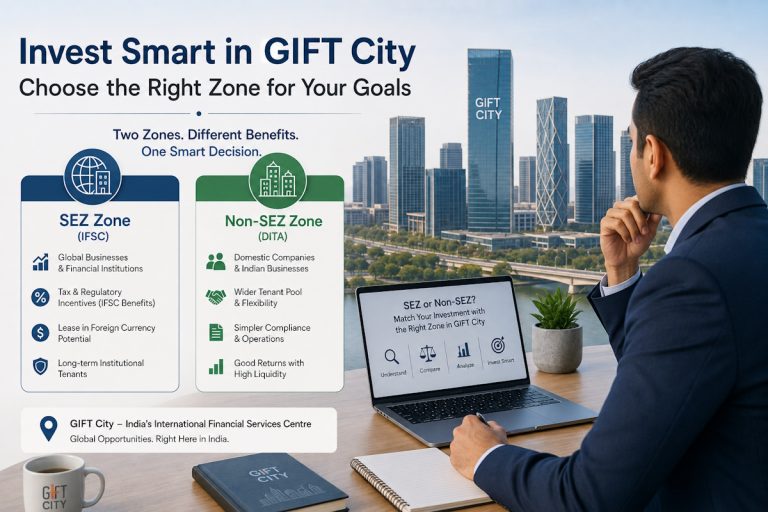
Focus your search on the SEZ and IFSC zones where the regulatory mandates are the strongest. These areas will be the first to feel the impact of the 5% lending rule. By aligning your portfolio with the IFSCA’s vision, you are not just buying property; you are investing in the very infrastructure of India’s financial future. The 5% rule is more than a mandate; it is a clear signal of where the next wave of wealth in GIFT City will be created.
Frequently Asked Questions
1. What exactly is the 5% rule in the IFSCA framework?
The 5% rule refers to the IFSCA mandate requiring regulated financial institutions in the IFSC to direct at least 5% of their total lending toward sustainable activities by the end of FY 2026-27. This encourages banks to prioritize funding for green buildings and sustainable projects.
2. Do LEED-certified buildings really offer better resale value?
Yes. Institutional buyers and REITs have strict ESG criteria. A LEED-certified building meets these requirements, ensuring a larger pool of potential buyers and higher liquidity compared to conventional buildings, which may become harder to sell as regulations tighten.
3. Is the IFSCA sustainable lending framework 2026 applicable to residential projects?
While the primary focus is often on commercial lending, the framework covers various “sustainable activities.” Residential projects that meet green building standards can qualify for sustainable financing, which benefits the developer and, by extension, the investor through better project viability.
4. How much higher is the rent in a green building in GIFT City?
Typically, LEED-certified office spaces in GIFT City command a premium of 10% to 15% over standard buildings. This is driven by high demand from MNCs and financial institutions that must occupy sustainable spaces to meet their global ESG targets.
5. Can I get cheaper home loans for ESG-compliant residential properties?
Many banks are introducing “Green Home Loans” with slightly lower interest rates or waived processing fees for properties that have high sustainability ratings. This is part of their effort to meet the IFSCA’s sustainable lending targets.