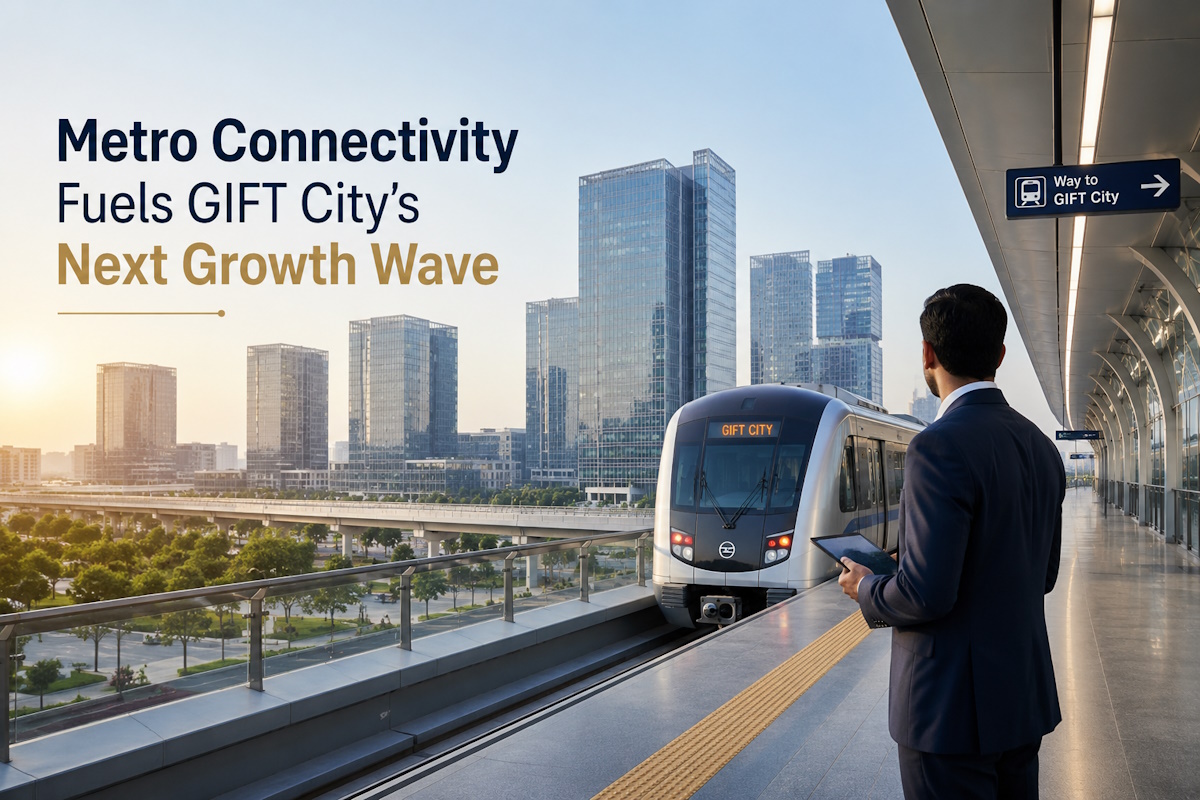
Infrastructure development has always been the primary catalyst for real estate valuation surges. For institutional investors, high-net-worth individuals, and non-resident Indians, tracking these physical developments is essential for timing entry points into high-growth corridors. The recent operational launch of the metro rail connectivity in Gujarat, India, marks a pivotal moment for GIFT City. It transitions the region from an exclusive, self-contained financial enclave into a highly integrated, accessible metropolitan node. This shift directly influences corporate occupiers, retail tenants, and residential buyers who prioritize transit-oriented developments.
As corporate offices scale up and global financial institutions establish their presence within the International Financial Services Centre, the demand for high-quality real estate is reaching unprecedented levels. Savvy buyers are focusing their attention on specific developments that stand to benefit most from these transit improvements. Understanding the broader context of these gift city infrastructure updates allows investors to identify undervalued assets before market prices fully adjust to the new reality of seamless commuting.
The Infrastructure Multiplier: Why the New Metro Station Changes the Valuation Game
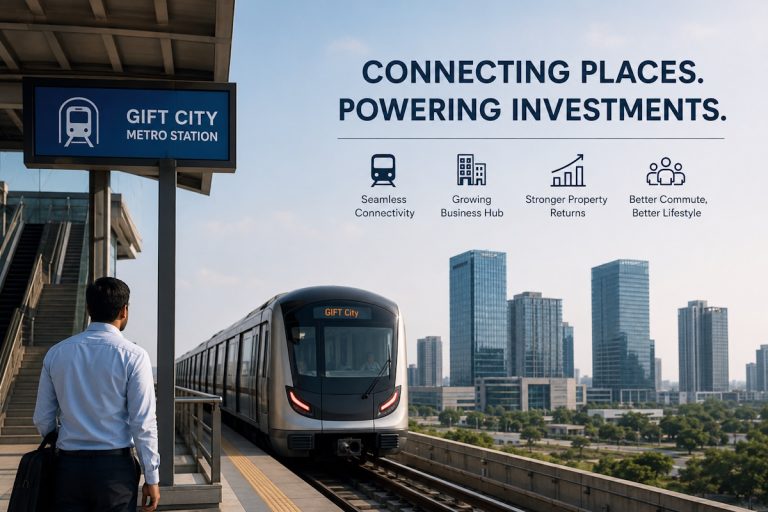
The introduction of mass rapid transit systems fundamentally alters urban real estate economics by compressing travel times and expanding the pool of available labor. Prior to the metro expansion, commuting to GIFT City from the twin cities of Ahmedabad and Gandhinagar relied heavily on road networks. This reliance created minor friction points for daily commuters and support staff. The new metro station removes this bottleneck, offering direct, predictable, and cost-effective transit that appeals to a diverse workforce.
Transit-Oriented Development and Capital Appreciation
Globally, properties located within a walking radius of active transit hubs experience a distinct valuation premium. This premium typically manifests in higher rental yields, lower vacancy rates, and faster capital appreciation compared to peripheral properties. For the local market, the metro station acts as an anchor for Transit-Oriented Development zone regulations, which often permit higher floor space index limits and more integrated, pedestrian-friendly urban planning. Investors targeting long-term growth should analyze how these localized regulatory adjustments enhance property utility.
Solving the Last-Mile Connectivity for Global Corporates
Global corporations evaluating office space in the International Financial Services Centre place a premium on employee ease of access. When a commercial office tower can claim a direct connection to a metro line, it instantly becomes more competitive in leasing negotiations. This connection simplifies recruiting, lowers corporate transportation costs, and satisfies institutional environmental criteria by promoting public transit usage. Consequently, commercial assets situated near the metro terminal are positioned to secure stronger tenant commitments and longer lease terms.
Analyzing the Top 5 Projects Poised for Growth
Not all developments within the special economic zone and non-special economic zone areas will benefit equally from these connectivity enhancements. The highest appreciation potential is concentrated in projects that combine architectural quality, reputable developer backing, and proximity to the transit hub. Below, we evaluate five distinct project profiles that are experiencing increased investor interest following these critical infrastructure updates.
Project 1: Premium Grade-A Commercial Towers
These commercial developments are designed to meet the rigorous standards of multinational banks, law firms, and consulting conglomerates. Featuring column-free office spaces, advanced energy-efficient HVAC systems, and international safety certifications, these towers are located within the immediate vicinity of the new metro station. The reduction in commute times for professional staff makes these buildings the first choice for expanding multinational corporate footprints.
Location Advantage Relative to the Metro Station
Being situated within a short walk of the metro gates ensures that these properties command a rental premium. Corporate tenants are willing to pay more for spaces that minimize travel delays, directly driving up the net operating income for individual unit owners.
Project 2: Luxury Residential Towers for Expat Professionals
As foreign financial institutions set up operations, there is a parallel surge in demand for premium housing. Luxury residential projects featuring modern clubhouse amenities, concierge services, and home automation systems are catering to this incoming demographic. The metro station enables these residents to access the cultural and retail offerings of Ahmedabad without relying on private vehicles.
Rental Yield Potential and Corporate Tenant Profile
Expatriate professionals and senior executives require premium, secure, and well-connected housing options. This segment is historically less price-sensitive and more focused on convenience, allowing landlords to secure stable, high-value rental agreements.
Project 3: Mixed-Use Developments Integrating Retail and Office Spaces
Mixed-use developments represent a highly resilient asset class. By combining retail podiums on the lower levels with premium office suites above, these projects maximize land-use efficiency. The influx of daily metro commuters creates a natural customer base for retail tenants, supermarkets, and dining establishments located within these complexes.
Capitalizing on Footfall Near the Transit Hub
The pedestrian traffic generated by the metro station translates into consistent retail footfall. Retail tenants in these developments benefit from high visibility, which supports robust retail sales and allows developers to negotiate favorable revenue-sharing lease agreements.
Project 4: Co-working and Managed Offices for Tech Firms
The demand for flexible office spaces has grown exponentially as technology startups and ancillary service providers cluster around major financial hubs. Co-working projects near the metro station offer flexible lease structures and shared infrastructure, making them highly attractive to growing enterprises that require immediate operational readiness.
Shift in Occupancy Dynamics
With improved transit access, co-working operators can attract talent from a wider geographic area. This increased talent pool drives higher daily occupancy rates, reducing the financial risks associated with traditional long-term vacancies.
Project 5: Elite Residential Enclaves for High-Net-Worth Individuals
These exclusive residential projects focus on privacy, expansive floor plans, and green building standards. Strategically positioned far enough from the station to avoid noise pollution, yet close enough for convenient access, these developments represent the peak of residential real estate within the micro-market.
Long-Term Capital Preservation Value
High-net-worth individuals prioritize capital preservation and lifestyle quality. These premium enclaves maintain their value exceptionally well during market cycles due to their limited supply and highly desirable locations.
Key Indicators to Evaluate Before Investing in GIFT City Real Estate
While infrastructure updates provide a favorable environment for property values to rise, investors must still perform rigorous due diligence. Blindly purchasing real estate based solely on metro proximity can lead to suboptimal returns if other critical investment pillars are ignored.
Developer Track Record and Execution Speed
In a rapidly growing market, project execution timelines are critical. Delays in construction can erode anticipated rental yields and delay capital appreciation. Investors should prioritize developers with a proven history of delivering high-quality commercial and residential projects on schedule, as well as those with strong capital reserves to withstand temporary economic headwinds.
SEZ vs. Non-SEZ Classification
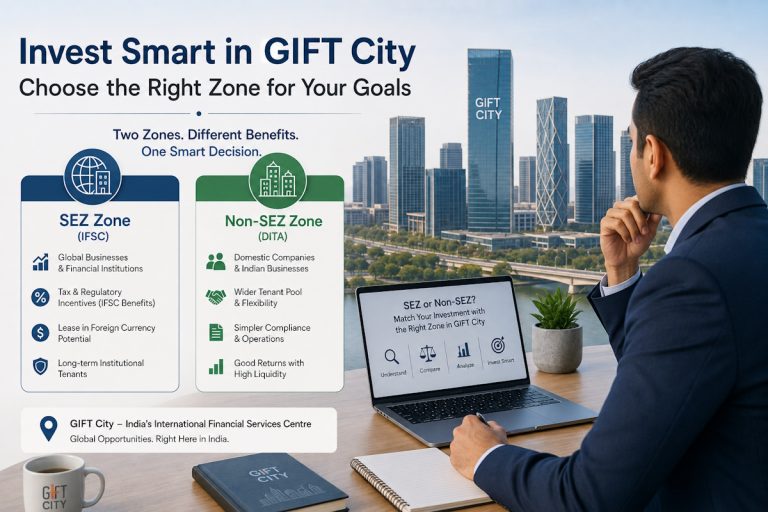
Understanding the regulatory distinction between Special Economic Zone and Domestic Tariff Area properties is essential. SEZ properties are designed for entities engaged in export-oriented services and foreign financial operations, which come with specific occupancy regulations. Non-SEZ areas cater to domestic businesses and broader residential use. Aligning your investment with the correct classification ensures compliance and optimal asset utilization.
Infrastructure Proximity and Accessibility Indices
Not all properties near the metro station have equal access. Evaluating the ease of physical access is important. Factors such as pedestrian walkways, internal shuttle services, and traffic management plans around the project play a vital role in determining the long-term desirability of a building for corporate and residential tenants alike.
Strategic Investment Playbook: Maximizing ROI Post-Metro Launch
The optimal entry point is typically during the final phases of infrastructure testing or immediately after commercial operations commence. At this stage, construction risks are resolved, yet the full impact of increased demand has not yet been priced into developer asking rates. Acquiring units during this window allows buyers to capture the initial wave of post-launch appreciation.
Mitigating Supply-Side Risks
As demand grows, developers often respond by launching new projects, which can lead to localized supply spikes. To protect your investment from future dilution, focus on assets with unique value propositions. This includes properties with higher ceiling heights, superior parking ratios, premium views, or direct physical integration with the transit station itself, as these features cannot be easily replicated by newer developments.
Evaluating Your Next Steps
The opening of the metro station is a clear indicator of GIFT City maturity. It marks the transition from a long-term development project to a fully functional, highly connected international business hub. For investors seeking stable, long-term capital growth and reliable rental income in Gujarat, India, the current market dynamic offers a compelling entry window. Success, however, relies on choosing the right asset class, verifying developer credentials, and understanding how localized transit access impacts specific projects.
Frequently Asked Questions
1. How does the new metro station affect current rental yields in GIFT City?
The new metro station improves rental yields by expanding the tenant pool and increasing demand for properties within walking distance. This convenience allows property owners to charge a rental premium, reducing vacancy rates and improving cash flow stability.
2. What is the difference between investing in SEZ versus Non-SEZ properties near transit hubs?
SEZ properties cater to businesses operating under the International Financial Services Centre framework, which offers tax exemptions but carries strict tenant eligibility rules. Non-SEZ properties offer greater leasing flexibility for domestic firms and residential occupiers, making them highly versatile assets.
3. Are residential properties near the metro station better for capital appreciation or rental income?
Properties near the transit hub generally deliver strong performance in both areas. They command premium rental rates from expat professionals who value seamless daily commutes, while also showing higher rates of capital appreciation due to the long-term desirability of transit-oriented locations.
4. How does GIFT City compare to other Indian metropolitan financial districts in terms of infrastructure growth?
Unlike older financial districts that must retrofit infrastructure into dense urban environments, GIFT City is built on a modern master plan. The integration of a smart utility tunnel, automated waste collection, and high-speed metro transit creates an efficient, future-proof business environment that is difficult for traditional metropolitan areas to replicate.