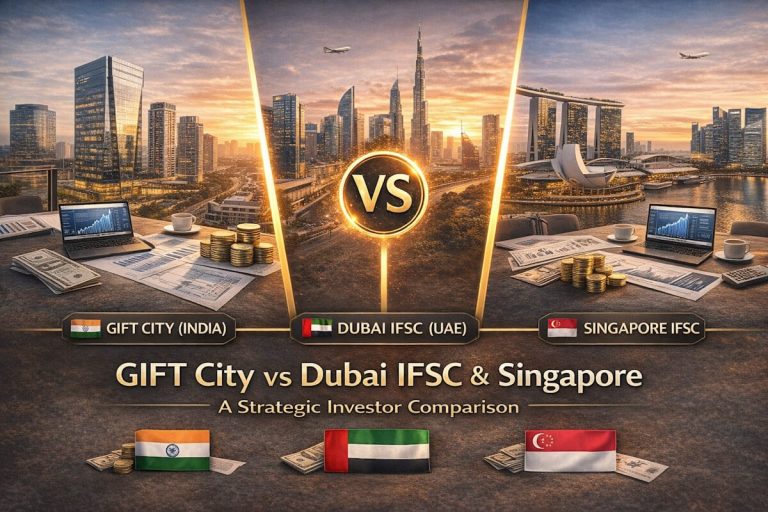

Allocating capital from overseas into Indian real estate has historically required navigating complex regulatory processes, currency conversion friction, and lingering tax ambiguities. For Non-Resident Indians managing USD balances in North America, the Middle East, or Southeast Asia, traditional property acquisitions back home often came tied to domestic rupee accounts, extensive banking paperwork, and restrictive repatriation caps. The emergence of the Gujarat International Finance Tec-City has established a fundamentally restructured avenue for foreign wealth deployment.
Operating as an International Financial Services Centre, GIFT City bridges global capital markets and high-growth Indian real estate assets. Through this dedicated jurisdiction, cross-border property acquisitions bypass many conventional hurdles. Foreign currency can enter an offshore-style regulatory zone anchored in Gujarat, India, delivering structural transparency, simplified ownership protocols, and streamlined capital exits. Understanding how this USD-denominated mechanism functions is essential before committing capital to this evolving asset class.
Understanding the Regulatory Architecture of the GIFT City Route
The core distinction of GIFT City lies in its dual-zone regulatory framework, combining a Domestic Tariff Area with a designated Special Economic Zone hosting the IFSC. For an NRI investor, this structure separates local Indian property regulations from international banking protocols. In practical terms, transactions occurring within the IFSC function under international financial guidelines while physically rooted in Indian soil. This setup enables investors to evaluate allocations using institutional benchmarks rather than fragmented local real estate practices.
Under this financial architecture, transactions are monitored by the International Financial Services Centres Authority rather than multiple disjointed regional agencies. This unified regulatory oversight minimizes bureaucratic delays, standardizes property transfer protocols, and provides legal clarity for foreign capital. Investors can utilize interactive Real Estate Calculators to model asset projections and evaluate how regulatory efficiencies enhance overall net yields across multi-year holding periods.
The Legal Status of Foreign Currency Transactions
Foreign exchange regulations historically required international investors to convert foreign currency into Indian Rupees through standard Non-Resident External or Non-Resident Ordinary banking channels. Within the GIFT City IFSC ecosystem, direct foreign currency accounts permit investors to hold, deploy, and transact capital in designated foreign currencies, primarily USD. This framework insulates your baseline capital from immediate conversion friction until funds are actively deployed into specific project vehicles.
Bypassing Traditional Foreign Exchange Bottlenecks
When capital moves directly into authorized IFSC banking units, it avoids multiple intermediary processing fees and unfavorable retail exchange spreads. This unified processing pipeline ensures that the value of deployed capital reflects global exchange parity rather than the arbitrary transaction rates of retail banking desks.
How USD Capital Transitions into High-Value Real Estate
Moving institutional or personal capital from overseas bank accounts into GIFT City real estate follows a defined, compliant pathway. The process begins with establishing a relationship with an IFSC Banking Unit situated directly within the zone. Unlike traditional domestic retail accounts, an IFSC banking unit functions with the compliance agility of an offshore international private bank, operating under global anti-money laundering and know-your-customer standards.
Once accounts are active, funds transfer via standard international wire systems directly in USD. The investor selects between high-absorption commercial assets, corporate office suites, or residential projects designed to accommodate IFSC workforce demand. To understand the underlying asset mix and documentation requirements, investors often review the comprehensive materials when they Download the GIFT City investor guide before executing fund transfers.
Direct Acquisition Versus Fund-Based Allocations
NRIs typically choose between direct physical ownership of commercial and residential titles, or indirect participation via Alternative Investment Funds registered within the IFSC. Direct ownership delivers titled deeds, predictable quarterly rental distributions, and direct control over asset liquidations. Conversely, fund-based investments provide diversified exposure across commercial towers, managed retail developments, and co-working assets without individual title management.
Asset Selection Criteria for Global Investors
Direct ownership requires careful scrutiny of developer delivery timelines, grade-A certifications, and anchor tenant lease structures. Grade-A commercial office space leased to multinational financial firms offers lower default risk and predictable long-term lease escalations, establishing stable cash flow back to overseas investors.
Commercial Real Estate Versus Residential Allocations
Commercial property inside GIFT City is predominantly driven by multinational financial firms, technology centers, and international trading desks establishing physical presences under special economic incentives. As these corporations occupy footprint, executive housing demand within both the IFSC and adjacent zones rises proportionally. Investors targeting commercial spaces frequently review options in GIFT City Commercial Property for NRI buyers to capture corporate tenant yields, whereas residential acquisitions focus primarily on tenancy from expatriates and senior corporate leadership.
Repatriation Mechanics and Capital Protection
The primary concern for any NRI allocating significant foreign capital into Indian property is the ease of exit. In conventional Indian real estate, the repatriation of sale proceeds, especially capital appreciation, has often required complex compliance under the Foreign Exchange Management Act. Traditional real estate liquidations routinely demand tax clearance certificates, specialized chartered accountant declarations, and adherence to specific annual repatriation limits through NRE or NRO banking rails.
The GIFT City investment route for NRI capital solves this friction fundamentally through its outbound capital provisions. Because transactions inside the IFSC are treated as cross-border financial activity under offshore rules, capital invested in USD can be repatriated along with realized gains back to overseas accounts. This fluid movement removes the friction of trapped equity, positioning GIFT City real estate as a liquid international allocation rather than a locked domestic land holding.
Currency Risk Mitigation Strategies
Currency volatility represents an unavoidable variable when investing in emerging market real estate. A property might generate strong returns in local currency, but severe rupee depreciation can erode net returns when converted back to USD. By anchoring transactions, leases, or underlying banking reserves to USD-denominated accounts inside the IFSC, investors can introduce hedge-like mechanisms that protect real portfolio value.
Lease Escalations and Foreign Currency Balancing
Many commercial leases signed by multinational tenants operating in the SEZ feature built-in escalation clauses of twelve to fifteen percent every three years. These steady cash flow increases historically outpace the standard rate of rupee depreciation, safeguarding the investor’s baseline USD yield over standard ten-year holding periods.
Fiscal and Tax Incentives for Non-Resident Investors
Taxation serves as a decisive variable when choosing between property allocations in Dubai, Singapore, London, or India. The Indian government, along with the Gujarat state leadership, created tailored tax frameworks within GIFT City to actively encourage international participation. Operating under unified tax structures, the IFSC offers distinct operational advantages over standard domestic Indian property holdings, improving net real yields for passive and active investors alike.
While domestic real estate purchases across major Indian metropolitan hubs attract local withholding taxes, Goods and Services Tax, and complex stamp duties, GIFT City IFSC transactions benefit from specific statutory exemptions. Exploring potential returns using specialized Real Estate Calculators allows investors to verify the impact of lower transaction frictional costs against gross yields, revealing substantial financial benefits relative to standard metro investments.
Long-Term Capital Gains Realignment
Capital gains derived from physical real estate located in the IFSC are governed by favorable treaty frameworks and specific capital gains guidelines structured to attract foreign foreign direct investment. When structured via compliant offshore vehicles or approved direct NRI channels, investors can optimize their tax exposure upon exiting the asset. These rules eliminate double taxation uncertainties through applicable Double Tax Avoidance Agreements signed between India and over eighty-five global jurisdictions.
Minimum Alternate Tax and Withholding Relief
Corporate entities and overseas trusts investing into commercial infrastructure in the IFSC often enjoy substantial relief from standard Minimum Alternate Tax provisions. For individual NRIs, standard withholding rates on rental income are streamlined through organized IFSC banking units, removing bureaucratic administrative hurdles.
Key Pitfalls to Avoid in the GIFT City Route
While the administrative benefits of the GIFT City investment route for NRI participants are substantial, investors can make tactical errors if they treat this market like a standard speculative property play. Successful capital allocation in this micro-market demands discipline, adherence to zoning guidelines, and clear recognition of corporate demand trends. Overlooking regulatory distinctions between zones can alter your expected returns and affect future exit liquidity.
A frequent error among overseas buyers involves confusing Domestic Tariff Area assets with IFSC SEZ assets. While properties in both sections hold long-term value, their leasing structures, tenant permissions, and operational laws differ significantly. Prior to capital deployment, smart investors carefully Download the GIFT City investor guide to thoroughly examine development zoning and make certain their selected unit aligns with their target tenant profile.
Overlooking Tenant Eligibility Regulations
Commercial assets located inside the SEZ zone can only be occupied by business entities holding valid permissions to operate within an SEZ or IFSC. If an investor purchases commercial space assuming any local business can lease it, they face an unexpected restriction. Verifying that a commercial tower maintains an active pipeline of certified institutional tenants is critical to preventing extended vacancy intervals.
Relying on Pure Speculation Over Rental Fundamentals
Some buyers enter GIFT City expecting rapid short-term capital flipping similar to earlier cycles in peripheral Mumbai or Bengaluru. GIFT City is fundamentally an infrastructure-first, institutional financial center designed for steady, compounding growth driven by corporate job creation. Focusing on high-yielding GIFT City Commercial Property for NRI portfolios that deliver actual operational cash flows is a significantly safer, more profitable path than betting purely on unverified speculative appreciation.
Making an Informed Capital Allocation Decision
Deciding to route USD capital into GIFT City real estate requires evaluating your broader portfolio diversification goals. If your objective is establishing predictable, cross-border income backed by sovereign-supported infrastructure while retaining straightforward exit mechanics back into foreign currency, this corridor presents a clear advantage over conventional real estate avenues. The regulatory stability and tax exemptions turn what was once an administrative burden into an organized institutional transaction.
Working with specialized regional advisors like Gift City Realty ensures your acquisitions adhere strictly to IFSC guidelines, maintain verified developer clear titles, and deliver optimal rental yields. Reviewing precise project blueprints, verifying tenant absorption rates, and aligning your entry timeline with ongoing infrastructure expansion phases allows you to participate in Gujarat’s financial expansion with high capital security.
Frequently Asked Questions
1. Can an NRI buy property in GIFT City directly in USD?
Yes. Non-Resident Indians can utilize designated foreign currency accounts held within authorized IFSC Banking Units to transact directly in foreign currencies, including USD, specifically for properties situated within the IFSC Special Economic Zone framework.
2. How does repatriation from GIFT City differ from traditional real estate in India?
Unlike standard domestic property sales which require extensive documentation through domestic NRE or NRO banking rails and strict adherence to annual central bank limits, property investments structured through the GIFT City IFSC benefit from streamlined outbound repatriation of initial principal and realized capital appreciation.
3. Are residential properties inside GIFT City open to all investors?
Residential properties in the Domestic Tariff Area of GIFT City are accessible to all buyers without restriction, whereas properties within the SEZ zone follow specific operational occupancy norms designed primarily to support professionals and entities working within the international financial zone.
4. What kind of rental yields can an NRI expect from commercial assets in GIFT City?
Grade-A commercial assets in GIFT City leased to recognized international corporate tenants, financial brokerages, and tech organizations currently reflect gross rental yields typically ranging between seven and nine percent, alongside standard multi-year escalation clauses.
5. Is double taxation an issue for NRIs investing through this channel?
No. India’s extensive network of Double Tax Avoidance Agreements with major jurisdictions such as the United States, United Kingdom, Singapore, and the UAE safeguards investors from being taxed twice on the same capital gains or earned rental receipts.