Smart real estate investment is rarely about buying into a finished product. It is about identifying the specific infrastructure milestones that bridge the gap between current valuation and future market maturity. For investors looking at India’s first operational smart city, the upcoming GIFT City Metro Connectivity project, slated for completion in 2026, represents the single most significant liquidity and appreciation trigger in the current development cycle. While the International Financial Services Centre (IFSC) provides the regulatory backbone, the physical connectivity of the metro system provides the circulatory system required for a truly global city to function.
For high-net-worth individuals and institutional buyers, the 2026 timeline is more than just a date on a construction schedule. It serves as a definitive window of opportunity to secure assets before the “convenience premium” is fully baked into property prices. Historically, transit-oriented developments in major financial hubs like London’s Canary Wharf or Dubai’s DIFC have shown that property values undergo a permanent upward shift once the friction of commuting is removed. As GIFT City transitions from a specialized business district to a holistic live-work-play environment, understanding the nuances of this infrastructure shift is essential for optimizing Real Estate ROI in Gujarat.
The Strategic Nexus of GIFT City Metro Connectivity and Capital Growth
The relationship between mass transit and real estate value is well-documented, but in the context of a Greenfield project like GIFT City, the impact is magnified. Currently, the city relies heavily on road-based transport, which, while efficient, does not support the density required for a world-class financial hub. The introduction of GIFT City Metro Connectivity changes the fundamental calculus of the city by integrating it directly with the broader Ahmedabad and Gandhinagar metropolitan areas. This integration effectively expands the labor pool and makes the city accessible to a wider demographic of professionals who may not yet reside within the city limits.
Understanding the Transit Premium in Emerging Markets
In emerging markets, the “transit premium” typically manifests in two stages. The first stage is speculative, where prices rise based on the announcement of the project. The second, and often more substantial stage, occurs when the service becomes operational and the utility of the asset increases. For the GIFT City Infrastructure Update, we are currently in the mid-point of these stages. Investors who commit now are positioning themselves to capture the delta between speculative value and operational utility. This is a critical distinction for those evaluating long-term capital appreciation versus short-term trading gains.
Assessing the Liquidity Factor for Institutional Buyers
Liquidity is often the primary concern for institutional investors. A commercial or residential asset that is easily accessible via public transit is inherently more liquid because it appeals to a broader range of potential tenants and future buyers. In the context of GIFT City, the metro ensures that the asset remains relevant even as the city expands. It mitigates the risk of “peripheral stagnation” by ensuring that the core business district remains a central, easily reachable node for the entire region.
Analyzing the GIFT City Infrastructure Update: The 2026 Roadmap
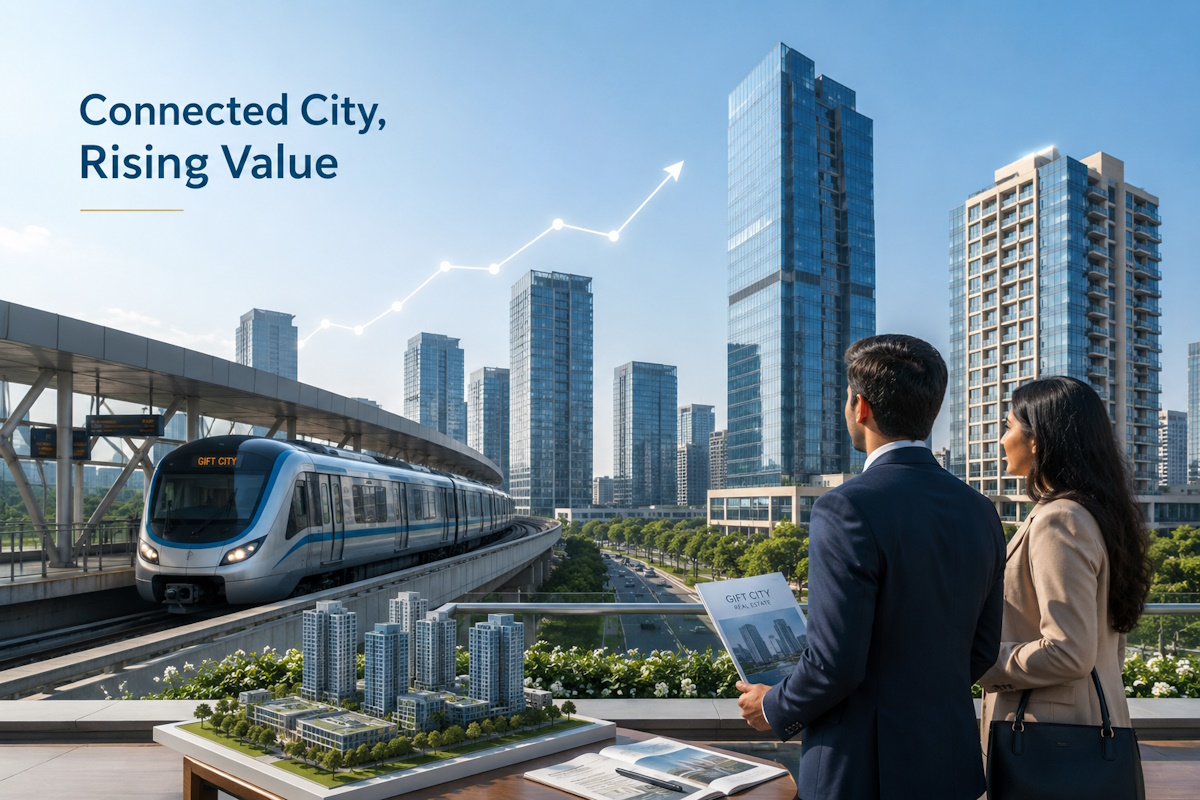
The GIFT City Infrastructure Update for 2026 is not limited to the metro alone, but the metro is the anchor. Phase II of the Ahmedabad Metro Rail Project is specifically designed to connect Motera Stadium to Mahatma Mandir, with a crucial spur line dedicated to GIFT City. This 5.4-kilometer spur is the key to unlocking the residential and commercial potential of the zone. For investors, the 2026 deadline provides a clear exit or re-valuation point, allowing for a structured investment horizon that aligns with tangible physical progress.
Synchronizing Property Possession with Metro Commissioning
One of the most effective strategies for maximizing Real Estate ROI in Gujarat is to align property acquisition with the completion of major infrastructure. Investors should look for projects within GIFT City that are scheduled for delivery between late 2025 and mid-2026. By timing the handover of the property with the commissioning of the metro, investors can command higher initial rents and benefit from an immediate spike in capital value. This synchronization reduces the holding period during which the asset might otherwise be underutilized due to connectivity gaps.
Mitigating Timing Risks in Gujarat Real Estate
Every major infrastructure project carries the risk of delays. However, the Gujarat Metro Rail Corporation (GMRC) has shown consistent progress, and the strategic importance of GIFT City to the national economic agenda ensures high-level oversight. Investors can mitigate timing risks by focusing on developers with a track record of timely delivery and by diversifying their portfolio across different asset classes within the city. The goal is to ensure that the investment’s success is not solely dependent on a single month’s progress but on the overall trajectory of the city’s growth.
Impact on Commercial Real Estate ROI in Gujarat
Commercial assets in GIFT City are the primary beneficiaries of enhanced connectivity. For a multinational corporation (MNC) or a financial institution operating in the IFSC, the ability of their employees to commute efficiently is a top priority. When GIFT City Metro Connectivity becomes operational, it will significantly lower the barriers to entry for firms that were previously hesitant due to the perceived distance from Ahmedabad’s residential centers. This influx of new tenants is the primary driver of commercial rental growth.
Attracting Multinational Tenants through Improved Commuting
Global firms often have strict requirements for “Grade A” office space, which include accessibility and sustainability. A metro connection satisfies both. It provides a green, efficient way for thousands of employees to reach the city daily. As an investor, owning commercial space near a metro node within GIFT City means your property will be at the top of the shortlist for high-quality corporate tenants. These tenants typically sign longer leases and provide more stable cash flows, which are essential for achieving a superior Real Estate ROI in Gujarat.
The Shift from Localized to Regional Talent Access
Before the metro, GIFT City was largely seen as a destination for those willing to live within the city or endure a long drive. Post-2026, it becomes a regional hub. This shift allows businesses to tap into the talent pool of the entire Ahmedabad-Gandhinagar corridor. For the real estate investor, this means the demand for office space is no longer tied to the local population of GIFT City but is fueled by the economic activity of the entire state. This broadened demand base is a powerful hedge against localized market downturns.
Residential Appreciation: From Occasional Use to Primary Residence
The residential market in GIFT City has historically been viewed through the lens of investor-driven rental stock. However, the GIFT City Metro Connectivity is the catalyst that will transform these properties into primary residences for professionals. When the commute to central Ahmedabad is reduced to a predictable 30 to 40-minute metro ride, the value proposition of living within GIFT City changes. The convenience of the metro, combined with the city’s superior social infrastructure, makes it a highly attractive residential destination.
The Walk-to-Work Ecosystem and Metro Synergy
GIFT City is designed as a “walk-to-work” city, but the metro adds a necessary layer of external mobility. It allows residents to enjoy the tranquility and high-tech amenities of GIFT City while maintaining a physical link to the cultural and social life of Ahmedabad. This synergy is what drives high-end residential demand. Investors should evaluate residential projects based on their proximity to the metro stations, as these properties will likely see the highest demand from high-earning expatriates and C-suite executives working in the IFSC.
Rental Yield Projections for High-Net-Worth Investors
Current rental yields in GIFT City are competitive, but the 2026 connectivity update is expected to push them higher. As more professionals choose to live in the city, the vacancy rates for well-located apartments will drop. We anticipate that residential assets within a 500-meter radius of metro stations will command a 15 to 20 percent rental premium over those located further away. For the savvy investor, this emphasizes the importance of location within the city itself, rather than just being “somewhere in GIFT City.”
Regulatory Advantages and The IFSC Factor
While infrastructure like the metro provides the physical framework, the regulatory environment of the IFSC provides the economic engine. The tax incentives, such as the 10-year tax holiday and the exemption from GST and Stamp Duty for certain transactions, attract the very businesses that fill the office buildings and drive the need for the metro. The GIFT City Metro Connectivity simply makes it easier for the global financial community to utilize these regulatory benefits. This combination of “Policy plus Pipe” (policy advantages and infrastructure) is why Real Estate ROI in Gujarat is outperforming other regional markets.
Tax Benefits Driving Demand Near Transport Nodes
Investors should consider how the tax-free status of many entities within GIFT City affects their tenant profile. Firms in the IFSC are often high-growth, high-margin businesses that are less sensitive to rent increases if the location provides operational efficiencies. A metro-connected office is the ultimate operational efficiency. Therefore, the regulatory benefits of the IFSC and the infrastructure benefits of the metro work in tandem to support high capital values and robust rental growth.
Global Comparison: How Metros Fuel Financial Districts
If we look at global benchmarks like the Dubai Metro’s impact on the Sheikh Zayed Road corridor, the results are clear. Properties within walking distance of metro stations saw significantly higher capital appreciation compared to those that were car-dependent. GIFT City is following a similar developmental trajectory. By applying these global lessons, investors can see that the 2026 GIFT City Infrastructure Update is a predictable value-creation event, not a speculative gamble.
Strategic Entry Points: How to Evaluate Projects Today
Navigating the GIFT City market requires a disciplined approach to project selection. Not all projects will benefit equally from the metro. The key is to analyze the “distance decay” of value. Properties immediately adjacent to metro stations often see the highest initial spike, but there is also significant value in projects that are part of integrated townships or mixed-use developments that offer direct pedestrian access to the transit system. Evaluating these entry points today, while the metro is still under construction, is the hallmark of a sophisticated investment strategy.
Distance Decay and Property Valuation Models
In real estate economics, distance decay refers to the reduction in value as distance from a core amenity increases. For GIFT City Metro Connectivity, the “core amenity” is the metro station. Investors should prioritize assets that fall within the “Goldilocks zone”—close enough for a 5-minute walk, but not so close that they are impacted by the noise or congestion of a transit hub. These properties consistently offer the best balance of rental demand and capital appreciation, ensuring a healthy Real Estate ROI in Gujarat over a 5 to 10-year horizon.
Identifying Overvalued vs. Undervalued Zones
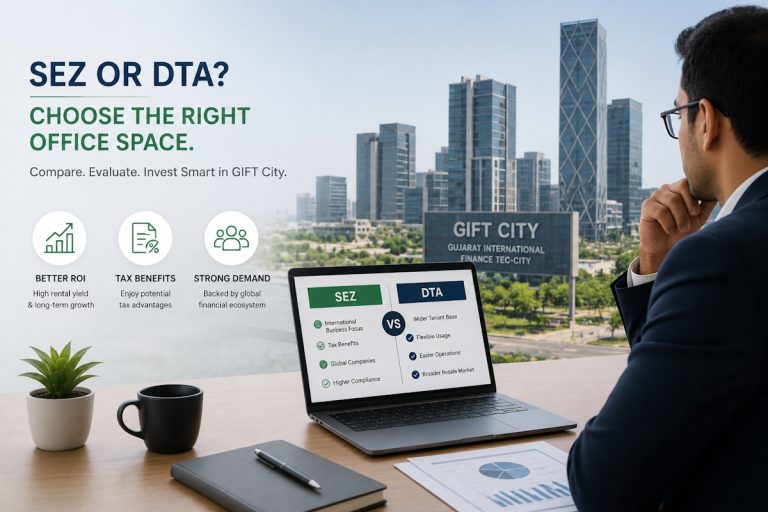
One common mistake is overpaying for a project simply because it is near a proposed metro station. Investors must also look at the developer’s credibility, the quality of construction, and the specific zoning laws of that area. Is the project in the SEZ or the Domestic Tariff Area (DTA)? This distinction often matters more for the type of tenant you can attract than the metro itself. Gift City Realty helps investors identify these nuances, ensuring they don’t just buy near the metro, but they buy the right asset near the metro.
Investment Justification and Long-Term Outlook
Investing in GIFT City ahead of the 2026 metro completion is a move backed by both fundamental economic drivers and physical infrastructure reality. The transition from a car-centric city to a transit-oriented hub is a watershed moment for any metropolitan area. For the investor, this means reduced risk, enhanced liquidity, and a clear path to capital appreciation. The GIFT City Infrastructure Update is not just a improvement in lifestyle, it is a structural change in the way property is valued in the region.
The long-term outlook for GIFT City remains exceptionally strong as it continues to attract global banks, fintech firms, and international universities. With the GIFT City Metro Connectivity as the backbone of the city’s growth, the real estate market is poised for a decade of sustained expansion. Those who recognize the significance of the 2026 milestone today will be the ones who reap the rewards of a mature, connected, and highly profitable financial ecosystem tomorrow.
Future-Proofing Portfolios Against Market Volatility
In an era of economic uncertainty, high-quality infrastructure serves as a stabilizer for real estate values. Even during broader market corrections, assets in well-connected, strategically important hubs like GIFT City tend to hold their value better than peripheral properties. By focusing on the 2026 connectivity timeline, investors are effectively future-proofing their portfolios, ensuring that their assets remain in high demand regardless of short-term economic fluctuations. This is the essence of building a resilient real estate portfolio in India’s most ambitious city.
Frequently Asked Questions
1. When will the GIFT City Metro become fully operational?
The metro connectivity to GIFT City, part of Ahmedabad Metro Phase II, is targeted for full operational status by 2026. Construction on the dedicated spur line and stations within the city is progressing according to the Gujarat Metro Rail Corporation’s schedule.
2. How does metro connectivity impact residential rental yields?
Properties within walking distance of metro stations typically command a rental premium of 15% to 20%. The convenience of a predictable commute attracts high-earning professionals, reducing vacancy rates and allowing for consistent annual rent escalations.
3. Is it better to invest in commercial or residential property near the metro?
Both asset classes benefit, but they serve different goals. Commercial property near the metro attracts MNC tenants and offers stable, long-term yields. Residential property near the metro is likely to see higher capital appreciation as the city transitions into a primary living destination.
4. Will the metro connection influence property prices outside of GIFT City?
Yes, the areas immediately surrounding GIFT City and those along the metro corridor connecting to Ahmedabad will also see increased demand. However, the highest ROI is expected within GIFT City itself due to the unique tax benefits and regulatory advantages of the IFSC.
5. What is the “transit-oriented development” (TOD) policy in GIFT City?
GIFT City utilizes TOD principles, which encourage high-density, mixed-use developments near transit nodes. This policy ensures that the most valuable and utilized buildings are located closest to the metro, maximizing the efficiency of the land and the convenience for residents and workers.