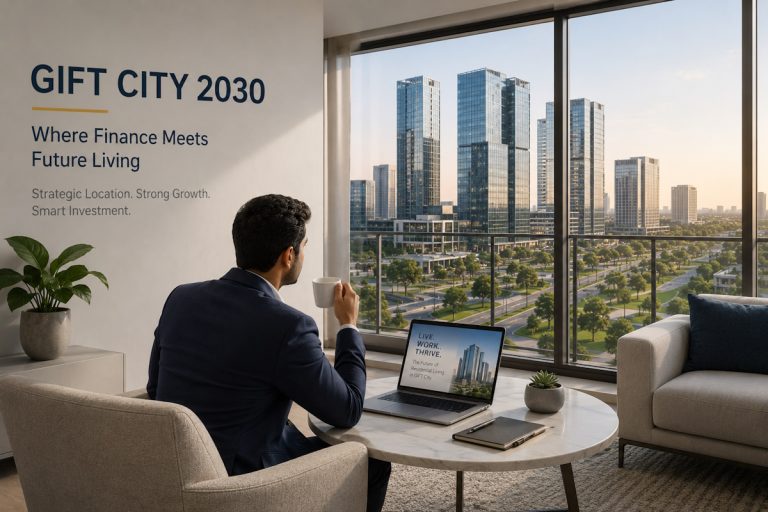

India’s economic landscape is shifting rapidly, with Gujarat International Finance Tec-City, widely known as GIFT City, serving as the focal point of this massive transformation. As global financial institutions, international universities, and tech giants establish their presence in this specialized economic zone, the demand for high-quality housing has reached unprecedented levels. For high-net-worth individuals, corporate executives, and non-resident Indian investors, this growth presents a critical decision. Should you purchase residential property in GIFT City to live in, or is it better utilized strictly as a high-performing asset in your investment portfolio?
Choosing between personal residence and investment requires a deep understanding of the unique regulatory, economic, and lifestyle factors governing this smart city. Unlike traditional Indian metropolitan markets, GIFT City operates under a distinct regulatory framework designed to mimic global financial hubs like Singapore, London, and Dubai. At Gift City Realty, we analyze these market dynamics daily to help buyers make informed decisions. This strategic guide will break down the structural realities of acquiring flats in GIFT City, helping you align your real estate acquisition with your long-term financial and lifestyle goals.
The Core Dilemma: Living vs. Investing in GIFT City
Buying a home is traditionally an emotional choice, but in a highly regulated financial district, logic and data must prevail. The primary driver for residential real estate in this micro-market is the massive mismatch between the rapidly growing commercial workforce and the available residential space. If you choose to reside here, you are opting for a highly structured, modern ecosystem. If you choose to invest, you are targeting a captive audience of high-earning financial and tech professionals who need premium apartments in GIFT City.
The Dual Identity of India’s First Operational Smart City
GIFT City is divided into two distinct zones, the domestic tariff area and the International Financial Services Centre special economic zone. This structural division plays a massive role in how residential real estate is consumed, valued, and regulated. For a resident, the distinction dictates your proximity to key social infrastructure like schools and clubs. For an investor, it defines the potential tenant pool and the tax treatment of rental income generated from residential projects GIFT City.
The SEZ and IFSC Growth Catalyst
The presence of global banks, foreign universities, and international stock exchanges inside the IFSC zone creates an upscale demographic. These organizations bring in expatriates, researchers, and highly compensated financial professionals who expect international living standards. Consequently, developers focusing on residential projects GIFT City are designing properties that meet global expectations, complete with smart home automation, concierge services, and high-end wellness amenities.
Evaluating GIFT City as a Primary Residence
Living in GIFT City offers an environment unlike any other urban center in India. The city has been planned and built from the ground up with a focus on sustainability, efficiency, and safety. However, relocating here means adapting to a highly planned, walk-to-work community that is still developing its retail and entertainment ecosystems. It is a decision that balances unparalleled administrative convenience against a transitioning social scene.
Quality of Life and Infrastructure Standards
For those considering flats in GIFT City for personal use, the infrastructure is the single biggest draw. The city features underground utility tunnels, meaning there are no overhead power lines, exposed cables, or dug-up roads for utility repairs. Water supply is continuous and potable directly from the tap, and power backup is institutional-grade, minimizing the daily disruptions that are common in other Indian cities.
Walk-to-Work Culture and Urban Planning
The primary lifestyle advantage of residing here is the drastic reduction of daily commute times. The urban design encourages a walk-to-work culture, where residential towers are positioned within walking or cycling distance of major commercial offices. This integration reduces daily stress, eliminates traffic headaches, and returns valuable hours to your day, which is a significant selling point for busy executives and business owners.
District Cooling and Automated Waste Management
Under the hood of this smart city are advanced municipal systems that improve daily living. The district cooling system replaces individual air conditioning units, delivering chilled water to buildings for energy-efficient climate control. Additionally, an automated vacuum waste collection system sucks garbage directly from chutes in residential buildings to a central processing plant, maintaining unmatched cleanliness across the development.
Evaluating Residential Property in GIFT City as an Investment
From an investment perspective, residential property in GIFT City presents a compelling case backed by structural undersupply. The commercial footprints of global giants like HSBC, Google, and various international universities are expanding rapidly, while residential supply is tightly controlled by development authorities. This creates a highly favorable demand-supply equation for early investors.
Rental Yield Dynamics and Tenant Profile
Traditional residential yields in Indian tier-one cities hover around two to three percent. In contrast, apartments in GIFT City are projected to deliver yields of four to five percent, driven by corporate leases and high-income professionals. These tenants prioritize safety, proximity to their offices, and premium amenities, making them willing to pay a premium for well-managed properties.
High-Income Professional Demand
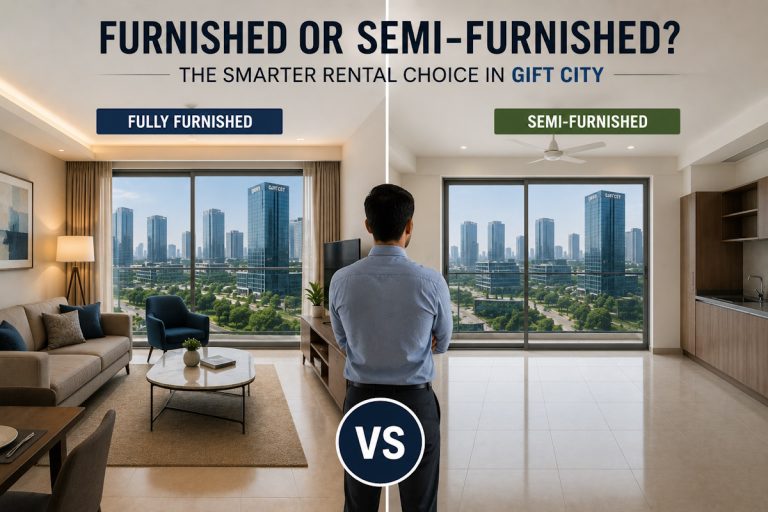
The tenant profile in this micro-market consists of investment bankers, tech leads, compliance officers, and international faculty. These individuals have strong housing allowances and demand hassle-free living. Investors who furnish their apartments to international standards can command superior rental rates and experience virtually zero vacancy periods.
Capital Appreciation Potential and Supply Constraints
Capital appreciation is driven by the strict land allocation policies of the GIFT Urban Development Authority. Because developers must meet stringent qualifying criteria and financial clearances, there is no risk of sudden, uncontrolled supply gluts that typically depress property prices in other suburban developments. This controlled environment ensures steady long-term capital growth as the commercial districts reach full occupancy.
Key Factors Influencing Your Purchasing Decision
Before signing a purchase agreement, there are several regulatory and operational nuances that every buyer must evaluate. Understanding these variables prevents costly mistakes and ensures your asset performs according to your expectations, whether you are living in it or leasing it out.
Co-existence of SEZ and Non-SEZ Regulations
Originally, residential properties within GIFT City had strict restrictions on who could buy or reside in them, often limiting occupancy to those employed within the zone. However, recent regulatory easing has opened up the residential sector, allowing broader ownership and leasing structures. It is crucial to verify the specific zoning regulations of the project you are targeting, as this affects your exit strategy and resale liquidity.
Comparing Apartments in GIFT City: Key Project Typologies
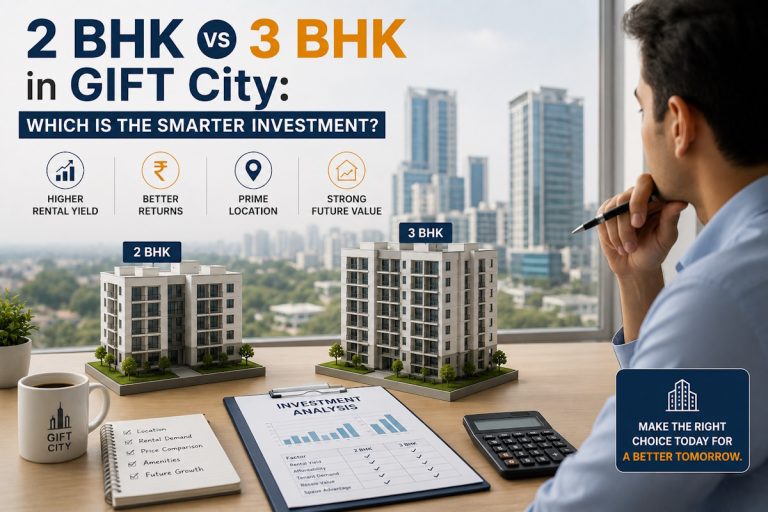
The market features a mix of studio apartments, standard multi-bedroom units, and ultra-luxury penthouses. Studio units and single-bedroom configurations are highly favored by institutional investors looking for maximum rental yield, as they cater to single professionals or weekly commuters. Conversely, spacious three- and four-bedroom apartments attract senior management and families, offering better long-term capital appreciation but lower initial yield percentages.
Making the Decision: A Strategic Framework
Your choice to buy for living or investment should align with your personal horizon and risk appetite. If you are a business owner or corporate executive working inside the zone, buying to live makes immense practical sense, saving hundreds of commuting hours and offering a world-class environment for your family. The lifestyle benefits, combined with steady underlying asset appreciation, offer a balanced return.
On the other hand, if you are an NRI or a domestic investor looking to park capital in a high-growth corridor, buying strictly for investment is highly lucrative. In this scenario, your focus should be on smaller, high-yield layouts that are easy to lease and maintain. By leveraging professional property management services, you can enjoy a completely hands-off source of regular rental income while capital values compound. At Gift City Realty, we guide clients through this selection process, ensuring every acquisition is backed by solid data and clear strategic intent.
Frequently Asked Questions
1. Can non-residents and NRIs buy residential property in GIFT City?
Yes, NRIs and Foreign Portfolio Investors can acquire residential property in GIFT City. The transaction processes are streamlined, and the properties can be leased out to professionals working inside the zone, making it a highly attractive offshore investment option.
2. What are the average rental yields for apartments in GIFT City?
Rental yields in this special zone are currently tracking between four and five percent, which is significantly higher than the average residential yields of two to three percent found in surrounding metros like Ahmedabad or Mumbai.
3. Are there schools and hospitals inside GIFT City for residents?
Yes, GIFT City is designed as a self-sustainable smart city. It features international schools, medical facilities, retail zones, and recreational clubs, ensuring that families residing here have access to all essential social infrastructure without leaving the city limits.
4. How does the district cooling system affect utility bills?
The centralized district cooling system is highly efficient, reducing energy consumption for air conditioning by up to thirty to forty percent. This translates to lower overall electricity bills for residents compared to traditional split or window air conditioning systems.