Institutional expansion, international banking operations, and progressive regulatory frameworks have catalyzed rapid workforce migration into India’s premier international financial services centre. As multinational corporations, fintech innovators, and global financial entities scale their presence, the requirement for premium housing has shifted from an emerging need into an urgent priority. Understanding the dynamics of gift city residential flats rent is essential for any investor seeking to deploy capital effectively in this high-growth ecosystem.
For high-net-worth individuals, NRIs, and institutional buyers, residential assets in GIFT City represent a distinct asset class compared to standard metropolitan real estate. The convergence of strict zoning, high-income corporate professionals, and structured urban planning creates unique rental yields and steady occupancy profiles. Evaluating these rental apartments requires looking beyond conventional metrics and analyzing the intersection of tenant demographics, unit configurations, and sustained corporate growth.
Macro Fundamentals Driving GIFT City Flats for Rent
The macroeconomic environment within GIFT City directly dictates residential leasing momentum. Unlike conventional suburban markets that rely on speculative end-user demand, GIFT City operates on an employment-led real estate model where commercial space absorption precedes residential occupancy.
Corporate Expansion and Expat Migration
The continuous inflow of talent across international banking units, global in-house capability centers, and alternative investment funds has established a deep base of high-earning professionals. These individuals prioritize living within or immediately adjacent to the financial district to minimize commute times and access integrated infrastructure. This influx has directly elevated corporate leasing demand in GIFT City, making institutional-grade rental units highly sought after.
Key Corporate Tenant Profiles
Tenants seeking rental apartments in GIFT City generally fall into three distinct categories:
- Senior Executives and C-Suite Professionals: Demanding premium, fully furnished three and four-bedroom apartments with high-end amenities and concierge services.
- Mid-Level Management and Financial Analysts: Typically seeking well-appointed one and two-bedroom units with modern finishes and proximity to primary commercial towers.
- Consultants and Short-Term Assignees: Prioritizing plug-and-play serviced residences with flexible leasing tenures and managed utility packages.
The Infrastructure and Walk-to-Work Advantage
GIFT City’s unique urban planning framework, featuring district cooling systems, automated waste collection, and utility tunnels, offers a lifestyle standard that is difficult to replicate in surrounding Ahmedabad or Gandhinagar micro-markets. The walk-to-work culture is a decisive factor for corporate tenants who value efficiency, significantly reducing vacancy rates for well-positioned residential developments.
Rental Yield Economics and Cash Flow Performance
When assessing residential property performance, investors must differentiate between gross paper yields and actual net distributable cash flow. Rental performance in this international financial hub outpaces standard Indian Tier-1 residential markets due to a persistent demand-supply imbalance.
Comparing Net Rental Yields Against Indian Metro Averages
Traditional residential investments across Mumbai, Delhi NCR, or Bengaluru rarely generate gross rental yields higher than 2.5% to 3.5%. In contrast, properties optimized for GIFT City residential rent routinely achieve gross yields ranging from 4.5% to 6.0%, supported by strong corporate housing budgets and limited ready residential inventory.
Factors Influencing Rental Yield Longevity
Yield sustainability is supported by several critical drivers that real estate investors should track closely:
- Pre-Leased Institutional Contracts: Many corporations negotiate multi-year residential block leases for their relocating teams, ensuring zero vacancy downtime for landlords.
- Consistent Annual Rental Escalations: Strong demand allows property owners to build standard 5% to 7% annual rental escalations into lease agreements.
- Lower Maintenance Downtime: Modern infrastructure and centralized utility systems reduce unplanned capital expenditure and ongoing maintenance costs.
A comprehensive examination of historical performance shows that yield compression is unlikely in the near term, as highlighted in current GIFT City rental yield trends that reflect resilient tenant retention rates.
Unit Configuration and Furnishing Strategies for Higher Yields
Optimizing rental income requires aligning unit floor plans and interior specifications with target tenant preferences. Not all apartment layouts deliver identical returns, and choosing the wrong configuration can result in extended vacancy periods.
Furnished vs. Semi-Furnished Rental Premium
The choice between furnishing levels significantly impacts both initial capital outlay and gross annual rental returns. Corporate expatriates and financial professionals overwhelmingly prefer move-in ready residences, creating a distinct rental premium for turnkey homes.
Return on Investment for Furnishing Packages
Equipping an apartment with modern, executive-grade furniture, consumer durables, and high-speed connectivity typically commands a 25% to 35% rental premium over unfurnished units. When analyzing furnished vs semi-furnished flats in GIFT City, investors usually discover that the additional fit-out capital expenditure is fully recovered within 24 to 30 months of active leasing.
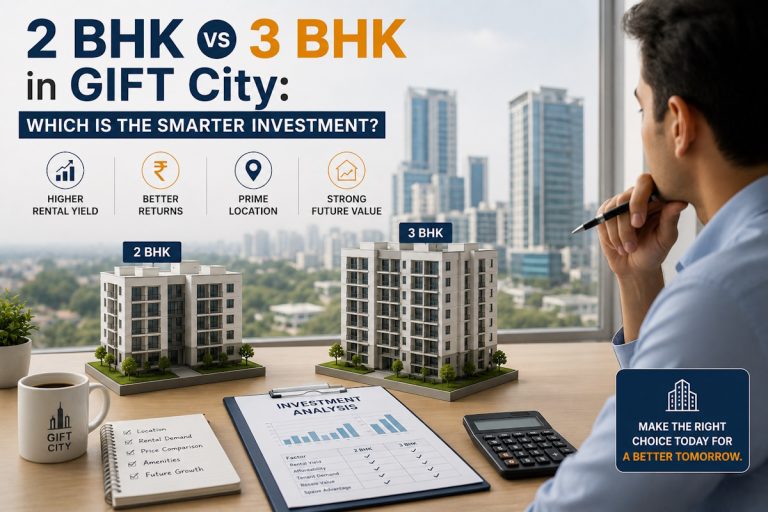
Configuration Breakdown: 1BHK, 2BHK, and 3BHK Performance
Selecting the right unit mix is vital for portfolio balance and ongoing liquidity:
- 1BHK and Studio Apartments: Yield the highest percentage returns on invested capital and appeal strongly to young single professionals and visiting consultants.
- 2BHK Residences: Represent the highest absorption volume, attracting dual-income couples and senior analysts seeking home office flexibility.
- 3BHK and 4BHK Premium Flats: Generate the highest absolute monthly cash flow and secure longer-term family tenancies with higher lease stability.
Targeting Corporate Rental Flats GIFT City
Corporate accounts prioritize properties managed by professional entities or responsive landlords who provide proper invoicing and GST compliance. Investors who structure their leases to accommodate corporate governance protocols gain direct access to higher-tier, non-defaulting tenant pools.
Regulatory, SEZ, and DTA Considerations for Landlords
Investing in rental real estate within GIFT City requires clarity on regulatory boundaries. The master plan divides the zone into the Special Economic Zone (SEZ/IFSC) and the Domestic Tariff Area (DTA), each carrying distinct occupancy and operational rules.
Residential Leasing Within the SEZ vs. DTA
Historically, residential developments were primarily concentrated in the DTA, allowing unrestricted occupancy for professionals working anywhere in the region. Recent regulatory rationalization allows seamless residential development across both zones, expanding the addressable tenant base.
Compliance Essentials for NRI and Institutional Landlords
Investors must navigate several operational and tax considerations when managing rental properties in GIFT City:
- TDS Deductions and NRO Accounts: Non-resident landlords must ensure proper Tax Deducted at Source (TDS) structures are in place for rental remittances.
- Corporate Lease Agreements: Drafting standardized, legally compliant lease deeds with clear clauses on utility metering, maintenance, and lock-in periods.
- Property Management Integration: Engaging vetted local advisors such as Gift City Realty to oversee tenant onboarding, rent collection, and physical unit upkeep.
Evaluating Best Options: What Investors Should Ask Before Buying
Navigating the expanding catalog of residential towers requires a rigorous due diligence checklist. Capital appreciation and rental yields vary significantly based on developer execution, building amenities, and property handover timelines.
Critical Due Diligence Checkpoints
Before committing capital to buy-to-let residential assets, evaluate the following parameters:
- Developer Delivery Track Record: Has the developer delivered institutional-quality construction with active facility management?
- Dedicated Rental Management Desk: Does the project offer an in-house leasing desk or third-party property management partnerships?
- Operational Infrastructure: Is the building fully integrated with the city’s district cooling system and automated waste management?
- True Net Yield Modeling: Have you accounted for society maintenance, property management fees, property taxes, and realistic vacancy reserves?
Common Investment Pitfalls to Avoid
A frequent error among first-time investors is purchasing overly large luxury formats in towers that lack corporate-grade facility management. Larger units often have longer turnaround times between leases, whereas compact, well-located two-bedroom units experience virtually continuous occupancy.
Strategic Outlook for GIFT City Residential Rentals
The long-term outlook for residential leasing in GIFT City remains structurally positive. As commercial office towers reach complete utilization and more international universities, foreign banks, and multinational headquarters open their doors, demand for quality housing within the zone will outpace completions.
For investors focused on recurring cash flows, capital preservation, and steady appreciation, acquiring residential assets optimized for corporate leasing offers an attractive risk-adjusted opportunity. Positioning your portfolio with the right unit sizes, complete furnishing packages, and professional property management ensures high tenant demand and durable yields throughout market cycles.
Frequently Asked Questions
1. What is the average rental yield for residential flats in GIFT City?
Gross rental yields in GIFT City typically range from 4.5% to 6.0%, which is significantly higher than the 2.5% to 3.5% average found in most Indian metropolitan cities. Yields vary based on unit configuration, furnishing level, and building management quality.
2. Do corporate tenants prefer furnished or unfurnished apartments?
Corporate tenants and relocating professionals overwhelmingly prefer fully furnished, plug-and-play apartments. Fully furnished units command a 25% to 35% rental premium and experience shorter vacancy cycles compared to unfurnished alternatives.
3. Can NRIs easily invest in rental properties in GIFT City?
Yes, NRIs can seamlessly invest in GIFT City residential real estate. Transactions can be routed through regular banking channels, and rental income can be credited to NRO or NRE accounts subject to standard repatriation rules and applicable tax withholding.
4. Which apartment configuration generates the highest rental demand?
One-bedroom and two-bedroom apartments experience the highest rental turnover and volume demand, driven by financial analysts, IT professionals, and mid-level management. Three-bedroom apartments are favored for longer tenures by senior executives and families.
5. How does corporate leasing differ from individual tenancy in GIFT City?
Corporate leasing involves the tenant’s employer executing the lease contract directly with the landlord. This model provides superior credit security, timely rental disbursements, structured multi-year lock-ins, and generally superior property upkeep.