If you are comparing GIFT City vs smart cities across India, you are probably not looking for slogans. You want to know where capital actually feels safer, where demand is real, and where rules are clear enough to plan five to ten years ahead.
Most buyers who reach this stage have already looked at Dholera, Amaravati, Naya Raipur, maybe even Gift vs Lavasa type comparisons. On paper, many of these places look similar. Planned infrastructure. Big government backing. Long-term vision.
On the ground, the experience is very different.
This piece is meant to help you sort that out without marketing noise. No future fantasies. Just how these cities work for investors in real life.
What “Smart City” Really Means for an Investor
India’s smart city label is broad. It covers very different models.
Some are retrofits of existing cities. Others are greenfield developments built from scratch. Some focus on governance and digital services. Others lean on industrial corridors.
From an investor’s side, the smart city tag by itself does not answer the questions that matter.
Will people actually work there in large numbers
Will companies commit capital long-term
Will rental demand show up before resale demand
Will rules stay stable across market cycles
This is where most comparisons fall apart.
GIFT City in Practical Terms
GIFT City is not trying to be everything at once.
It is a financial and services hub first. Residential, retail, hospitality, and social infrastructure follow that core purpose.
The anchor is the IFSC. That changes everything.
Banks, global exchanges, fintech firms, fund managers, insurance players, and professional services operate under a separate regulatory framework. That framework is designed to compete with Singapore and Dubai, not with other Indian cities.
So demand does not rely only on population growth or manufacturing jobs. It relies on financial activity that already exists and is expanding.
This single difference puts GIFT City in a different category from most smart cities.
GIFT City vs Dholera: The Most Common Comparison
When people search GIFT City vs Dholera, they are usually comparing two Gujarat-backed projects with strong government support.
The similarities mostly end there.
Dholera at a Ground Level
Dholera is an industrial smart city. Its focus is manufacturing, logistics, electronics, and large land parcels.
That attracts a very different type of investor.
Most Dholera buyers are:
- Land investors
- Long-horizon speculators
- Industrial players planning future factories
Residential demand in Dholera depends on factories being operational, workers relocating, and supply chains forming. That takes time. Often decades.
Rental demand comes late in that cycle.
GIFT City at a Ground Level
GIFT City started with offices. Not factories.
People working in IFSC banks, exchanges, IT services, legal firms, and consulting need housing immediately. Many are mid to senior professionals. Many are expats or returning NRIs.
That creates early-stage rental demand.
From a residential investor’s view, this is a big gap between the two cities.
If your capital is locked in land waiting for industrial activity, the risk profile is very different from owning an apartment where tenants already exist.
Why Investors Say GIFT Feels More “Visible”
One phrase that comes up often is visibility.
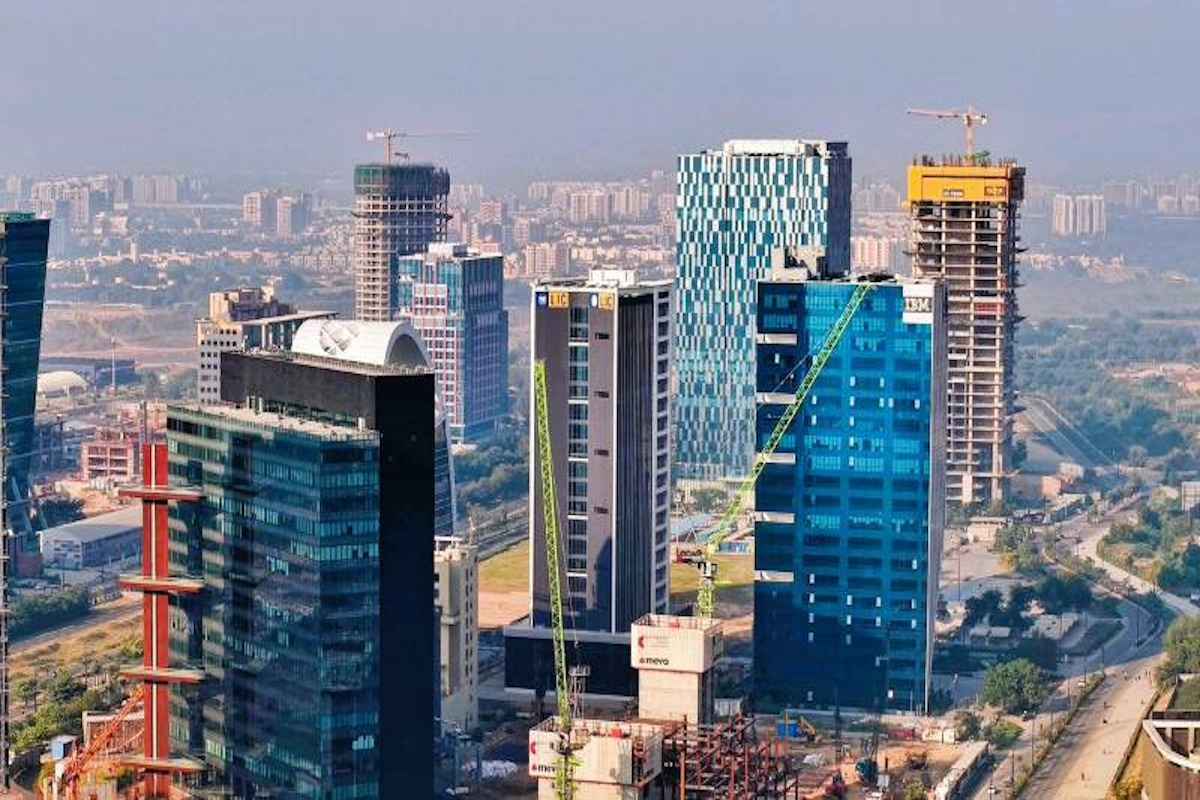
In GIFT City, activity is easy to see. Offices are occupied. Employees commute daily. Events happen. New global names announce operations.
In many other smart cities, progress is real but spread out. Infrastructure first. Activity later.
For investors, visibility reduces uncertainty. You can walk the district and understand who is working there and why.
That matters more than glossy master plans.
IFSC vs SEZ vs Non-SEZ: Why This Matters in Comparison
This is where GIFT City pulls away from most smart cities.
IFSC Advantage
The IFSC is a regulated financial zone with tax structures that do not exist elsewhere in India.
From an investor’s lens, this creates:
- Higher paying jobs
- International tenant profiles
- Stable corporate presence
- Longer leasing cycles
Most smart cities do not have an IFSC equivalent.
SEZ and Non-SEZ Balance
GIFT City also has SEZ and Non-SEZ zones. Residential is Non-SEZ.
This matters because:
- End users can legally live there
- Domestic rentals are allowed
- Resale is simpler than SEZ residential models
Some smart cities struggle here. Either residential comes too early or regulatory clarity comes too late.
Rental Demand: The Quiet Decider
Many buyers focus on appreciation. In early-stage cities, rental demand is the real test.
In GIFT City:
- Offices came first
- Employees followed
- Housing demand followed that
That sequence is investor-friendly.
Rental yields vary by project, configuration, and timing. Numbers move. What stays consistent is tenant profile quality.
Compare this with other smart cities where:
- Housing launches come early
- Jobs come later
- Investors wait years for stable tenants
Rental income during holding years changes your entire risk calculation.
Liquidity and Exit Reality
Liquidity is rarely discussed honestly in smart city investing.
In many projects, resale depends on new buyers entering at higher prices. End-user demand may still be thin.
GIFT City has two exit paths:
- Another investor betting on financial growth
- An end-user working in IFSC or nearby Ahmedabad-Gandhinagar belt
That second category is missing in many other smart cities.
It does not make exits easy. It makes them possible.
Appreciation: Expectations Without Fantasy
No smart city guarantees price growth.
What differs is the reason behind appreciation.
In industrial cities, appreciation depends on:
- Land absorption
- Factory operations
- Long-term migration
In GIFT City, appreciation is tied to:
- Office absorption
- Corporate expansion
- Salary growth in finance and tech roles
These cycles tend to be steadier, not explosive.
If you are expecting fast doubling, GIFT City may disappoint. If you want measured growth with rental support, it fits better.
Tax Structure: Why GIFT Attracts NRIs
NRIs often shortlist GIFT City because of clarity.
Tax treatment in IFSC-linked activity is well-defined. Compliance processes are structured. Many professionals working there are paid in foreign currency-linked setups.
This attracts a global workforce.
Other smart cities do not offer this layer. Their tax story is mostly standard Indian real estate rules.
For NRIs comparing best smart city to invest in India, this clarity often becomes the deciding factor.
What GIFT City Is Not Good For
This matters as much as advantages.
GIFT City is not ideal if:
- You want low entry pricing like raw land plays
- You want short-term speculative spikes
- You prefer independent villas or plotted development
- You are uncomfortable with regulatory-driven markets
Some investors are better suited to Dholera or similar cities. Especially those comfortable waiting long cycles with land holdings.
Risk Areas Buyers Often Miss
Even in GIFT City, risks exist.
Supply can rise faster than absorption if too many residential projects launch together.
Rental yields depend heavily on unit size and layout. Oversized apartments may struggle.
Policy support is strong now, but markets still react to global finance cycles.
Knowing these does not make GIFT risky. It makes expectations realistic.
So Why Do Investors Lean Toward GIFT City?
When comparing GIFT City vs smart cities, the preference often comes down to three things.
Jobs already exist
Rental demand shows up early
Regulatory structure is clear
Not every investor needs that combination. Many do.
That is why GIFT City attracts a specific buyer profile. Professionals. NRIs. Yield-aware investors. People planning five to seven years, not fifteen.
The Real Question You Should Ask Yourself
Instead of asking which is the best smart city to invest in India, ask this.
Do you want to invest where economic activity is already visible, or where it is expected later?
Neither is wrong. They suit different temperaments.
GIFT City suits investors who want structure, income support, and clarity.
Cities like Dholera suit investors comfortable with patience, land cycles, and delayed rewards.
Once you answer that honestly, the comparison becomes much simpler.
And the decision feels less stressful.