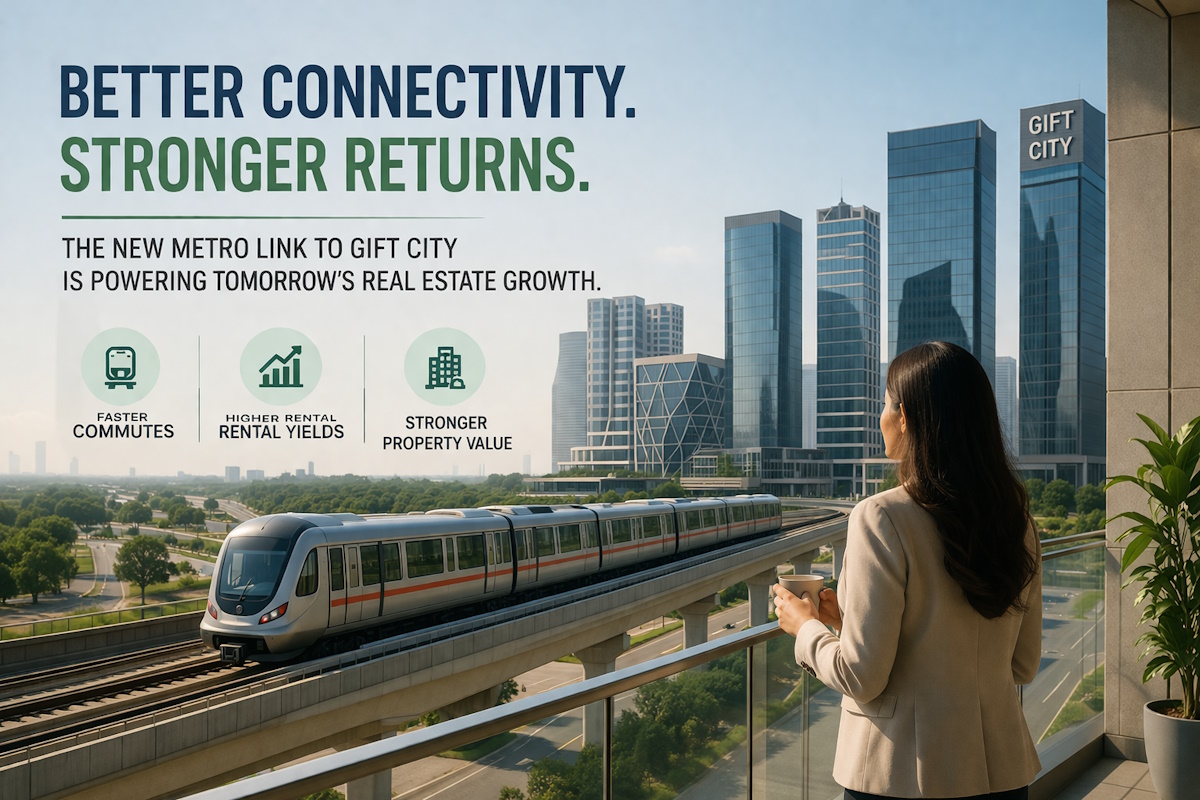
Infrastructure development has always been the most reliable leading indicator for real estate value. In the context of GIFT City, the transition from a conceptual financial hub to an operational international ecosystem is being accelerated by the Ahmedabad Metro Phase 2 GIFT City expansion. For the sophisticated investor, the 3.3km extension from Shahpur to the heart of GIFT City is not merely a transport update. It is a fundamental shift in the accessibility and liquidity of the local real estate market, directly influencing the demand for both premium residential and commercial spaces.
The core of any successful real estate investment in a specialized economic zone like GIFT City lies in the ability to attract and retain high-value talent. As the International Financial Services Centre (IFSC) continues to draw global banks, hedge funds, and fintech giants, the workforce requirement for seamless connectivity becomes paramount. This specific metro link bridges the gap between the residential corridors of Ahmedabad and the high-density employment zones of GIFT City, creating a direct corridor for rental growth and long-term capital gains. Evaluating this infrastructure milestone requires a deep dive into how connectivity correlates with the yield expectations of institutional and private buyers alike.
The Strategic Significance of the Ahmedabad Metro Phase 2 GIFT City expansion
The Ahmedabad Metro Phase 2 GIFT City expansion represents the final piece of the connectivity puzzle for Gujarat’s flagship smart city. While the first phase established the core network within Ahmedabad, Phase 2 focuses on regional integration, specifically targeting the high-growth corridor toward Gandhinagar and GIFT City. For investors, the 3.3km spur line is the most critical segment of this expansion because it terminates within the GIFT City boundaries, providing “doorstep” access to the SEZ and non-SEZ zones.
GIFT City to Shahpur connectivity: Bridging the Urban Divide
The GIFT City to Shahpur connectivity serves as the primary artery for the daily migration of professionals. Shahpur acts as a vital interchange, linking the specialized financial hub to the broader Ahmedabad metro network. This means a professional living in West Ahmedabad or the city center can reach their office in the IFSC without the unpredictability of road traffic. From an investment standpoint, this reliability increases the “commutable radius” of GIFT City, making it a viable primary workplace for a much larger demographic of the Gujarat workforce.
Impact on Workforce Mobility and Retention
Corporate occupiers in GIFT City prioritize locations that minimize employee fatigue. When a project is situated near a metro station, it commands a premium because it offers a predictable, climate-controlled commute. This mobility is a major driver for companies deciding to lease large office blocks, which in turn secures the rental pipeline for commercial property owners. If you are evaluating a commercial investment, proximity to the metro entry points should be a top-tier checklist item.
Why the Metro Extension Directs Rental Yield Trends
Rental yields in emerging financial districts are rarely driven by square footage alone. Instead, they are driven by the “convenience premium.” In GIFT City, where the climate and the scale of the development make walking long distances impractical for much of the year, the Ahmedabad Metro Phase 2 GIFT City expansion becomes the primary mode of internal and external transit. Data from similar global hubs, such as London’s Canary Wharf or Dubai’s DIFC, shows that residential units within a 500-meter radius of a metro station consistently yield 15 to 20 percent higher rents than those further away.
Analyzing the Rental Premium for IFSC Professionals
The target tenant profile in GIFT City consists of high-earning CXOs, expatriates, and specialized financial analysts. These individuals value time over almost any other commodity. By utilizing the GIFT City to Shahpur connectivity, these tenants can bypass the congestion of the Ahmedabad-Gandhinagar highway. As an investor, you are not just buying a property; you are buying a slice of a high-efficiency lifestyle that the metro enables. This efficiency translates directly into lower vacancy rates and the ability to command premium monthly rentals.
The Shift from Speculative to Utility-Driven Demand
Early-stage investment in GIFT City was largely speculative, based on the long-term vision of the Gujarat government. However, as the GMRC GIFT City updates confirm that the metro line is nearing operational status, the demand shift is moving toward utility. Tenants are now looking for homes and offices that are ready to benefit from this connectivity. This transition typically marks the end of the highest volatility and the beginning of steady, utility-driven rental growth.
Property Appreciation Near GIFT City Metro: The Capital Gains Angle
While rental yields provide the cash flow, property appreciation near GIFT City metro stations provides the long-term wealth creation. Historically, the announcement of a metro line triggers the first jump in prices, but the actual commissioning of the line triggers the second, often more substantial, rise. We are currently in the window between construction and full operational integration, which is often considered the “sweet spot” for entry.
The “Station-Effect” on Land and Built-up Values
In GIFT City, land is a finite resource managed by the authorities. As the Ahmedabad Metro Phase 2 GIFT City expansion nears completion, the parcels of land adjacent to the stations become the most coveted. This scarcity drives up the valuation of existing buildings. For an investor, this means the replacement cost of your asset is constantly rising, which provides a strong floor for your property’s market value. The GMRC GIFT City updates serve as a roadmap for where this value will consolidate next.
Infrastructure as a Risk Mitigation Tool
One of the primary risks in real estate is the “ghost town” effect, where buildings are completed but the area remains empty. The metro extension mitigates this risk by ensuring a steady flow of people. When an area is highly accessible, it attracts retail, dining, and service industries, creating a self-sustaining ecosystem. This vibrancy is what ensures that your property appreciation near GIFT City metro is not just a bubble, but a reflection of genuine economic activity.
GMRC GIFT City Updates: Navigating the Investment Timeline
Staying informed about the GMRC GIFT City updates is essential for timing your exit or entry. The Gujarat Metro Rail Corporation (GMRC) has been methodical in its rollout, ensuring that the Phase 2 expansion aligns with the occupancy milestones of the GIFT City towers. Monitoring these updates allows investors to stay ahead of the general market sentiment.
Construction Milestones and Market Sentiment
Every time a new milestone is reached, such as the completion of the bridge over the Sabarmati or the electrification of the 3.3km spur, market confidence ticks upward. These updates often precede a spike in transaction volume. For the institutional investor, these technical updates are a signal to finalize capital allocations before the next price revision by developers.
Avoiding the “Wait and See” Trap
A common mistake among retail investors is waiting for the metro to be fully operational before buying. By that time, the “connectivity premium” is already priced in. Professional investors at Gift City Realty often advise clients to look at the GMRC GIFT City updates as a countdown. Once the line is operational, the opportunity for significant capital appreciation on entry diminishes, and the focus shifts entirely to yield management.
Comparative Analysis: Commercial vs. Residential Yields
The 3.3km extension affects different asset classes in unique ways. While both benefit from the Ahmedabad Metro Phase 2 GIFT City expansion, the nature of the ROI differs. Understanding these nuances is key to aligning your investment with your financial goals, whether you seek immediate cash flow or long-term wealth preservation.
Commercial Assets: The Corporate Magnet
Commercial properties near the metro benefit from higher occupancy rates. Large multinational corporations (MNCs) often have strict internal policies regarding employee safety and transport. A metro-connected office building automatically ticks these boxes, making it easier for the developer to secure long-term leases with “A-grade” tenants. This stability is the hallmark of commercial investment in the IFSC zone.
Residential Assets: The Lifestyle Premium
On the residential side, the GIFT City to Shahpur connectivity appeals to the younger, tech-savvy workforce that prefers not to own a car or deal with the hassles of parking. These tenants are willing to pay a premium for a “work-live-play” environment where the metro station is an extension of their living room. This lifestyle demand is what drives the high rental yields for studio and 2-BHK apartments in the vicinity.
Strategic Advice for GIFT City Investors
Investing in a project because it is “near the metro” is a good start, but a sophisticated strategy goes deeper. You must evaluate the specific pedestrian access from the station to the building, the quality of the developer, and the future master plan of the surrounding blocks. The Ahmedabad Metro Phase 2 GIFT City expansion is a tide that lifts all boats, but the strongest, most well-positioned boats will see the highest gains.
Avoid the pitfall of investing in projects that are technically near the metro but have poor last-mile walking infrastructure. In a professional hub like GIFT City, the transition from the train to the office desk should be seamless. Projects that integrate with the metro through covered walkways or shared plazas will always outperform those that require a secondary shuttle or a long walk in the sun.
Furthermore, keep a close watch on the regulatory environment. The benefits of the IFSC and the tax incentives for units within GIFT City work in tandem with the physical infrastructure. When you combine the tax-efficient nature of the investment with the physical utility of the 3.3km extension, the result is a robust investment vehicle that is difficult to replicate elsewhere in India.
For those ready to move from analysis to action, the window for capturing the infrastructure-led growth in GIFT City is narrowing. At Gift City Realty, the focus is on identifying assets that capitalize on these structural shifts before they become common knowledge in the broader market.
FAQs
1. How does the metro extension specifically impact rental yields in GIFT City?
The metro extension increases rental yields by expanding the tenant pool. It allows professionals from across Ahmedabad to commute easily, increasing demand for office space. For residential units, it commands a “convenience premium,” as tenants are willing to pay more for a predictable, traffic-free commute to the IFSC.
2. Is it better to invest in residential or commercial property near the metro?
Both have advantages. Commercial property offers stability through long-term corporate leases and is highly sensitive to the GMRC GIFT City updates. Residential property often sees higher percentage growth in rental yields due to the high demand for modern housing among the incoming workforce.
3. When is the Ahmedabad Metro Phase 2 GIFT City expansion expected to be fully operational?
The project is moving through its final stages of construction and testing. While specific dates can shift, the GMRC GIFT City updates indicate that the line is a priority for the state government, with operations expected to commence in phases over the coming months. Smart investors typically enter the market before the official ribbon-cutting.
4. Will property appreciation near GIFT City metro continue after the line is opened?
While the steepest appreciation often happens during the construction phase, price growth continues after opening as the “utility value” is proven. Once the metro is operational and the area becomes more vibrant with retail and footfall, the asset becomes more liquid and attractive to institutional buyers, supporting further price growth.
5. Does the GIFT City to Shahpur connectivity affect properties outside of GIFT City?
Yes, the connectivity benefits the entire corridor. However, the highest ROI remains within GIFT City due to the unique tax benefits, the IFSC status, and the concentrated demand from high-paying employers which cannot be replicated in the surrounding suburban areas.