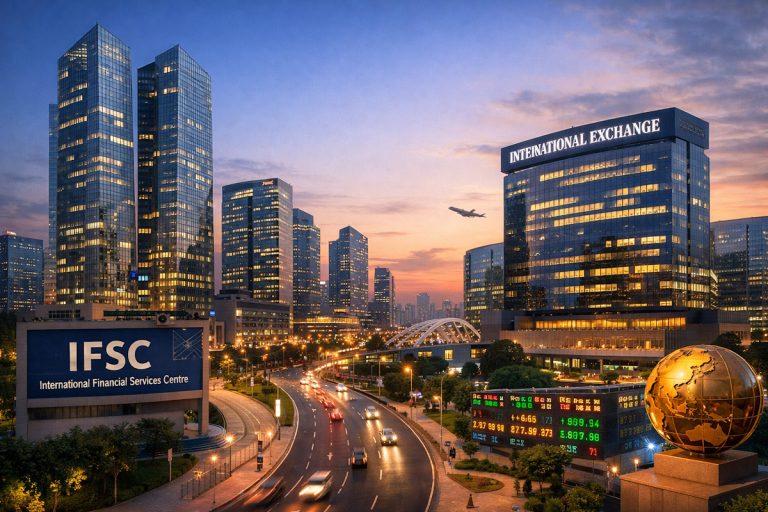

If you are evaluating property in GIFT City, you are not just comparing locations. You are comparing regulatory systems. This is where most buyers pause or should pause.
IFSC real estate rules influence what you can buy, how it can be used, who can lease it, and how predictable returns really are. These rules are not optional, and they are not cosmetic. They shape the entire investment outcome.
Before thinking about rental yield or appreciation, you need to understand how IFSC regulations work on the ground.
What Makes IFSC Real Estate Different From Normal Commercial Property
An International Financial Services Centre is a regulated financial zone, not a typical business district.
Inside GIFT City, IFSC areas operate under a separate financial framework. Currency rules are different. Tax treatment for operating entities is different. Oversight comes from a single regulator instead of multiple bodies.
For real estate investors, this creates a very specific environment.
Property inside IFSC is built to serve regulated financial institutions. Demand does not come from the open market. It comes from approved entities only.
This one point changes how you should think about risk, liquidity, and usage.
Understanding the Role of the IFSC Authority in GIFT City
The IFSC authority in GIFT City controls who can operate inside the IFSC zone and under what conditions.
It does not approve your building plan. It does not issue completion certificates. Those remain with local authorities.
What it does control is far more important for investors.
Only IFSC-registered entities can legally operate from IFSC-designated buildings. That means your tenant eligibility is determined by regulation, not market preference.
If a building is not IFSC-compliant, an IFSC entity cannot lease space there, even if the building looks premium.
This is why zone verification matters more than brand names.
IFSC Zone, SEZ Zone, and Non-SEZ Zone Explained Simply
GIFT City is not one uniform market. It is divided into zones, and each zone follows different rules.
IFSC Zone
This is the financial core. Offices here are meant only for IFSC-registered entities. Usage is tightly controlled. Residential presence is minimal.
SEZ Zone
This follows SEZ regulations. IT services, global support functions, and export-oriented businesses operate here. Rules and tax benefits differ from IFSC.
Non-SEZ Zone
This is where most residential projects sit. These areas function like standard urban developments, though demand is driven by IFSC and SEZ employment.
If you are buying residential property, IFSC real estate rules do not apply directly. If you are buying commercial property, zone classification is non-negotiable.
Always confirm which zone the property belongs to.
What IFSC Compliance Means for Commercial Property Buyers
IFSC compliance is not a marketing term. It has real consequences.
For a building to be usable by IFSC entities, it must meet specific operational standards. These relate to infrastructure reliability, data connectivity, access controls, and business continuity.
For you as an investor, this affects three things.
First, who can lease your property. The tenant pool is smaller but defined.
Second, how leases are structured. Long-term leases are common. Escalations are structured. Early exits are rare.
Third, what you cannot do. You cannot freely convert IFSC offices into co-working spaces or lease to non-IFSC businesses.
If predictability matters more to you than flexibility, this structure can work well.
Residential Property and IFSC Rules: Where the Link Ends
Residential projects in GIFT City are mostly in Non-SEZ areas.
From a legal standpoint, they behave like normal residential property. Ownership, resale, and leasing follow standard rules.
So where does IFSC matter for residential investors?
It shapes the tenant profile.
Most tenants work in banks, exchanges, fintech firms, and global service companies inside GIFT City. This creates stable but limited demand.
Rents are practical, not aggressive. Vacancy cycles move with hiring trends.
If you are buying residential property expecting city-wide resale demand, expectations need adjustment.
How IFSC Real Estate Rules Affect Rental Income and Taxes
This is where assumptions often go wrong.
Owning property inside IFSC does not make your rental income tax-free.
IFSC tax benefits apply to operating financial entities, not automatically to landlords.
As a property owner:
- Rental income is taxed under normal income tax rules
- Commercial property allows depreciation benefits
- Capital gains follow standard holding-period rules
NRIs also need clarity here. IFSC does not override FEMA rules for real estate ownership or repatriation.
Tax planning matters, but it must be based on real provisions, not assumptions.
Stamp Duty, GST, and Holding Costs You Should Expect
Commercial offices attract GST at purchase. Input credit eligibility depends on how the property is leased and structured.
Stamp duty follows Gujarat state rules. Incentives have existed at times, but these are policy-driven and subject to change.
Holding costs include maintenance charges, property tax, and compliance-related expenses, especially for larger office units.
These costs are manageable, but they must be factored realistically.
Liquidity and Exit Reality in IFSC Property
Liquidity behaves differently here.
IFSC office assets attract a narrow buyer base. Resale usually targets institutions or high-net-worth investors.
Exit timelines can be longer than regular commercial property.
Residential units are easier to sell, but demand is employment-linked. Slower hiring phases can stretch resale cycles.
This is not a flip market. It rewards investors who are comfortable holding.
Risks Most Buyers Overlook
Regulations can evolve. Changes usually support financial institutions first.
Demand concentration is real. Your rental income depends on one economic ecosystem.
Usage flexibility is limited for IFSC offices.
And not every project marketed as “IFSC aligned” is actually inside the IFSC zone.
Verification beats assumption every time.
Who Should Avoid IFSC-Linked Real Estate
If you want broad-market liquidity, this may not suit you.
If you prefer flexible usage and short-term leasing, restrictions will feel heavy.
If your plan depends on quick appreciation, patience will be tested.
IFSC property works best for investors who value structure, visibility, and regulatory clarity.
How to Decide If IFSC Property Fits Your Goals
Before committing, ask yourself:
Am I buying for income or resale?
Do I clearly understand the zone and its rules?
Are my return expectations based on real demand?
Can I hold through slower cycles?
IFSC real estate rules are not obstacles. They are filters.
Once you understand how the IFSC authority in GIFT City, zoning, and compliance shape outcomes, the decision becomes clearer.
If the structure fits your mindset, GIFT City can make sense.
If not, it is better to know that early.