
GIFT City represents a paradigm shift in Indian real estate, moving away from chaotic urban sprawl toward a meticulously planned financial hub. For the high net worth investor or NRI, the allure of India’s first International Financial Services Centre (IFSC) is undeniable. However, the unique regulatory framework that makes this city attractive also creates a minefield for the unprepared. Many investors approach a property in gift city with the same mindset they use for traditional markets like Mumbai or Bangalore, which is often the first mistake in a series of avoidable errors.
The complexity of investing here lies in the intersection of Special Economic Zone (SEZ) laws, domestic regulations, and the evolving ecosystem of a greenfield city. Understanding that this is an institutional-grade investment environment, rather than a speculative residential playground, is critical. To maximize returns and mitigate risk, one must look beyond the gleaming glass facades and interrogate the underlying demand drivers, tax implications, and operational realities that define this specific geography in Gujarat.
The SEZ vs. Non-SEZ Misunderstanding
One of the most frequent errors investors make is failing to distinguish between the SEZ and Non-SEZ (Domestic Tariff Area) zones within the city. Each zone carries a distinct set of rules regarding who can occupy the space, how it can be leased, and what tax benefits apply. A property in gift city located within the SEZ is primarily intended for entities providing services to international markets. If you purchase commercial space here without understanding the eligibility of your potential tenants, you may find yourself with a limited pool of occupants.
Why Occupancy Rules Matter
In the SEZ, tenants must be authorized units approved by the Development Commissioner. This means a standard local business cannot simply rent your office space. This restriction impacts liquidity and vacancy periods. If your goal is broad market appeal, you might find better alignment in the Domestic Tariff Area, where local Indian companies can operate without the same level of export-oriented scrutiny. Investors who overlook this distinction often face unexpected hurdles when trying to secure a steady rental income.
Regulatory Constraints on Leasing
Leasing in the SEZ involves specific documentation and compliance that differs significantly from standard commercial leases. The authorities monitor the utilization of these spaces to ensure they align with the city’s mandate as a global financial hub. Failing to account for these administrative layers can delay your ROI and complicate your management strategy. It is essential to consult with experts who understand the IFSC benefits before committing to a specific zone.
Before moving forward with a transaction, it is vital to assess how the zoning aligns with your five-year or ten-year financial plan. Misalignment here is not just a minor inconvenience, it is a structural flaw in an investment strategy that can lead to prolonged periods of zero yield.
Misjudging the Rental Yield Timeline
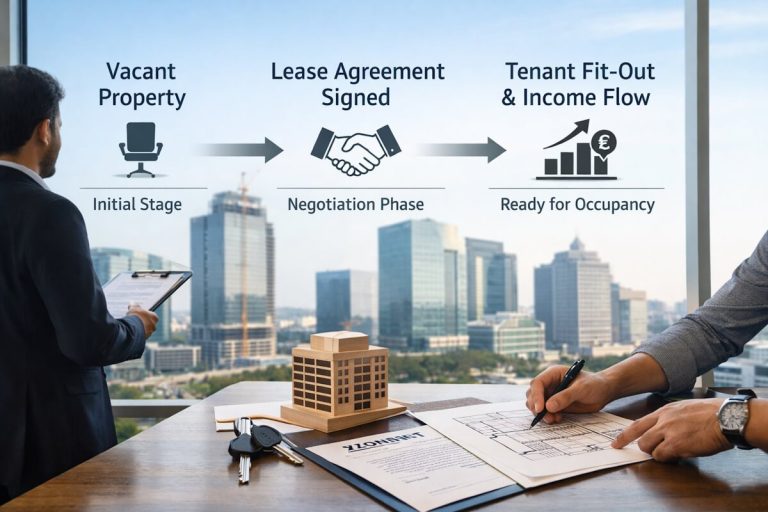
GIFT City is a long-term play, yet many buyers enter the market expecting immediate, high-double-digit rental yields. While the potential for appreciation is significant, the rental market is currently tied to the pace of corporate migration. Buying a property in gift city requires an understanding of the “occupancy lag.” Even as buildings reach completion, the time it takes for a multinational corporation to fit out an office and move hundreds of employees can span twelve to eighteen months.
Understanding the Growth Reality
The city is currently in a high-growth phase where infrastructure is ahead of total residential occupancy. This creates a temporary imbalance. If you are an investor who relies on immediate cash flow to service a loan, you must be cautious. The yield will stabilize and likely outperform other Indian metros, but the trajectory is not a vertical line. It is a phased ascent that mirrors the increasing footprint of global banks and fintech firms within the IFSC.
The Impact of Corporate Migration
The real driver for residential demand is the influx of white-collar professionals working in the commercial towers. As more entities like Google, Oracle, and various international banks scale their operations, the demand for high-quality housing will spike. Investors who buy today are essentially banking on this migration. A mistake occurs when an investor fails to research the hiring pipelines of the major employers in the zone. You are not just buying bricks, you are buying into the employment data of the city.
To navigate these timelines effectively, one must look at the delivery schedules of the major commercial hubs. Aligning your residential purchase with the completion of nearby Grade-A office spaces is a proven strategy to minimize vacancy risk. For a detailed breakdown of these cycles, you should look into a residential property in gift city guide that tracks corporate movement.
Overlooking Infrastructure and District Cooling Charges
GIFT City operates on a utility model that is unique in India. The city features a district cooling system (DCS), automated waste collection, and a centralized utility tunnel. While these features make the city world-class, they come with a specific cost structure. A common mistake for buyers of property in gift city is failing to factor these operational expenditures (OPEX) into their net yield calculations. These are not your standard society maintenance fees; they are sophisticated utility charges.
Operational Costs for Commercial Property
For commercial landlords, the district cooling charges are a significant line item. Unlike traditional buildings where tenants might manage their own air conditioning units, the DCS provides chilled water for cooling as a utility. This is highly efficient and sustainable, but the billing structure must be clearly understood. If your lease agreement does not properly attribute these costs to the tenant, your net ROI will be significantly eroded.
Maintenance and Sustainability Premium
The sustainability features of GIFT City actually help in attracting high-quality international tenants who have strict ESG (Environmental, Social, and Governance) mandates. However, the premium for maintaining these systems is baked into the city’s ecosystem. Investors need to ask for a clear breakdown of the fixed and variable components of these utility charges. Ignoring this leads to “sticker shock” once the property is operational and the first few bills arrive.
Smart investors view these costs as an investment in the property’s longevity. A building that is part of a sustainable, smart-city grid will appreciate faster than a standalone structure in a congested metro area. It is about trading lower immediate margins for higher long-term capital gains and tenant retention. You can find more about these technicalities in our commercial property in gift city analysis.
Inadequate Due Diligence on Developer Experience
The construction standards in GIFT City are rigorous. The city has a strict building code that emphasizes fire safety, structural integrity, and integration with the centralized tunnels. A major mistake is choosing a developer based solely on price or flashy marketing without verifying their track record in complex, regulated environments. Not every developer in Gujarat has the technical expertise to build within the IFSC’s strict parameters.
Compliance with Gift City Authority Guidelines
The GIFT City Authority has a set of guidelines that are far more stringent than RERA requirements elsewhere. Developers must adhere to specific timelines and quality benchmarks. If a developer runs into compliance issues, the entire project can face significant delays, or worse, penalties that affect the buyers. When looking at a property in gift city, the developer’s history of delivering institutional-grade assets is a more important metric than their residential portfolio in other cities.
Approval Delays and Special Zone Risks
In a special zone, approvals are centralized but highly technical. A developer who is unfamiliar with the IFSC’s administrative nuances may struggle with the “Single Window Clearance” system. This can lead to a situation where the building is physically ready, but the Occupancy Certificate (OC) is delayed due to technical non-compliance with the city’s smart-grid requirements. As an investor, your capital is locked during this period with no way to generate income.
Always ask for the project’s approval status specifically regarding the GIFT City Authority’s master plan. Understanding the developer’s debt-to-equity ratio and their previous experience with high-rise, smart-city infrastructure is a non-negotiable part of the due diligence process. Consulting a GIFT City Expert can help you vet these developers more effectively.
Ignoring the Tax and Repatriation Nuances for NRIs
For NRIs and foreign investors, buying a property in gift city offers unique tax advantages, but only if the transaction is structured correctly. A common error is failing to utilize the IFSC banking channels for the transaction. The IFSC is treated as a foreign territory under Indian exchange control laws for many purposes. This means that for certain types of investments, the rules regarding repatriation of funds and capital gains can differ from the rest of India.
Capital Gains and FEMA Compliance
Investing in the IFSC allows for certain exemptions that are not available in the Domestic Tariff Area. However, many NRIs mistakenly use their NRO accounts for these transactions as they would for a property in Delhi or Mumbai. This can complicate the eventual repatriation of sale proceeds. Using the right banking unit within the IFSC can streamline your tax efficiency and ensure that your investment is compliant with the Foreign Exchange Management Act (FEMA).
The Role of IFSC Banking Units
Many global banks have set up IFSC Banking Units (IBUs) in the city. These units are designed to handle offshore transactions. If you are an NRI looking at large-scale commercial or residential holdings, ignoring these banking advantages is a missed opportunity to optimize your global tax liability. The interplay between your country of residence’s tax laws and the IFSC’s incentives requires professional guidance. Our NRI investment guide provides a starting point for these considerations.
The tax landscape in GIFT City is designed to be competitive with Dubai or Singapore. However, the benefits are not automatic; they require specific compliance steps during the purchase phase. Failing to document the source of funds correctly or misclassifying the investment can lead to unnecessary tax litigation in the future.
The Risk of an Ill-Defined Exit Strategy
Real estate is inherently illiquid, but the niche nature of property in gift city adds another layer of complexity to the exit process. Many investors enter the market with a vague idea of “selling when prices go up” without considering who the next buyer will be. Because this is a specialized hub, the secondary market is driven by corporate demand and institutional interest, not just emotional home buying.
If you own a large commercial floor, your exit might involve selling to a Real Estate Investment Trust (REIT) or a large family office. If you own a luxury apartment, your buyer will likely be a high-ranking executive moving to the city for work. Not tailoring your purchase to these specific buyer personas is a mistake. You want to own an asset that fits the future “standard” of the city, not a fringe property that lacks the connectivity or features that institutional buyers demand.
The successful investor in GIFT City is the one who thinks like a developer. They look at the master plan, identify where the future “center of gravity” will be, and buy assets that will be essential to the city’s ecosystem ten years from now. Gift City Realty helps investors navigate these long-term strategic decisions by providing data-driven insights that go beyond the sales brochure.
FAQs
1. Can any individual buy residential property in the GIFT City SEZ?
Yes, residential property in the SEZ and Non-SEZ areas is now open to individuals. However, there are specific guidelines regarding who can reside in SEZ units, often tied to their employment within the zone. It is essential to check the latest notifications from the GIFT City Authority as these rules have evolved to encourage a walk-to-work culture.
2. How are maintenance charges different in GIFT City compared to other cities?
Maintenance in GIFT City includes charges for centralized infrastructure like the District Cooling System and automated waste management. These are often billed based on usage and fixed capacity charges, similar to a utility bill, rather than a simple per-square-foot fee. This ensures a higher standard of living and better building efficiency.
3. Is there a risk of oversupply in the GIFT City residential market?
Currently, the residential market is actually underserved compared to the commercial footprint. However, as more developers launch projects, investors should focus on premium projects with unique value propositions, such as proximity to the metro or superior amenities, to avoid the risks of future commoditization.
4. What are the tax benefits for NRIs investing in GIFT City?
NRIs can benefit from exemptions on certain capital gains and lower withholding taxes, depending on the structure of the investment and the specific zone (SEZ vs. Non-SEZ). Additionally, transacting through IFSC banking units can offer more flexibility in repatriating funds compared to standard Indian bank accounts.
5. Can I rent my commercial property in the SEZ to a local Indian startup?
Generally, no. Commercial spaces in the SEZ are reserved for units that are engaged in the export of services or other authorized IFSC activities. If you want to target the domestic Indian market, you should focus your search on property in the Non-SEZ or Domestic Tariff Area of the city.