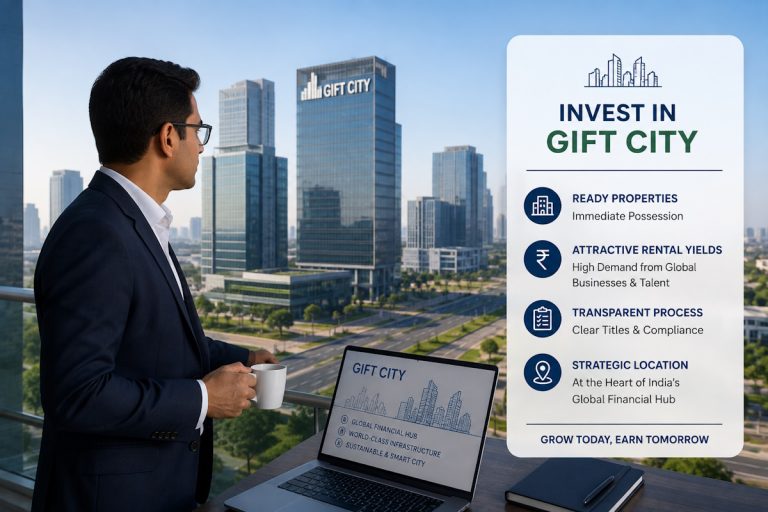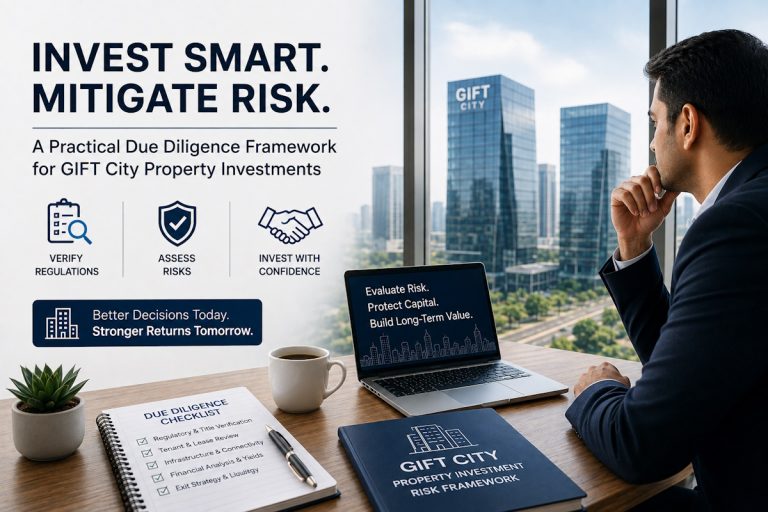

Investing in Indian real estate has long been a preferred strategy for the global Indian diaspora, yet the emergence of the Gujarat International Finance Tec-City, popularly known as GIFT City, has fundamentally shifted the investment landscape. As India’s first operational Smart City and International Financial Services Centre (IFSC), it offers a regulated, business-friendly environment that mirrors global financial hubs like Dubai or Singapore. For an NRI, the decision to commit capital here is rarely about sentiment, it is about participating in a unique regulatory experiment that prioritizes transparency, ease of doing business, and structured growth.
The strategic importance of GIFT City lies in its dual-zone classification, consisting of the IFSC (SEZ) and the Domestic Tariff Area (DTA). This structure allows for a variety of investment vehicles and property types, catering to different risk appetites and yield expectations. When considering NRI Investment in GIFT City, one must look beyond the physical structures and focus on the policy-driven demand that ensures long-term asset viability. Whether you are seeking capital appreciation or stable rental income, the ecosystem is designed to attract high-value talent and global corporations, creating a sustainable demand loop for high-quality real estate.
The Strategic Rationale for NRI Investment in GIFT City
The primary driver for any NRI considering a significant real estate allocation in India is the stability of the regulatory environment. GIFT City operates under a framework that reduces much of the ambiguity traditionally associated with Indian property markets. By providing a clear roadmap for infrastructure development and business incentives, the government has created a predictable environment for capital growth. Investing in GIFT City is not just a bet on real estate, it is a strategic move to capitalize on India’s aspirations to become a global financial powerhouse.
The IFSC Advantage: A Global Financial Gateway
The International Financial Services Centre (IFSC) status is perhaps the most significant factor for an NRI investor. This zone allows businesses to conduct financial transactions in foreign currencies, attracting banks, stock exchanges, and insurance firms from across the globe. For a real estate investor, this translates to a tenant profile consisting of high-net-worth professionals and multinational corporations. The presence of global entities ensures that the demand for both commercial office spaces and premium residential units remains robust, shielding the investment from the volatility often seen in secondary or tertiary Indian markets.
Strategic Location and Connectivity
Located between Ahmedabad and Gandhinagar, GIFT City benefits from its proximity to a major international airport and established industrial corridors. The planned metro connectivity and high-speed rail projects further enhance its appeal. For an NRI, ease of access is a critical component of due diligence, as it directly impacts the future liquidity of the asset. The city’s design focuses on a “walk-to-work” culture, which is highly attractive to the modern workforce and, by extension, to those looking to secure high rental yields.
Evaluating Residential vs. Commercial Property Asset Classes
Deciding between residential and commercial property is a pivotal step in the investment journey. Each asset class in GIFT City serves a different purpose within a portfolio. Commercial properties often offer higher yields and longer lease terms, while residential properties provide significant capital appreciation potential as the city’s population expands. Understanding the nuances of these sectors is essential for any NRI Investment in GIFT City to be successful.
Residential Real Estate: The Long-Term Appreciation Play
Residential demand in GIFT City is driven by the influx of professionals working in the IFSC and DTA zones. With the recent relaxation in residential rules, including the permission for individuals not working within the city to purchase property, the market has seen a surge in interest. For the investor, this means a wider pool of potential buyers and tenants in the future. Residential projects here are built to international standards, featuring smart city amenities that are often missing in traditional Indian urban centers.
The Impact of the Walk-to-Work Ecosystem
The integration of office spaces with residential clusters minimizes commute times, a feature that is increasingly valued by top-tier professionals. This lifestyle choice creates a “sticky” tenant base, reducing vacancy risks. Investors should evaluate residential units based on their proximity to the major commercial hubs within the city, as these will likely command the highest rental premiums and see the fastest appreciation.
Commercial Real Estate: Yield-Driven Decision Making
Commercial assets in GIFT City, particularly Grade-A office spaces, are highly sought after by institutional investors and HNIs. The tax incentives provided to units operating within the IFSC make it an attractive destination for global firms. When you are investing in GIFT City commercial space, you are essentially buying into a market with high barriers to entry and a sophisticated tenant profile. Lease structures are typically more favorable to landlords here than in other parts of Gujarat, often including long lock-in periods and structured escalations.
Understanding Grade-A Infrastructure
Grade-A spaces are defined by their compliance with international building standards, including energy efficiency, high-speed connectivity, and advanced security systems. These features are non-negotiable for the global firms that GIFT City aims to attract. As an investor, ensuring that the project meets these criteria is vital for maintaining high occupancy rates and attracting premium rents.
Regulatory Framework and Tax Efficiency for NRIs
One of the most compelling reasons for NRI Investment in GIFT City is the suite of tax benefits and regulatory easements offered by the government. The IFSC is treated as a foreign territory for certain tax and exchange control purposes, which simplifies many processes for non-resident investors. Navigating these rules correctly can significantly enhance the net ROI of your investment.
Understanding FEMA and Fund Repatriation
For NRIs, the ability to repatriate funds is a primary concern. Property investments in GIFT City must comply with the Foreign Exchange Management Act (FEMA) guidelines. Generally, when an NRI sells a property in India, they can repatriate the sale proceeds (up to the original investment amount) through their NRE or NRO accounts, subject to certain conditions and tax clearances. In the GIFT City context, the transparency of transactions makes this process smoother than in many other Indian jurisdictions.
Tax Benefits within the GIFT City Ecosystem
The Indian government has introduced various tax exemptions to promote the IFSC. While many of these apply to businesses, they indirectly benefit real estate investors by driving demand and property values. For example, the 10-year tax holiday for units in the IFSC ensures that these companies have more capital to invest in high-quality office spaces and employee housing. Additionally, the exemption from Goods and Services Tax (GST) for certain services within the zone can lower the operational costs of managing a property portfolio.
Capital Gains and Rental Income Considerations
Rental income earned from property in GIFT City is taxable in India for NRIs, but the applicable Double Taxation Avoidance Agreement (DTAA) between India and the investor’s country of residence may provide relief. Capital gains tax also applies to the sale of the asset. However, the structured nature of GIFT City often results in more accurate property valuations, reducing the risk of tax disputes that can plague investors in less regulated markets. Gift City Realty advisors often recommend consulting with a tax professional to optimize the holding structure of the investment.
Risk Mitigation: What NRIs Must Evaluate Before Investing
No investment is without risk, and NRI Investment in GIFT City is no exception. However, the risks here are often different from those in the broader Indian market. Instead of worrying about basic infrastructure or legal titles, investors should focus on the pace of corporate absorption and the long-term commitment of the regulatory bodies. Due diligence must be rigorous and forward-looking.
Developer Pedigree and Delivery Track Record
In a burgeoning market like GIFT City, the reputation of the developer is paramount. Investors should look for developers with a proven track record of delivering high-specification projects. Since GIFT City has strict building codes and timelines, any delay by a developer can have cascading effects on the investor’s ROI. Investigating the developer’s financial health and their history with RERA compliance is a mandatory step in the decision-making process.
Leasehold vs. Freehold Realities
It is important to understand that most land in GIFT City is provided on a long-term leasehold basis by the GIFT City authorities. While this is common in many planned financial districts worldwide, NRIs must be comfortable with the terms of the lease, which are typically for 99 years. These leases are renewable and provide sufficient security for multiple generations, but they require a different mindset compared to freehold properties found elsewhere in India. The governance by the GIFT City Company Limited ensures that the land remains dedicated to the city’s vision, which actually protects the long-term value of the asset.
Projecting Returns: Capital Appreciation and Rental Yields
When analyzing the potential of NRI Investment in GIFT City, one must compare it with other Tier-1 Indian cities like Mumbai, Bangalore, or Gurgaon. GIFT City offers a unique value proposition where the entry price is currently more accessible than prime areas in Mumbai, yet the growth trajectory is arguably steeper due to the concentrated government backing and infrastructure focus.
Comparing Yield Dynamics
In traditional Indian residential markets, rental yields often hover around 2% to 3%. However, the specialized nature of GIFT City, with its high-income professional demographic, creates the potential for yields to trend higher, especially for serviced apartments or premium co-living spaces. In the commercial sector, yields of 7% to 9% are achievable for well-located, Grade-A assets, making it a competitive destination for yield-seeking NRI capital.
Exit Strategies and Secondary Market Liquidity
An investment is only as good as its exit. The liquidity of an asset in GIFT City is tied to the city’s overall maturity. As more global banks and technology firms set up operations, the secondary market for both residential and commercial units is expected to deepen. NRIs should view this as a 5 to 10-year play. Selling an asset in a globally recognized financial hub is generally easier than in a generic residential suburb, as the pool of buyers includes institutional investors and corporate entities looking for employee housing or operational bases.
Navigating the Investment Process from Abroad
The digital transformation of the Indian real estate sector has made it significantly easier for NRIs to invest without being physically present. From virtual tours to digital documentation and online registration processes, investing in GIFT City is designed to be efficient. However, having a local partner or an advisory firm like Gift City Realty can bridge the gap between global expectations and local execution.
The Role of Advisory and Management
Managing a property from several time zones away requires a reliable ground partner. This includes everything from property inspections during the construction phase to finding and vetting tenants once the project is delivered. For many NRIs, the goal is “set and forget” investment. Professional property management services ensure that the asset is maintained and the rental income is collected promptly, allowing the investor to focus on their primary professional commitments abroad.
Documentation and Compliance Checklist
Investors must ensure they have an active PAN card and have completed their KYC requirements through an NRE or NRO account. Understanding the RERA (Real Estate Regulatory Authority) filings for the specific project is also crucial. These documents provide transparency regarding the project’s progress, financial health, and legal approvals, offering a layer of protection that was previously unavailable to NRI investors in India.
Determining Your Entry Point in GIFT City
The window for early-mover advantage in GIFT City is still open, but it is narrowing as more global entities announce their arrival. For the NRI investor, the decision should be based on a clear understanding of whether they seek immediate rental income or long-term capital growth. While the commercial sector offers immediate stability, the residential sector offers a lifestyle-driven growth story that is just beginning to unfold. By aligning your investment with the broader vision of the IFSC, you can build a portfolio that is not only profitable but also resilient against global economic shifts.
Success in this market requires a blend of macro-economic awareness and local market intelligence. As GIFT City continues to evolve into a global financial center, the real estate assets within its boundaries will likely become some of the most sought-after holdings in any Indian property portfolio. Evaluate the developers, understand the tax implications, and choose an asset that matches your long-term financial objectives. The time to transition from observation to action is now, as the city reaches its critical mass of corporate and residential occupancy.
Frequently Asked Questions
1. Can NRIs buy residential property in GIFT City if they don’t work there?
Yes, recent policy changes have opened up residential property ownership in GIFT City to everyone, including NRIs who do not have an office or employment within the city. This has significantly expanded the market for potential investors.
2. What is the typical tenure for land in GIFT City?
Most land in GIFT City is allotted on a 99-year lease. This is a common structure in planned international hubs and provides long-term security. These leases are typically renewable and are recognized by major financial institutions for mortgage purposes.
3. Are there any specific tax exemptions for NRIs investing in GIFT City?
While direct property purchase does not have a “holiday,” the overall tax-friendly environment of the IFSC drives higher demand and property values. Rental income and capital gains are subject to Indian tax laws, but NRIs can often benefit from DTAA provisions to avoid double taxation in their home country.
4. How is the rental demand generated in GIFT City?
Demand is primarily driven by employees of global banks, insurance companies, and fintech firms operating in the IFSC and DTA. As the city adds more office space and attracts more corporations, the requirement for nearby housing and support services continues to grow.
5. Is it safe to invest in GIFT City projects during the construction phase?
GIFT City projects are governed by RERA, which provides a high level of transparency and protection. Furthermore, the GIFT City authority maintains strict oversight on construction timelines. However, choosing a developer with a strong reputation remains a critical part of risk mitigation.