The Core Decision: Stabilized Income vs. Unlocked Potential in GIFT City Real Estate
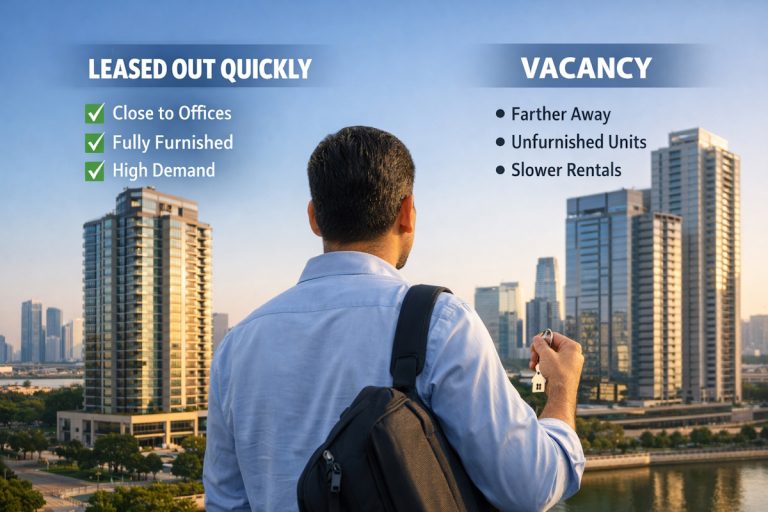
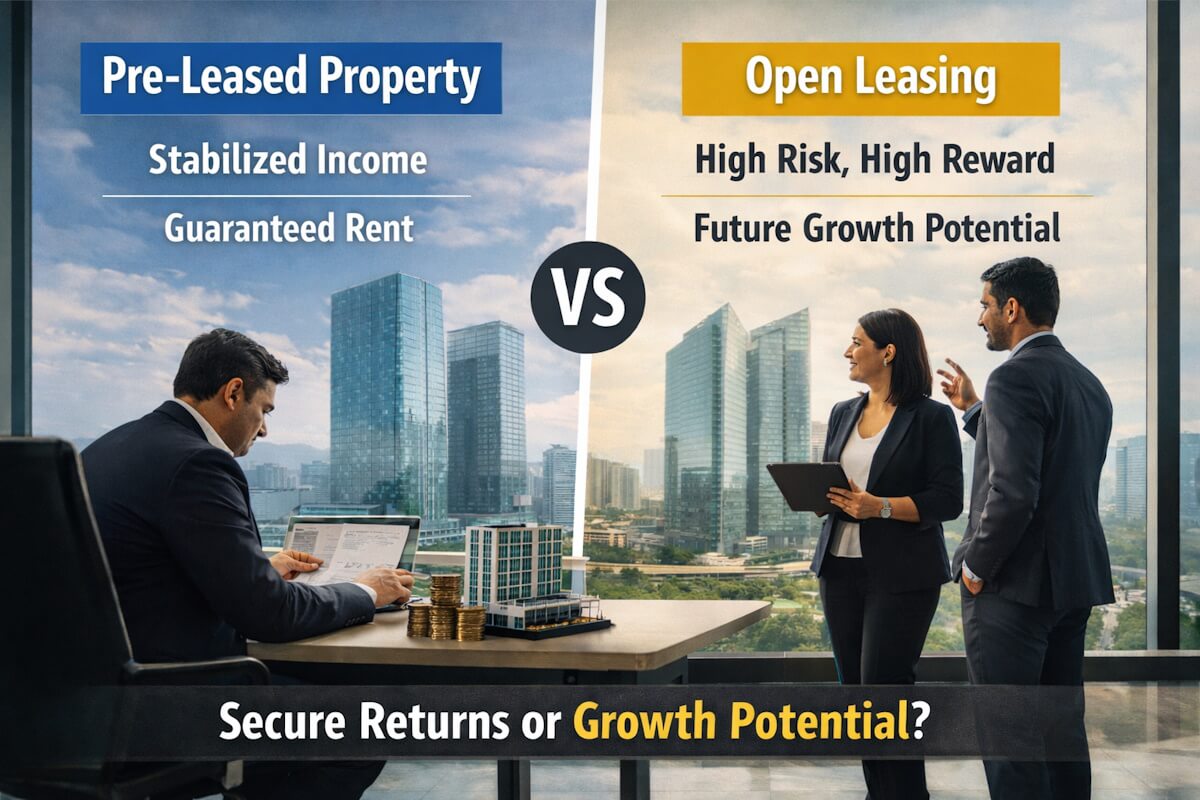
For serious investors targeting India’s premier financial and technology hub, GIFT City, the commercial real estate acquisition process invariably leads to a fundamental choice: should you prioritize immediate, stable returns offered by a pre leased property GIFT City, or should you pursue an open leasing strategy GIFT City, betting on future rental growth and valuation upside?
This decision is not merely about cash flow; it’s about risk tolerance, required investor liquidity, and alignment with the unique regulatory and economic dynamics of an IFSC/SEZ environment. Choosing between acquiring a space with an established tenant or one requiring active leasing management dictates the entire trajectory of the investment, from immediate capitalization rate to long-term property valuation. Understanding these two paths requires rigorous due diligence, far beyond typical commercial real estate analysis.
The Foundation of Stabilized Income: Pre Leased Property GIFT City
Acquiring a commercial asset that already has a tenant in place—a pre leased property GIFT City—is often the preferred route for institutional investors, NRIs, and HNIs seeking predictable, passive income from day one. This strategy prioritizes de-risking and immediate yield stability over maximizing future appreciation.
Defining “Pre-Leased” in the GIFT City Context
In the high-stakes environment of GIFT City, the term “pre-leased” must be carefully scrutinized. It typically refers to properties where the lease agreement and fit-out contract are executed, and rent commencement is either imminent or already started. Crucially, the tenant is often a leading financial entity, IT company, or insurance firm operating within the IFSC or SEZ framework. The true value lies not just in the lease document, but in the tenant’s long-term commitment to the regulatory ecosystem.
Tenant Committed Offices GIFT City: Scrutinizing Commitment
When evaluating tenant committed offices GIFT City, investors must differentiate between a developer-backed commitment (a promise to find a tenant) and a fully executed, irrevocable lease agreement signed by a credible, regulated entity. A true pre-leased asset mitigates the primary risk of real estate investment: vacancy. However, the regulatory status of the tenant (IFSC unit, SEZ unit, or Domestic Tariff Area unit) directly impacts tax benefits and permissible operations, which, in turn, influences the property’s long-term desirability and rental rates. Before proceeding, assess the tenant’s operational license and financial health.
Advantages: Immediate ROI and De-Risking
The core appeal of a pre leased property GIFT City is the immediate return on investment (ROI). There is no waiting period, no brokerage fees associated with finding the initial tenant, and no capital expenditure for initial fit-outs, as these costs are typically borne by the tenant or factored into the purchase price.
- Predictable Cash Flow: Investors benefit from immediate, scheduled rental income, making financial projections straightforward.
- Lower Management Overhead: The asset is operational, reducing the need for active management during the initial transition period.
- Favorable Valuation: Stabilized, pre-leased assets command a premium valuation (lower cap rate) because they present less risk to future potential buyers, enhancing liquidity.
If you are an investor prioritizing low-effort, immediate yield, the stabilized nature of a pre leased property GIFT City offers superior risk mitigation compared to ground-up development or vacant spaces. To fully evaluate current stable yield opportunities, we recommend you Download the GIFT City investor guide, which details verified rental agreements currently on offer.
Disadvantages: Yield Ceiling and Due Diligence Traps
While security is high, the upside is often capped. Because the asset is already stabilized, the investor pays a premium, inherently accepting a lower initial capitalization rate than they might achieve by securing a tenant themselves. Furthermore, the investor inherits the existing lease terms, including potential long lock-in periods and pre-defined, sometimes rigid, rental escalation clauses.
The Risk of Inherited Lease Structures
Investors must ask: Is the existing rent reflective of current market rates, or did the developer offer a discounted rate to secure the initial anchor tenant? If the escalation clause is weak (e.g., fixed annual 3% rise in a high-growth zone), the investor might lag behind market rental rates for several years. Thorough due diligence requires professional advisory on lease abstracting and market comparison to ensure the existing arrangement is equitable.
Ready to compare current pre-leased opportunities and verify tenant financials? Request Property Details and verified lease abstracts from our advisory team.
Maximizing Potential: The Open Leasing Strategy GIFT City
The alternative path, the open leasing strategy GIFT City, involves acquiring a vacant or soon-to-be-vacant commercial unit and actively managing the tenant acquisition process. This route is typically chosen by investors with higher capital reserves, a longer investment horizon, and a strong belief in GIFT City’s future market appreciation.
The Rationale: Capitalizing on Future Rental Growth
Choosing an open leasing strategy is a calculated risk based on the anticipated trajectory of GIFT City’s supply and demand dynamics. As more global and domestic entities obtain regulatory approvals to operate within the IFSC/SEZ, the demand for premium office space is projected to surge. An investor who secures space today at a lower per-square-foot valuation and successfully leases it at tomorrow’s higher rental rates maximizes their capital gain.
Valuation Discount and Higher Potential Cap Rate
Vacant properties generally trade at a discount compared to fully occupied assets. This discount translates into a higher potential capitalization rate upon successful lease execution. If an investor can secure an anchor tenant quickly and on favorable terms, the immediate valuation uplift can significantly outperform the slow, incremental appreciation seen in stabilized assets.
Risk Assessment: Vacancy Periods and Operational Costs
The primary risk of the open leasing strategy is the vacancy period. In commercial real estate, every month of vacancy represents lost revenue and requires the investor to cover maintenance, property tax, and utilities out-of-pocket. These carrying costs can quickly erode the initial savings from the discounted purchase price.
- Leasing Costs: Investors must budget for brokerage fees, marketing expenses, and potentially fit-out contributions to attract high-quality tenants.
- Market Timing Risk: If the market supply outpaces demand temporarily, securing a tenant might take longer than projected, delaying cash flow commencement.
- Fit-Out Management: Depending on the lease terms, the investor may bear the cost and complexity of custom fit-outs required by high-profile IFSC institutions.
For investors targeting a higher potential return, understanding and mitigating vacancy risk is paramount. Our firm helps investors gauge realistic time-to-lease estimates based on current sector demand. For a detailed sector-specific breakdown of current demand drivers, Download the GIFT City investor guide today.
Required Investor Profile: Liquidity and Patience
The open leasing strategy GIFT City demands a more hands-on approach and significant liquidity to absorb carrying costs and fit-out expenditures. This strategy suits sophisticated investors who view real estate as an active portfolio management component, rather than just a passive income source. They must have the patience to weather a 6–18 month leasing period before cash flow stabilizes.
Are you positioned for active management and long-term capital growth? Schedule an Investment Consultation to map out a strategic open leasing approach.
Critical Evaluation Metrics for Decision Making
Whether you choose a pre-leased asset or an open strategy, the investment decision hinges on four key metrics unique to GIFT City.
Analyzing Tenant Quality and Sector Stability
The quality of the tenant profoundly impacts the property’s long-term valuation. A unit leased to a high-grade, regulated bank or financial institution operating within the IFSC framework offers lower default risk and greater sector stability than a small, unregulated service provider.
IFSC vs. SEZ Commitment: The Regulatory Stability Factor
Tenants operating under IFSC regulations often represent strong, mandated commitments to the zone. For tenant committed offices GIFT City, verify the duration of their regulatory license compared to their lease duration. A tenant with strong regulatory roots enhances the investment’s stability, making it easier to re-lease the space when the initial term expires.
International Institutional Presence and Leasing Dynamics
The growing participation of globally regulated institutions within the IFSC ecosystem is increasingly influencing both pre-leased and open leasing strategies in GIFT City. Financial and fund management entities connected to jurisdictions such as Australia, Canada, France, Germany, Malaysia, Singapore, United Arab Emirates, United Kingdom, and the United States are either operating or evaluating IFSC-aligned structures in GIFT City. This expanding international footprint strengthens the tenant pool available to both stabilized and vacant commercial assets.
For investors considering a pre leased property GIFT City, international institutional tenants often provide stronger covenant quality, longer lock-in commitments, and regulatory-backed operational continuity. Their presence enhances asset valuation stability and improves resale liquidity due to perceived lower default risk.
Conversely, for those adopting an open leasing strategy GIFT City, the increasing pipeline of global entrants widens the potential tenant universe. As more cross-border entities secure IFSC approvals, demand for compliant Grade A office space is expected to deepen, potentially shortening vacancy periods and supporting stronger rental negotiations for well-positioned assets.
Lease Structure Deep Dive: Escalation Clauses and Lock-in Periods
When reviewing a pre-existing lease for a pre leased property GIFT City, look beyond the headline rental yield. The escalation clause is critical. Most premium office spaces in GIFT City utilize a structured escalation, often 15% every three years or similar benchmarks. Ensure this formula keeps pace with anticipated inflation and market growth. The lock-in period defines how long the tenant is financially committed, preventing premature exits. A robust, non-negotiable lock-in of 3 to 5 years is ideal.
Capital Valuation Impact: Premium for Security vs. Discount for Risk
The core trade-off is reflected in the property’s valuation. Investors buying a stabilized property are essentially paying a premium for security (immediate income). Investors buying a vacant property receive a discount because they are assuming the market risk and the operational burden of finding a tenant.
- Pre-Leased: Higher overall purchase price, lower risk premium, immediate lower cap rate.
- Open Leasing: Lower overall purchase price, higher risk premium, potential for a higher eventual cap rate.
Investors must run sensitivity analyses, projecting cash flows under best-case (quick leasing at high rate) and worst-case (extended vacancy) scenarios for the open leasing strategy GIFT City to justify the risk premium. This analysis helps determine if the potential gain from leasing yourself outweighs the cost of buying a ready-made income stream.
Don’t rely on generalized projections. Request ROI Estimates specific to various property types and leasing scenarios in GIFT City.
Operational and Compliance Considerations for NRIs
For Non-Resident Indian (NRI) investors, both leasing strategies involve distinct compliance and operational hurdles, particularly concerning tax structure and property management logistics.
Tax Implications of Stabilized vs. Unstabilized Income
The tax treatment of rental income (stabilized) versus capital appreciation (the goal of the unstabilized strategy) can influence the preferred approach. While GIFT City offers significant tax benefits, rental income is still subject to specific regulations under the DTAA (Double Taxation Avoidance Agreement) for NRIs. When considering a pre leased property GIFT City, confirm how the current rent aligns with the IFSC/SEZ tax holidays passed down through the tenant’s operations, if applicable. A vacant property offers fewer current tax reporting complexities but demands careful record-keeping of capital expenditures (fit-out costs), which can be offset later.
Brokerage, Fit-out Costs, and Hidden Expenses
An investor pursuing an open leasing strategy GIFT City must anticipate significant upfront expenditures, including brokerage fees (often 1–2 months’ rent) and specialized fit-out costs. These spaces are highly regulated, requiring specific fire, safety, and IT infrastructure adherence, especially for financial sector tenants.
For buyers of tenant committed offices GIFT City, scrutinize the sale agreement to ensure all major fit-out responsibilities have been finalized and accepted by the existing tenant, mitigating the risk of unexpected capital calls shortly after acquisition.
Making the Investment Justification
The choice between immediate cash flow and future growth potential in GIFT City should be driven by the investor’s lifecycle and financial goals. If you require immediate, secure cash flow for diversification and passive management, the de-risked nature of a high-quality pre leased property GIFT City is likely the superior option. This path offers institutional-grade stability and predictable returns, backed by the strength of IFSC entities.
However, if your capital is patient, substantial, and you believe deeply in GIFT City’s trajectory over the next five to seven years, the open leasing strategy GIFT City presents an opportunity to enter the market at a lower acquisition price and potentially secure a significantly higher effective cap rate once a blue-chip tenant is secured. Regardless of the route, the complexity of regulatory compliance and high-value tenants necessitates local, expert advisory. Gift City Realty specializes in helping investors navigate this crucial decision, providing verified lease data and accurate valuation metrics.
Need personalized guidance to choose between high-yield potential and yield stability? Explore GIFT City Projects with proven stability records or high leasing potential.
Frequently Asked Questions (FAQ)
Is a pre leased property in GIFT City always a safer investment?
It is generally lower risk because cash flow is immediate and secured. However, it is only “safer” if the tenant is financially robust, the lease terms offer good long-term escalation, and the regulatory commitment of the tenant is stable.
What is the typical vacancy period when employing an open leasing strategy in GIFT City?
Time-to-lease varies based on property size, floor plate, and fit-out condition. For premium, large commercial spaces in GIFT City, successful leasing can take anywhere from 6 to 18 months, requiring investors to have sufficient capital to cover carrying costs during this period.
Do pre-leased assets command a higher price per square foot (PSF) than vacant ones?
Yes. A property with a stable, high-quality tenant (a pre leased property GIFT City) generally commands a 10% to 20% premium over a comparable vacant unit because the market values stabilized income streams highly (lower perceived risk).
What specific due diligence is needed for tenant committed offices GIFT City?
Investors must verify the tenant’s IFSC/SEZ operational license, confirm financial stability and credit rating, review the rent commencement and lock-in dates, and ensure the lease documents align with local GIFT City property laws.
How does the IFSC status affect the rental yield comparison between the two strategies?
Properties leased to IFSC units may benefit from lower corporate taxes and regulatory incentives, which can translate into slightly higher achievable net rents compared to non-IFSC entities, benefiting both pre-leased (immediate) and open leasing (future) strategies.