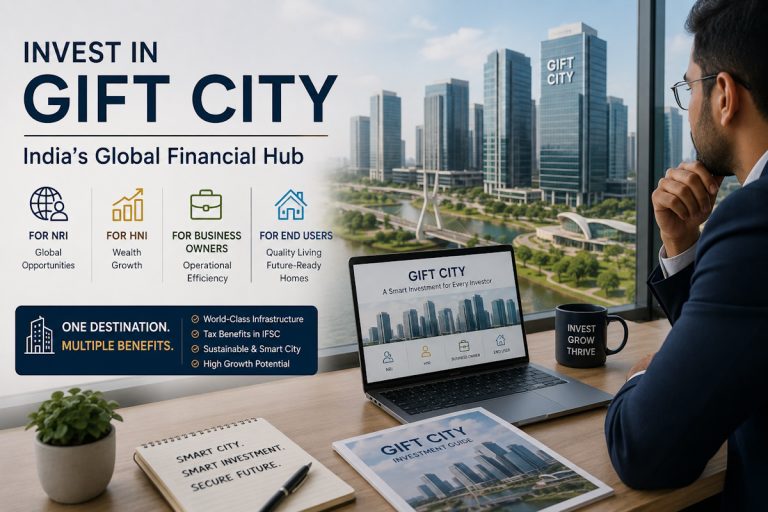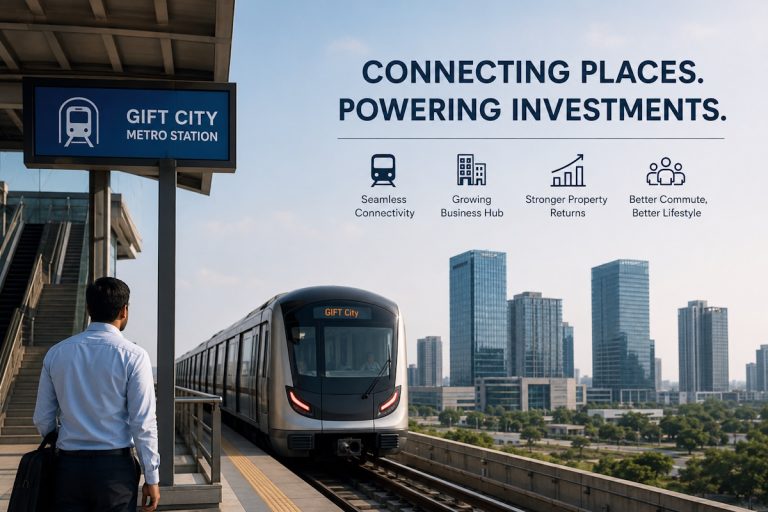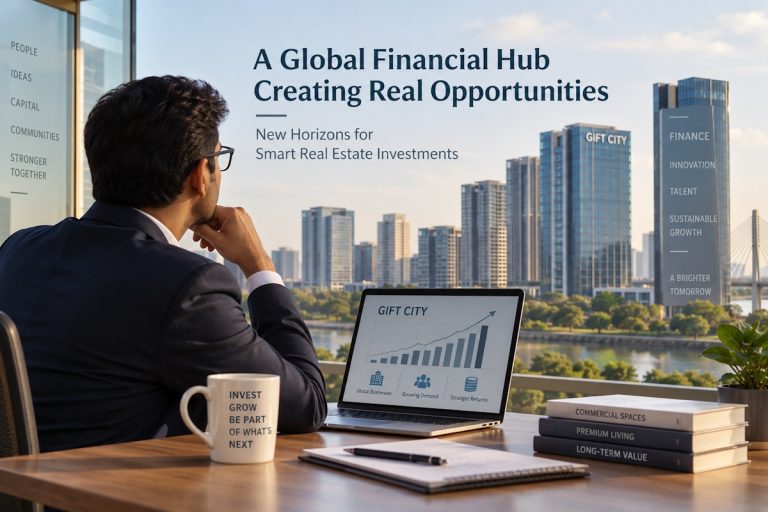
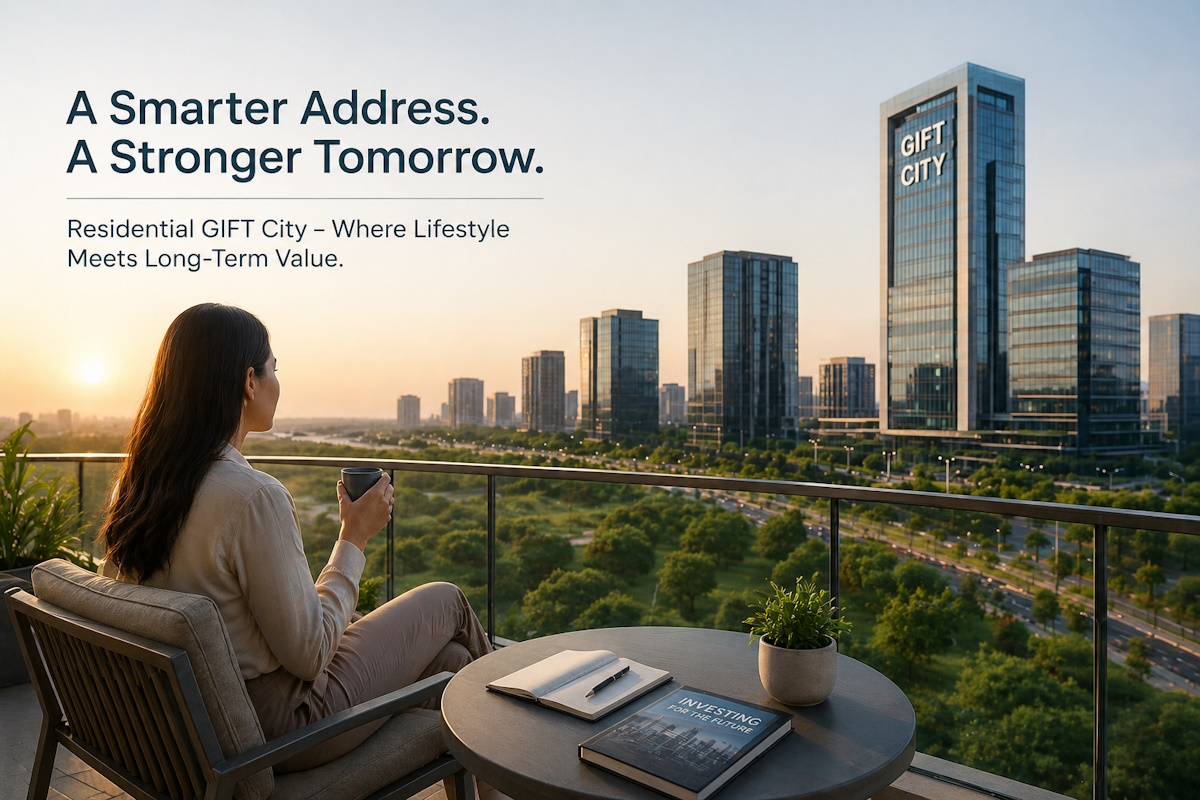
For years, the conversation surrounding the Gujarat International Finance Tec-City was dominated by its commercial prowess. As India’s first operational smart city and International Financial Services Centre, the focus remained squarely on the soaring office towers and the influx of global financial giants. However, a significant shift is occurring. The vertical skyline is no longer just about glass-fronted boardrooms, it is increasingly about high-end living spaces. Smart investors are recognizing that the next phase of growth in this region is not just where people work, but where they live, eat, and play. The emergence of Residential Projects GIFT City represents a transition from a 9-to-5 business district to a 24/7 integrated ecosystem, creating a unique window for early-mover advantage.
Investing in residential real estate here is fundamentally different from buying property in a standard metropolitan suburb. You are not just buying square footage, you are buying into a regulated, tech-enabled environment that operates under a distinct framework. With global entities like Google, IBM, and various international universities establishing a presence, the demand for high-quality housing is outstripping supply. This supply-demand imbalance is the primary driver for capital appreciation and rental yield projections that often exceed those of traditional markets in Ahmedabad or Gandhinagar. As an investor, understanding the nuances of this frontier is essential to navigating the risks and maximizing the long-term rewards of this historic urban experiment.
The Structural Shift Toward Residential Projects GIFT City
The early phases of GIFT City focused heavily on infrastructure and commercial viability. Now that the commercial backbone is established, the residential component is catching up. For an investor, this sequence is ideal. The jobs are already there, the infrastructure is world-class, and the resident population is just beginning to scale. This creates a de-risked environment where the fundamental drivers of real estate value are already in place before the residential boom hits its peak.
The “Walk-to-Work” Ecosystem as a Value Driver
The core philosophy of GIFT City is the “Walk-to-Work” concept. In a country where urban professionals often face grueling commutes, the ability to live within minutes of a global headquarters is a massive luxury. This proximity is not just a lifestyle perk, it is a significant factor in property liquidity. Homes located within the walking district of major employment hubs historically retain value better than those on the periphery. When evaluating Residential Projects GIFT City, investors must consider how the project integrates with the existing commercial zones.
Attracting the Global Workforce
The tenant profile in GIFT City is predominantly composed of C-suite executives, financial analysts, and tech professionals. These individuals have high disposable incomes and specific expectations regarding living standards. They seek security, smart home features, and seamless connectivity. Properties that cater to this specific demographic are likely to see the highest occupancy rates and the most stable rental income.
Long-Term Urban Planning and Sustainability
Unlike many Indian cities that grow organically and often chaotically, GIFT City is meticulously planned. The presence of district cooling systems, automated waste collection, and a utility tunnel ensures that the quality of life remains high for decades. For an investor, this means lower maintenance costs and a slower rate of building obsolescence, both of which contribute to a healthier long-term ROI.
Market Maturity and Entry Timing
We are currently in a “Goldilocks” period for residential investment in the region. The city has moved past the speculative phase where the project was just a concept, yet it has not reached the saturation point of established markets like Mumbai or Delhi. Entering the market now allows investors to capture the appreciation that comes as more social infrastructure, such as schools and hospitals, becomes fully operational.
Analyzing GIFT City Apartment Prices and Appreciation Potential
Understanding GIFT City Apartment Prices requires a look beyond the current price per square foot. One must analyze the velocity of price growth over the last three to five years. While prices have seen a steady climb, they remain competitive when compared to premium areas in other Tier-1 Indian cities. This price gap is where the opportunity for capital appreciation lies as GIFT City matures into a global financial hub on par with Dubai or Singapore.
Comparative Analysis with Surrounding Markets
When you compare GIFT City to the broader Luxury Housing Gandhinagar market, a clear distinction emerges. While Gandhinagar offers space and greenery, GIFT City offers a global lifestyle and a concentrated economic engine. The price premium within the GIFT City boundaries is justified by the superior infrastructure and the legal framework of the IFSC and SEZ zones. Investors should look at the internal rate of return (IRR) rather than just the entry price.
Rental Yield Projections in a High-Demand Zone
Rental yields in India’s top cities typically hover between 2% and 3% for residential properties. However, because of the concentrated nature of employment in GIFT City and the limited residential supply, yields here are projected to be significantly higher. The corporate housing demand from companies relocating their staff to the IFSC provides a steady stream of high-quality tenants who are less price-sensitive and more focused on convenience and safety.
Factors Influencing Price Volatility
While the outlook is positive, investors must be aware of factors that could influence price volatility. These include the pace of commercial absorption and the speed at which the social infrastructure is completed. A delay in the opening of a major international school or a retail hub can temporarily stall residential price growth. Gift City Realty advises investors to take a five to seven-year view to smooth out any short-term fluctuations.
The Impact of Regulatory Incentives on Property Value
The special status of GIFT City brings with it various tax and regulatory benefits that indirectly support property values. For instance, the ease of doing business attracts more companies, which in turn brings more residents. Furthermore, the transparent single-window clearance for developers often leads to more timely project completions compared to other parts of the country. Timely delivery is a crucial component of an investor’s ROI calculation.
Luxury Housing Gandhinagar and the Shift in Buyer Sentiment
The definition of luxury in the Gujarat real estate market is evolving. It is no longer just about marble floors and gold-plated fittings. Today’s HNIs and NRIs are looking for wellness-focused design, sustainable architecture, and a sense of community. The Luxury Housing Gandhinagar segment is seeing a massive influx of interest because it offers a lifestyle that was previously unavailable in the region.
Redefining Premium Living Standards
New residential developments are incorporating features such as private screening rooms, expansive sky gardens, and tech-enabled security systems. This shift is driven by the global exposure of the target audience. Many buyers in GIFT City are NRIs who are used to the living standards of New York, London, or Hong Kong. They expect their Indian investments to reflect that same level of sophistication.
The Role of Amenities in Tenant Retention
For those looking at investment properties, the amenity package is a key factor in tenant retention. High-end gyms, swimming pools, and co-working spaces within residential complexes are no longer optional. They are essential requirements for the modern professional. Projects that skimp on these features often face higher vacancy rates and lower rental growth.
Architectural Innovation and Smart Home Integration
Modern Residential Projects GIFT City are increasingly using IoT for energy management, lighting control, and security. This not only appeals to the tech-savvy resident but also reduces the long-term operational costs of the building. As an investor, purchasing a “smart” unit can offer a competitive edge in the resale market years down the line.
The Growing Importance of Green Spaces
Despite being a high-density urban environment, GIFT City emphasizes green cover and open spaces. The integration of parks and water bodies into the city plan is a major draw for families. This focus on environmental quality ensures that the city remains livable and attractive, preventing the urban decay that often plagues rapidly growing cities. Luxury buyers are increasingly willing to pay a premium for views of the green belt or proximity to the riverfront.
Investment Justification: Why GIFT City Over Other Markets?
When comparing Residential Projects GIFT City to traditional real estate hotspots like Gurgaon or Bangalore, the primary advantage is the regulatory oversight. GIFT City is a controlled environment where the rules of the game are clear and consistently applied. This reduces the “chaos risk” that often accompanies Indian real estate investments, where infrastructure lag or shifting zoning laws can derail an investment’s potential.
Risk Mitigation and Investor Protection
The involvement of the GIFT City Authority ensures that developers adhere to strict timelines and quality standards. This level of institutional oversight provides a layer of protection for investors that is rarely found in other markets. Furthermore, the transparency in land titles and the streamlined approval process significantly reduce the legal risks associated with property acquisition.
Liquidity and Exit Strategies
One of the biggest concerns for real estate investors is liquidity. Because GIFT City is a global hub, the secondary market for properties is expected to be highly active. The buyer pool includes local professionals, domestic investors, and a significant number of NRIs. This diverse buyer base ensures that there is always demand, making it easier to exit the investment when the time is right.
Diversification Benefits for a Portfolio
Real estate in a financial hub like GIFT City often behaves differently than typical residential markets. Its value is tied more closely to global financial cycles and corporate growth than to local agrarian or industrial trends. This makes it an excellent diversification tool for an investor who already has significant exposure to traditional real estate markets.
Evaluating Developer Credibility
Not all developers in the region are created equal. As GIFT City’s profile has risen, many builders have entered the fray. It is crucial for investors to partner with developers who have a proven track record of delivering high-end projects. At Gift City Realty, we focus on vetting projects not just on their current marketing, but on the developer’s financial stability and previous performance in delivering complex urban projects.
Common Investment Mistakes and How to Avoid Them
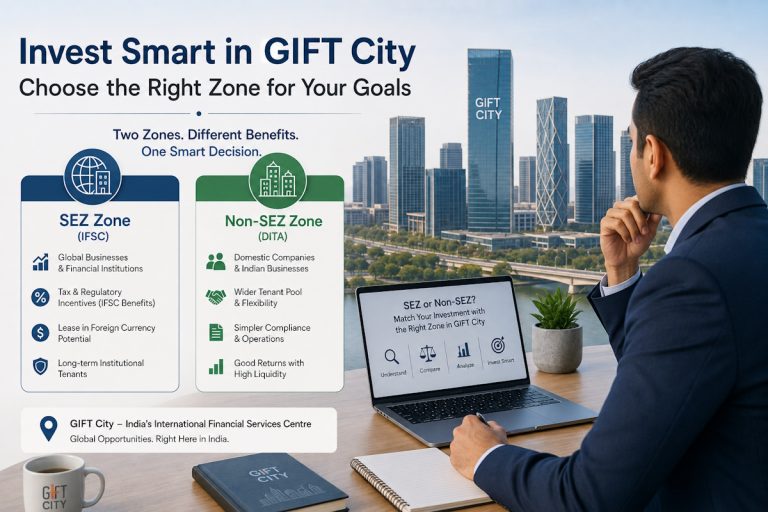
While the opportunity is vast, investing in Residential Projects GIFT City is not without its pitfalls. The most common mistake is failing to distinguish between the SEZ and Domestic zones. Each has different rules regarding who can live there and what the tax implications are for the owner. Understanding these regulatory nuances is the difference between a successful investment and a compliance headache.
Overlooking the Maintenance and Utility Framework
The utility infrastructure in GIFT City is unique. Investors often fail to account for the costs associated with the district cooling system or the automated waste management. While these systems increase the desirability of the property, they also come with specific monthly charges. It is important to factor these into your net yield calculations from the beginning.
Chasing Low Prices Over High Quality
In a burgeoning market, there is always a temptation to buy the cheapest available unit. However, in a luxury-driven market like GIFT City, quality is the primary driver of value. A cheaper unit in a poorly managed building will likely suffer from lower rental demand and slower appreciation than a premium unit in a well-maintained complex.
Ignoring the Commercial Absorption Rate
Residential demand is a derivative of commercial activity. If you are looking to invest, you must keep an eye on the office leasing numbers. A spike in commercial leasing today is a reliable indicator of residential demand six to twelve months down the line. Investors who ignore these macro signals often find themselves entering the market at the wrong time.
The Importance of Local Advisory
GIFT City is a specialized market. Relying on a general real estate agent who does not understand the specific bylaws and economic drivers of the IFSC can lead to poor decision-making. Working with a dedicated advisory like Gift City Realty ensures that you have access to the latest data and regulatory updates that affect your investment.
Navigating Your Investment Journey in GIFT City
The transition of GIFT City from a nascent project to a thriving residential frontier is well underway. For the discerning investor, the goal is to look beyond the current skyline and see the vibrant community that is forming. By focusing on high-quality Residential Projects GIFT City and staying informed about GIFT City Apartment Prices, you can position your portfolio to benefit from one of India’s most significant urban success stories. The combination of world-class infrastructure, a concentrated high-income workforce, and a supportive regulatory environment makes this a compelling opportunity for anyone looking to build long-term wealth in Gujarat real estate.
Frequently Asked Questions
1. Who can buy residential property in GIFT City?
Both Indian residents and Non-Resident Indians (NRIs) can purchase residential property in GIFT City. There are specific zones, such as the Domestic Tariff Area (DTA) and the Special Economic Zone (SEZ), which have different residency requirements. Generally, anyone working within GIFT City can reside in the SEZ residential area, while the DTA is more open to the general public.
2. Is the rental demand in GIFT City consistent?
Yes, rental demand is driven by the growing number of multinational companies and financial institutions operating in the IFSC. As more firms move their operations to GIFT City, the requirement for executive housing increases. The “Walk-to-Work” culture further solidifies this demand, making residential properties highly sought after by professionals working in the city.
3. How do GIFT City Apartment Prices compare to Ahmedabad?
GIFT City properties generally command a premium over average Ahmedabad prices due to the superior infrastructure, 24/7 power and water supply, and the global business environment. However, when compared to the posh areas of West Ahmedabad like Prahladnagar or Sindhu Bhavan Road, the prices are competitive and often offer better potential for future appreciation given the concentrated economic activity.
4. What are the tax benefits of investing here?
While the primary tax benefits in GIFT City are aimed at businesses (such as the 10-year tax holiday), residential investors benefit indirectly from the robust economic growth and the absence of certain local taxes that might apply in other municipalities. Furthermore, for NRIs, the ease of repatriating funds and the transparent regulatory environment make it a tax-efficient destination for real estate investment.
5. What is the expected timeframe for significant capital appreciation?
While real estate is always a long-term play, most experts suggest a horizon of five to seven years for GIFT City. This timeline allows for the completion of major social infrastructure projects and the full occupation of the commercial towers currently under construction, which will be the primary catalysts for a significant jump in property values.