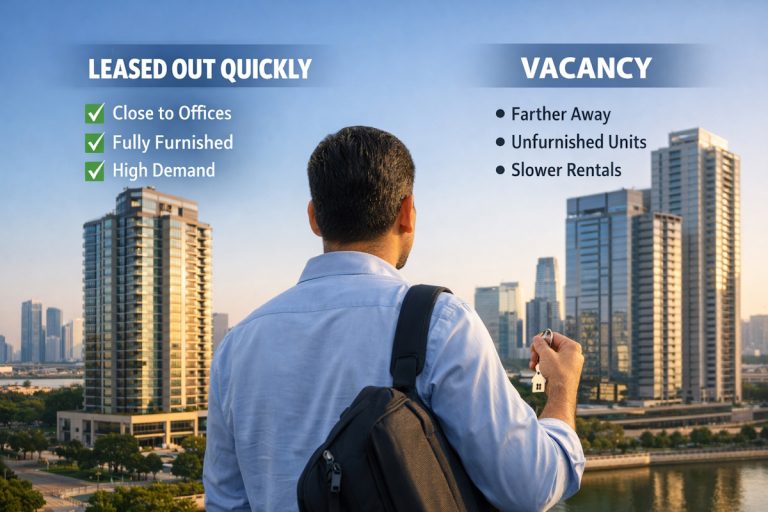

A Senior Investor’s Guide to Residential vs Commercial Property in GIFT City: Maximizing GIFT City ROI
For high-net-worth individuals, institutional buyers, and Non-Resident Indians (NRIs), the decision to allocate capital in India’s global financial hub, GIFT City, rarely involves a lack of opportunity. Instead, the challenge lies in asset selection: specifically, choosing between the high-potential commercial sector, driven by IFSC regulations, and the rapidly appreciating residential market, fueled by integrated urban demand.
This is not a traditional real estate market comparison. Investing here requires navigating distinct regulatory environments—IFSC/SEZ status profoundly impacts commercial property returns, tax liabilities, and valuation drivers. To achieve the optimal GIFT City ROI, investors must objectively weigh the predictable, often higher, cash flow of commercial assets against the potentially explosive capital appreciation and lower entry barrier of residential units. Our goal here is to provide a comprehensive, decision-focused framework for this critical choice.
Understanding the Asset Classes in GIFT City’s Unique Ecosystem
The fundamental differentiator for any asset within GIFT City is its zoning: SEZ (Special Economic Zone) properties, which house IFSC entities, or Non-SEZ properties. This regulatory distinction profoundly shapes demand, occupancy, lease terms, and, critically, tax treatment.
The Commercial Advantage: IFSC and SEZ Dynamics
Commercial investment in GIFT City is primarily driven by global corporate demand for compliance-friendly, tax-advantaged operational spaces. IFSC entities, which include global banks, FinTech firms, and international exchanges, require Grade A office space tailored to stringent compliance standards. This asset class offers a unique stability.
- Tenant Profile: Anchor tenants are typically large, well-capitalized institutions with long-term lease requirements (often 5+ years).
- Rental Growth Mechanism: Rents are governed less by local market fluctuations and more by the global scaling of the IFSC ecosystem and regulatory clarity.
- Tax Incentives: Commercial properties often benefit from enhanced tax breaks, especially those directly serving IFSC operations, leading to stronger net operating income (NOI) and potentially superior GIFT City rental yield.
The Residential Imperative: Demand Drivers for Integrated Living
Residential property in GIFT City is an integrated component of the walk-to-work culture, supporting the workforce relocating to the financial district. Demand is fundamentally derived from the growing talent pool of IFSC and SEZ professionals who prioritize convenience and high-quality infrastructure.
- Target Occupants: CXOs, senior managers, and specialized financial sector employees relocating from Mumbai, Bengaluru, or overseas.
- Appreciation Driver: Unlike commercial property, residential appreciation is closely tied to the density and success of the social infrastructure (schools, retail, recreation) within the city perimeter.
- Entry Point: Residential units typically require a significantly lower capital outlay, making them accessible for diverse investment portfolios seeking exposure to the city’s growth.
For investors ready to explore specific commercial opportunities that align with IFSC growth cycles, we recommend scheduling a direct briefing. We can provide proprietary data on current vacancy rates and tenant retention trends. get investor guide
Comparative Analysis: Calculating GIFT City ROI (Rental Yield Focus)
When comparing residential vs commercial property GIFT City, the immediate factor is the current income stream. While both offer income potential, the calculation of cash-on-cash return—the pure GIFT City ROI—is vastly different.
Commercial Property: Lease Structures and High Barriers to Entry
Commercial leases in GIFT City are generally NNN (triple net), meaning the tenant bears most or all operational expenses (maintenance, taxes, insurance). This structure shields the investor from rising operational costs, guaranteeing a more predictable net rental income. Historically, premium commercial spaces in established GIFT City towers have commanded higher yields than comparable assets in metropolitan hubs like Mumbai or Delhi, driven by regulatory certainty and limited supply.
Analyzing Commercial Investment Risk
The risk here is binary: finding and retaining a high-quality anchor tenant. Once a lease is signed with a global financial institution, the income stream is robust. However, initial vacancy can be costly due to higher acquisition and fit-out costs.
Residential Property: Yield Expectations and Occupancy Risk
Residential yields in newly developed urban areas are typically lower than prime commercial yields. In GIFT City, current residential rental yields tend to hover in the 3.5% to 5.0% range, depending on location and amenities. While this is respectable for Indian real estate, it requires active management and budgeting for periodic vacancies and maintenance.
Key Differentiator: Fit-Out Costs and Lease Duration
Commercial investors often face significant initial fit-out capital expenditure to meet high-grade tenant requirements. However, once completed, leases are often 5-10 years. Residential fit-out costs are lower, but the lease turnover is faster (typically 11 months to 2 years), leading to higher transaction costs and potential income gaps. Understanding these hidden costs is essential when calculating true GIFT City rental yield.
If you need specific, projected ROI estimates based on current market rates for both asset classes, we can provide customized reports. Speak with a GIFT City Expert
The Power of Appreciation: Capital Growth and Exit Strategy
While cash flow (yield) is important, the largest component of long-term wealth creation in Indian real estate often comes from capital appreciation. The drivers of appreciation for residential vs commercial property GIFT City differ dramatically.
Commercial Appreciation: Driven by Regulatory Stability and Infrastructure
Commercial property appreciation is tied to two core factors: the regulatory success of the IFSC (which drives corporate demand) and the completion of critical civic infrastructure (metro connectivity, access roads). If the city continues to attract global financial firms at its current pace, the intrinsic land and construction value of commercial assets will rise significantly. The asset quality also means that the pool of potential buyers (institutional funds, REITs, large corporate entities) for commercial assets is often larger and more financially robust than that for residential properties, positioning commercial property as the best investment in GIFT City for purely capital appreciation.
The institutional interest in GIFT City’s commercial segment underscores the long-term confidence in its financial ecosystem. Analyzing the regulatory milestones and IFSC adoption rates is key to predicting this trajectory. get investor guide
Residential Appreciation: Tied to City Growth and Social Infrastructure
Residential appreciation hinges on the successful transition of GIFT City from a business district into a fully integrated lifestyle destination. As retail, educational, and healthcare facilities mature, the desirability—and therefore the capital value—of residential units rises. We are currently seeing significant capital value growth as the city reaches critical mass in terms of liveability.
Timing the Residential Cycle
For residential investors, timing the entry point relative to the completion of key social amenities is crucial. Early investors benefit from the initial infrastructure push, but the strongest appreciation often occurs just before or after the establishment of major schools and retail hubs, creating a thriving ecosystem for the workforce.
Tax and Regulatory Implications: Residential vs Commercial Property GIFT City
The regulatory framework is arguably the most complex and powerful element influencing GIFT City ROI, particularly for NRIs and foreign investors. Tax neutrality provisions in the IFSC environment create significant advantages that are unavailable in the standard residential market.
Tax Benefits for Commercial Investors (IFSC/SEZ)
Investments within the SEZ area, particularly those earning rental income from IFSC-licensed entities, often qualify for substantial tax exemptions or lower concessional tax rates. This can include reduced or zero tax on rental income for a defined period, tax holidays, and benefits regarding capital gains upon exit, especially for certain classes of investors.
What Investors Must Evaluate: It is critical to confirm the precise zoning and tenant structure of a commercial asset to ensure eligibility for these exemptions. Non-SEZ commercial property, while valuable, operates under a different tax regime. Request ROI Estimates
Residential Tax Landscape for NRIs and Indian Investors
Residential property investment follows standard Indian tax regulations concerning rental income and capital gains. While the city itself is built on advanced infrastructure, the tax treatment of residential income generally lacks the aggressive incentives available to commercial SEZ property investors. However, NRIs can still benefit from tax treaties (DTAA) depending on their country of residence, making it essential to consult with a specialist on cross-border taxation before committing. get investor guide
Risk Mitigation and Liquidity Considerations
Every senior investor views opportunity through the lens of risk management. The differences in liquidity and vacancy risk between commercial and residential assets must be weighed carefully.
Analyzing Vacancy Risk
Commercial vacancy risk, while potentially high in terms of lost revenue, is infrequent. If a major tenant leaves, finding an immediate replacement can take time due to the specialized nature of the space, impacting the GIFT City ROI severely during that period. Conversely, residential properties experience more frequent but shorter vacancies, leading to a steady, albeit slightly lumpy, income flow.
Mitigation Strategy: For commercial assets, focus on buildings with multiple smaller tenants or high pre-lease commitments. For residential, invest in properties proximate to the key office towers to minimize the time between tenancies.
Liquidity Differences Between Asset Classes
Residential assets inherently offer greater liquidity due to lower ticket sizes and a broader buyer pool. If an investor needs to liquidate rapidly, a residential unit in a premium GIFT City complex will generally move faster than a fraction of a large commercial tower. Commercial assets, particularly institutional-grade properties, often require strategic selling periods to target corporate or pooled investment buyers, making the exit timeline longer but potentially more profitable.
For investors prioritizing ease of exit and flexibility, the residential segment offers a compelling case. For those focused on long-term, inflation-beating yields, commercial remains the primary focus. Explore GIFT City Projects
Decision Framework: Choosing Your Investment Thesis for GIFT City ROI
The choice between residential vs commercial property GIFT City ultimately hinges on your specific investment mandate:
If your primary goal is steady, potentially tax-advantaged cash flow and institutional-grade stability, commercial property within the SEZ area is the superior choice, offering a higher long-term GIFT City rental yield. This aligns with investors seeking stable income and low management overhead.
If your thesis is rapid capital growth, a lower capital entry point, and greater liquidity, residential investment is compelling. This strategy is suited for investors willing to trade slightly lower initial yields for potentially stronger capital appreciation as the city’s liveability infrastructure matures.
Our advisory role at Gift City Realty involves matching your risk profile and return expectations against available, vetted opportunities in both sectors, ensuring you identify the best investment in GIFT City that aligns with your financial strategy. get investor guide
Frequently Asked Questions (FAQs)
What is the typical rental yield difference between commercial and residential property in GIFT City?
Generally, prime commercial property leased to IFSC entities offers a higher net yield (often 6.5% to 8.5% net of operational expenses) due to regulatory incentives and NNN leases, compared to residential yields (typically 3.5% to 5.0%) which are subject to higher operational costs.
Are there size restrictions for NRI investment in GIFT City real estate?
There are generally no size restrictions for purchasing residential or commercial property in the non-SEZ area. However, specific regulatory approvals might apply to acquiring assets within the SEZ, especially for foreign entities, necessitating careful advisory support before acquisition.
How does the SEZ status impact the capital gains tax for commercial investors?
IFSC unit tax regulations, including exemptions for certain capital gains and long-term tax holidays on rental income, can significantly reduce the tax burden for qualifying commercial investors compared to standard Indian real estate taxation. Specific eligibility depends on the type of investor and duration of holding.
Is residential property investment in GIFT City considered a long-term strategy?
Yes, due to GIFT City’s unique status as a controlled development area with finite residential supply and accelerating job growth, residential property is viewed as a strong long-term appreciation asset, particularly as social infrastructure development catches up with corporate occupancy.
Which is the best investment in GIFT City for an income-focused NRI?
For income and tax efficiency, commercial property within the SEZ, leased to high-quality IFSC tenants, often represents the best investment in GIFT City, maximizing the GIFT City ROI through stable, long-tenure income streams and regulatory benefits.