GIFT City is often described as India’s answer to global financial hubs. That sounds neat. It also raises more questions than it answers.
If you are looking at property in GIFT City, or even just trying to understand why it exists, you need a clearer picture than the usual headlines. You are not buying into a slogan. You are evaluating a very specific economic zone with its own rules, risks, and timelines.
So let’s slow this down and unpack it properly.
This is a practical explanation of what is GIFT City, what the GIFT City meaning looks like in real life, and how GIFT City India actually functions for investors, professionals, and end users.
What Is GIFT City, Really?
GIFT City stands for Gujarat International Finance Tec-City. It is a planned business district located between Ahmedabad and Gandhinagar in Gujarat.
At a basic level, GIFT City India was created to keep international financial business within the country instead of letting it flow to places like Singapore or Dubai. That includes banking, fund management, insurance, fintech, capital markets, and support services.
From a buyer’s point of view, think of GIFT City as three things rolled into one:
- A financial zone with international-style regulations
- A real estate market still in its early growth phase
- A long-term policy project backed by the central government
It is not a regular city. It is not a suburb. It is not a tech park in the usual sense either.
Understanding this difference is the starting point for any serious decision.
GIFT City Meaning Beyond the Acronym
The literal GIFT City meaning is easy to find. The practical meaning takes more explanation.
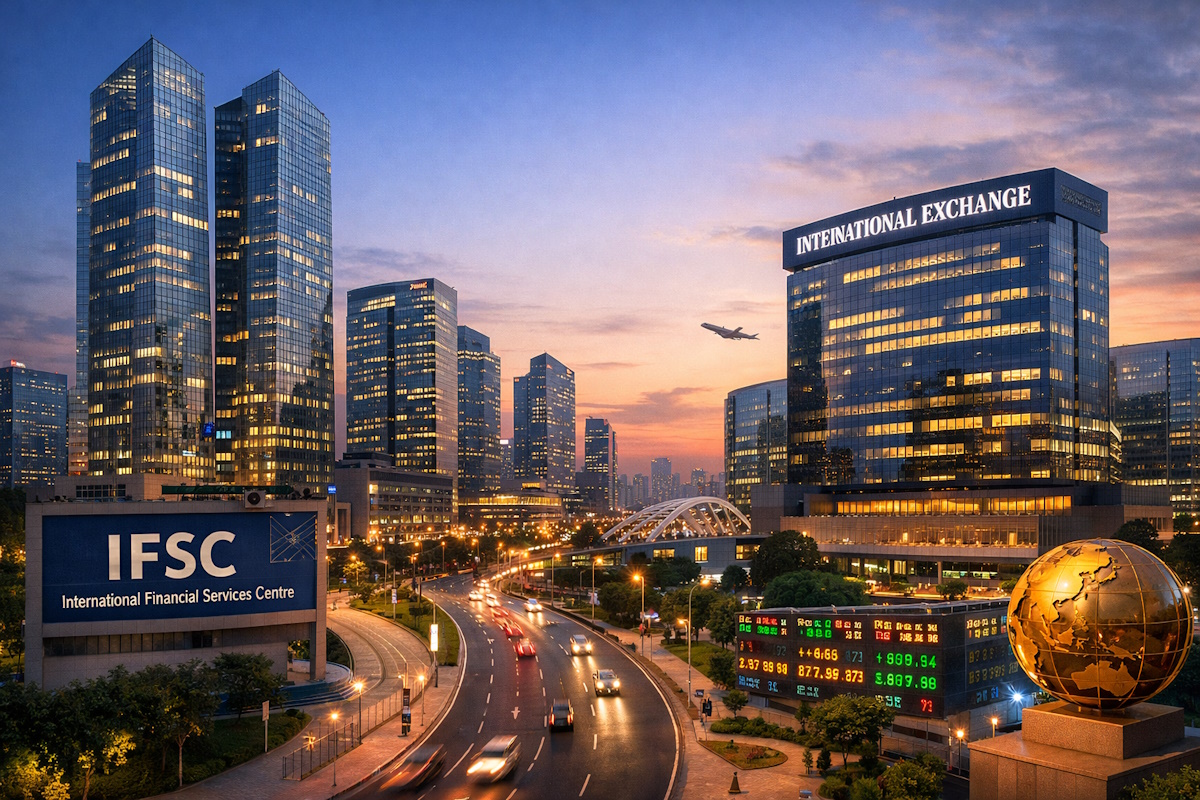
GIFT City is built around the idea of an International Financial Services Centre, commonly called IFSC. An IFSC allows financial institutions to operate in foreign currency while being physically located in India.
Why does that matter?
Because foreign currency operations in India normally come with tight controls. IFSC rules ease many of those controls, closer to what you see in global financial hubs.
This single design choice shapes everything else in GIFT City.
- Who works there
- What kind of companies move in
- What type of housing gets demand
- How rentals behave
- Why tax structures look different
If you ignore the IFSC angle, GIFT City makes very little sense. If you understand it, the layout becomes clearer.
Where GIFT City Fits Within India
GIFT City India is not meant to replace Mumbai or Bengaluru. It plays a narrower role.
Mumbai remains the country’s main domestic financial centre. Bengaluru continues to lead in technology and startups. GIFT City sits in a different space.
It focuses on cross-border financial activity.
That includes:
- Offshore banking units
- International stock exchanges
- Global fund administration
- Aircraft leasing
- Reinsurance
- Fintechs working with overseas clients
This is why many professionals working in GIFT City come from banking, finance, compliance, risk, and back-office operations rather than pure software roles.
If your expectation is a broad job market across sectors, that mismatch matters.
The Physical Layout of GIFT City
One thing buyers often misunderstand is scale.
GIFT City is compact. Very compact.
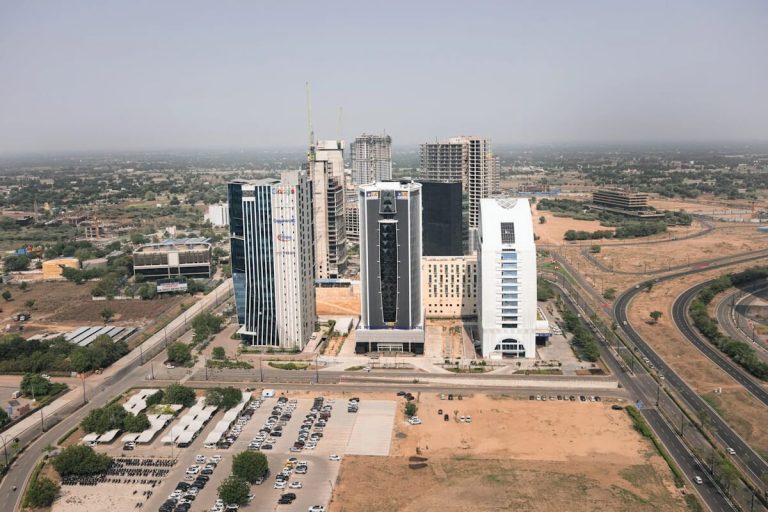
The entire development spans around 886 acres. Everything is planned vertically rather than spread out horizontally.
You will see:
- High-rise commercial towers
- Mixed-use buildings
- Limited residential clusters
- Central utilities and shared infrastructure
Daily life feels closer to a financial district than a traditional city neighborhood.
This affects livability expectations. Some people like that. Others don’t.
Ask yourself where you fall.
SEZ, IFSC, and Non-SEZ Explained Simply
This is where most confusion starts.
Let’s break it down without jargon.
SEZ Areas
SEZ stands for Special Economic Zone. Parts of GIFT City fall under SEZ rules.
SEZ benefits mainly apply to businesses, not residential buyers. These benefits include tax relief and operational flexibility for companies exporting services.
As a property buyer, SEZ status matters only if you are buying commercial space for leasing to eligible companies.
You cannot freely live in SEZ residential property in the same way you would in a normal city zone.
IFSC Area
The IFSC sits within the SEZ framework but has its own regulator called IFSCA.
This regulator replaces multiple Indian regulators within GIFT City. That simplifies compliance for financial firms.
From a buyer’s perspective, IFSC presence drives demand for offices and nearby housing. It does not automatically give tax benefits to individual homebuyers.
That distinction is critical.
Non-SEZ Areas
Non-SEZ zones in GIFT City operate like regular urban real estate.
Residential apartments meant for end use and rental typically fall here.
Most individual investors looking at homes in GIFT City end up buying in Non-SEZ projects.
If a brochure does not clearly state SEZ or Non-SEZ, ask. Do not assume.
Who Actually Lives in GIFT City?
This is not a retirement market. It is not a family-heavy residential suburb either.
Most residents fall into a few buckets:
- Professionals working in IFSC banks and firms
- Consultants on medium-term assignments
- Young working couples
- Some NRI investors holding units for rental
The rental demand is functional rather than emotional.
People rent because they want to stay close to work, reduce commute, and keep life simple during their assignment.
That shapes unit preferences.
Studios and one-bedroom apartments see stronger demand than large luxury homes. Furnished units perform better than bare-shell ones.
If you plan to live there long term with a large family, you need to think carefully about schooling, social life, and daily routines.
Residential Property in GIFT City India
Residential supply in GIFT City is still limited compared to demand projections. That is both an opportunity and a risk.
On one side, fewer units mean less competition for rentals in the near term.
On the other, limited options mean you have to compromise on layout, size, or pricing.
Things to keep in mind:
- Carpet areas are often smaller than metro averages
- Amenities are shared and vertical
- Pricing is already higher than surrounding Ahmedabad areas
You are paying for location and future potential, not current lifestyle luxury.
That tradeoff needs to be acceptable to you.
Commercial Property and Office Space
Commercial real estate is the backbone of GIFT City.
Office demand is driven by:
- Banks setting up offshore units
- Global firms opening India-facing teams
- Support services for financial operations
Lease structures here are more formal. Tenants care about compliance, power backup, data security, and regulatory approvals.
Returns can look attractive on paper. They also depend heavily on tenant quality and lease tenure.
Vacancy risk exists if a firm downsizes or relocates. This is not a diversified office market like central Mumbai.
Rental Demand Reality
Rental demand in GIFT City India is real, though it is narrow.
Most tenants look for:
- Proximity to IFSC towers
- Furnished or semi-furnished units
- Short to medium lease terms
Rental yields often discussed online vary widely. The reason is simple.
A furnished studio leased to an expat consultant behaves very differently from an unfurnished two-bedroom leased to a local employee.
Expect variability. Plan buffers. Avoid straight-line assumptions.
Tax Benefits Explained Without Hype
This is where many buyers get carried away.
Most tax benefits in GIFT City apply to businesses, funds, and institutions operating within the IFSC.
Individual residential buyers do not automatically get special income tax treatment just by owning a flat in GIFT City.
Some indirect advantages exist, such as demand stability driven by tax-friendly employers. That is not the same as a personal tax exemption.
If anyone tells you buying a home in GIFT City guarantees tax savings, pause and verify.
Stamp Duty, GST, and Holding Costs
Stamp duty in GIFT City follows Gujarat state rules. There is no blanket waiver for residential buyers.
GST applies on under-construction properties as per standard rates. Ready-to-move homes do not attract GST.
Holding costs include:
- Maintenance charges
- Property tax
- Furnishing upkeep
Maintenance costs can be higher due to shared infrastructure and vertical living.
Factor these into rental yield calculations.
Appreciation Expectations
This is a long-gestation market.
Price appreciation depends on:
- Speed of IFSC tenant onboarding
- Policy continuity
- Infrastructure completion
- Residential supply additions
Sharp short-term jumps are unlikely without a major policy trigger.
Steady growth over a longer horizon is a more reasonable expectation.
If you need quick resale liquidity, this market may test your patience.
Liquidity and Exit Concerns
Resale liquidity is still developing.
End-user buyers are fewer. Most buyers are investors.
That means resale often depends on another investor stepping in rather than a family upgrading homes.
Pricing flexibility matters. Holding power matters more.
If you might need to exit in a hurry, this is a serious point to weigh.
Risks Buyers Often Miss
Some risks rarely make it into glossy presentations.
- Policy timelines can stretch
- Commercial absorption may move in phases
- Rental demand is sector-specific
- Social infrastructure is still evolving
None of these make GIFT City unattractive. They do make it unsuitable for certain profiles.
Who GIFT City Is Not Ideal For
GIFT City may not suit you if:
- You want a lively residential neighborhood right now
- You depend on immediate resale liquidity
- You expect metro-style lifestyle amenities
- You are uncomfortable with policy-driven markets
There is no shame in deciding it is not your fit.
Clarity saves money.
Who Should Seriously Consider GIFT City
You should look closer if:
- You work in finance, fintech, or global services
- You are an NRI seeking India exposure with a long view
- You understand regulatory-led growth
- You are comfortable with focused rental demand
For these profiles, GIFT City India offers something few Indian markets do.
Final Thoughts Without a Sales Pitch
What is GIFT City?
It is a policy-backed financial district with real momentum and real constraints.
The GIFT City meaning changes depending on why you are there. For a banker, it is a workplace. For an investor, it is a long-term bet. For an end user, it is a lifestyle choice that needs adjustment.
GIFT City India is not about instant gratification. It is about alignment.
If your goals align with what this city is designed to do, it can make sense.
If they don’t, walking away is also a smart decision.
The key is knowing which side you are on before you commit.