The Strategic Evolution of GIFT City Residential Real Estate
For several years, the narrative surrounding Gujarat International Finance Tec-City was centered almost exclusively on commercial infrastructure and institutional growth. As the International Financial Services Centre (IFSC) gained momentum, attracting global banks and fintech giants, the focus naturally shifted toward the human capital required to power these entities. Today, the investment landscape has matured, positioning gift city residential property not just as a support function for the commercial district, but as a high-value asset class in its own right. Understanding who should enter this market requires a departure from traditional real estate logic, moving toward a specialized analysis of global financial ecosystems.
Investing in this zone is a bet on the long-term integration of India into the global financial order. As a senior investor or advisor, you must recognize that the residential demand here is structurally different from the suburban sprawl of Ahmedabad or Gandhinagar. This is a controlled, high-density environment designed for a specific demographic of professionals, executives, and entrepreneurs. The following analysis breaks down the specific profiles of investors who are best positioned to benefit from this unique market, focusing on capital appreciation, rental yield dynamics, and the regulatory advantages that define the region.
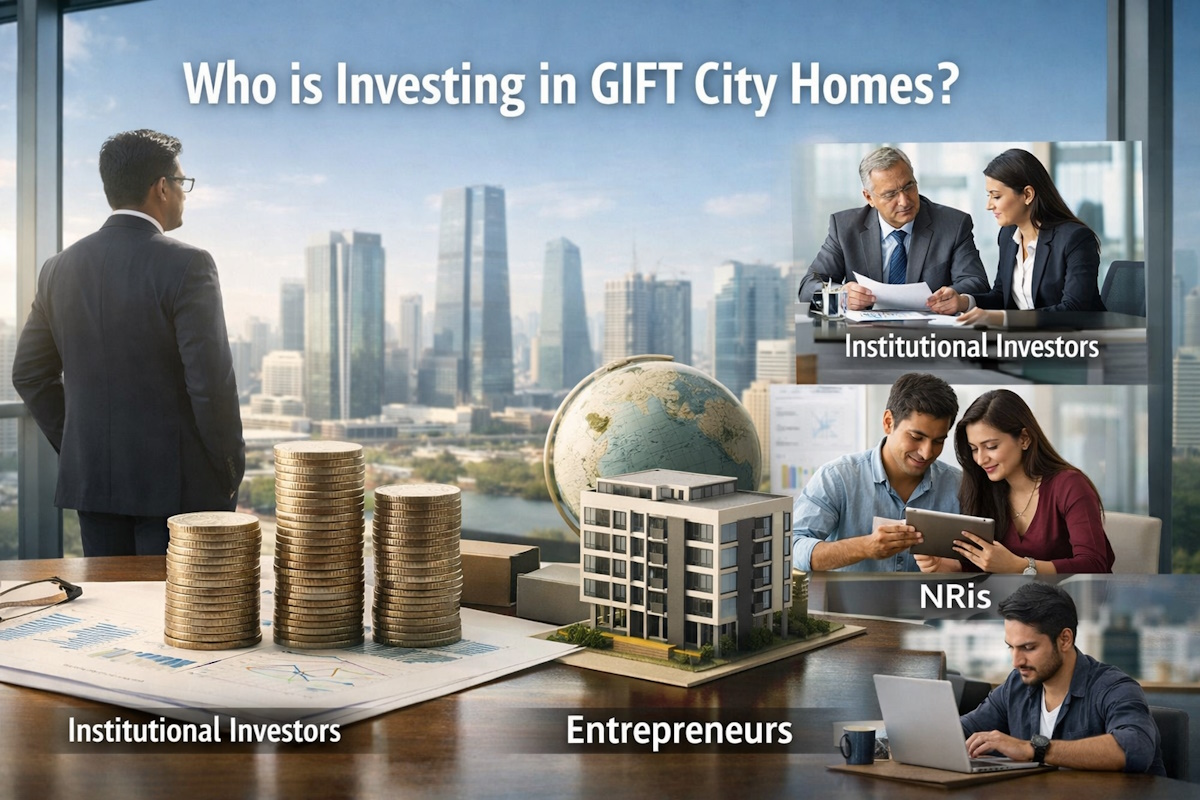
Institutional Investors and Corporate Housing Strategists
Institutional buyers and large-scale corporate entities represent a significant portion of the demand for gift city residential property. These investors are often looking to secure housing for their leadership teams or to create a managed portfolio of rental units that cater specifically to the influx of white-collar professionals moving into the SEZ and IFSC areas. The logic here is driven by the sheer scale of workforce projections, where the need for proximity to the workplace outweighs almost every other factor for the modern professional.
Securing Yield through Corporate Leases
For institutional investors, the primary draw is the potential for long-term, stable corporate leases. Companies setting up operations in GIFT City often prefer to have dedicated housing blocks or high-end apartments available for their expatriate staff and senior management. This creates a B2B rental model that significantly reduces the risk of vacancy and provides a predictable cash flow. Unlike retail residential investments where tenant turnover can be high, corporate-backed housing offers a level of security that aligns with institutional risk appetites.
Scalability and Property Management
Institutional players also benefit from the organized nature of GIFT City’s infrastructure. Because the city is managed by a single authority, the maintenance of common areas, utilities, and security is standardized. This allows large-scale investors to manage multiple units within a single project with minimal operational friction. When evaluating a gift city residential property, institutional buyers should prioritize projects that offer professional facility management and high-spec amenities that meet global corporate standards.
Non-Resident Indians Seeking Portfolio Diversification
The NRI community has historically been one of the most active segments in Indian real estate, but their approach to gift city residential property is notably different from their investments in Mumbai or Bengaluru. For an NRI, GIFT City offers a unique “offshore” feel within the Indian geography. The regulatory clarity provided by the IFSCA and the specialized tax environment makes it an attractive destination for diversifying wealth away from traditional residential hubs that may be reaching saturation.
Repatriation and Transactional Ease
One of the critical factors for NRIs is the ease of doing business. GIFT City is designed to minimize the bureaucratic hurdles often associated with Indian property transactions. The transparency in title deeds and the involvement of reputable developers who understand the needs of global clients provide a layer of comfort. Furthermore, the potential for earning rental income in a stable environment and the long-term prospects of capital appreciation make it a viable hedge against currency fluctuations in their home countries.
Capital Appreciation vs. Immediate Yield
While rental yields in GIFT City are competitive, most NRI investors are focusing on the ten-year appreciation play. As the commercial towers fill up and the “walk-to-work” culture becomes the norm, the limited supply of residential land within the city limits will naturally drive prices upward. NRIs should view a gift city residential property as a core asset in a diversified India-centric portfolio, rather than a speculative short-term flip.
High Net-Worth Individuals and the Lifestyle Hedge
For HNIs based in India, especially those within the Gujarat and Maharashtra corridors, GIFT City represents a lifestyle hedge. These are investors who may not necessarily plan to reside in the city full-time but recognize the value of owning a high-specification asset in India’s only operational smart city. The appeal lies in the infrastructure—district cooling systems, automated waste collection, and 24/7 power and water backup—which are features rarely found in standard Indian residential projects.
The Scarcity Factor in Prime Zones
HNIs often invest based on scarcity. In GIFT City, the master plan strictly regulates the ratio of commercial to residential development. This ensures that the market is never oversupplied with housing, protecting the value of existing assets. For an HNI, owning a gift city residential property is akin to owning a piece of a private club; the barrier to entry is high, and the surrounding environment is curated to maintain a premium status. This exclusivity is a powerful driver for long-term value retention.
Evaluating Luxury Benchmarks
When an HNI evaluates a project, they should look beyond the basic floor plan. The focus should be on the quality of construction, the reputation of the developer in delivering international-grade finishes, and the integration of smart home technologies. In a city built on technology, a residential property that lacks modern digital integration will quickly become obsolete. Gift City Realty advisors often emphasize that in this segment, quality far outweighs quantity when it comes to ROI.
Fintech Founders and the New-Age Entrepreneur
A burgeoning segment of buyers for gift city residential property is the entrepreneur class, particularly those in the fintech and legal sectors. With the government’s push to make GIFT City a global fintech hub, many founders are moving their base of operations to the IFSC. For these individuals, investing in residential property is a matter of logistical efficiency and networking. Being present in the city 24/7 allows them to be at the heart of the regulatory and financial ecosystem.
Networking and the Proximity Dividend
The “proximity dividend” is a real factor in GIFT City. Living within the city means being in constant contact with other founders, venture capitalists, and regulators. For a tech founder, the investment in a gift city residential property is as much a business decision as it is a real estate play. The ability to host clients or partners within the city limits adds a level of prestige and convenience that cannot be replicated by commuting from Ahmedabad.
Tax Implications and Regulatory Alignment
Entrepreneurs must also consider the tax benefits associated with operating within the IFSC. While the residential property itself may not offer the same tax breaks as a commercial entity, the overall cost of living and doing business within the zone is optimized. Advisors at Gift City Realty often help founders navigate how to structure their property holdings to align with their broader business interests, ensuring that the residential asset supports their professional growth.
Critical Decision Factors for All Investor Types
Regardless of your profile, investing in a gift city residential property requires a disciplined approach to due diligence. This is not a market for the uninformed or those looking for “typical” Indian real estate returns. The value here is derived from the success of the city as a financial hub. If the commercial sector thrives, the residential sector will follow suit with high-velocity growth. If commercial growth slows, residential yields may take longer to materialize.
Understanding the Leasehold Structure
One common point of confusion for investors is the land tenure system. Most properties in GIFT City are on a long-term leasehold basis from the GIFT City Authority. While this is standard for planned cities in India and globally (similar to London or Navi Mumbai), it is a factor that must be factored into the valuation. Investors should evaluate the remaining lease term and the renewal conditions, though these are typically structured to be investor-friendly to encourage long-term commitment.
Supply-Demand Equilibrium
Investors must monitor the commencement of new residential phases. Unlike other cities where developers can launch projects at will, GIFT City regulates the release of land. This controlled supply is a double-edged sword; it prevents price crashes due to oversupply but also means that entry points are limited. Timing your entry to coincide with major commercial announcements—such as a new global bank moving in—can be a highly effective strategy for maximizing early-stage appreciation.
Common Pitfalls and Risk Mitigation
No investment is without risk, and gift city residential property is no exception. The primary risk is the “occupancy lag.” There can be a gap between the completion of a residential tower and the full activation of nearby commercial offices. Investors must have the liquidity to hold the asset through these cycles without relying on immediate rental income. Furthermore, choosing a developer without a proven track record of delivering high-tech infrastructure can lead to long-term maintenance issues that erode the asset’s value.
Evaluating Developer Credibility
In GIFT City, the developer’s ability to execute on “smart city” features is paramount. A standard builder might struggle with the district cooling integrations or the specific fire safety codes required in the zone. Before committing, ask for a detailed breakdown of the developer’s experience with integrated townships or high-spec commercial projects. The technical complexity of GIFT City projects is significantly higher than a standard residential building in the mainland.
Liquidity and the Secondary Market
The secondary market in GIFT City is still evolving. While primary sales are brisk, the ease of exiting an investment depends on the maturity of the city’s ecosystem. Investors should plan for a five-to-seven-year horizon to truly capture the value created by the city’s development phases. Selling a gift city residential property too early might result in missing the steepest part of the appreciation curve that occurs once the city reaches a critical mass of residents.
Navigating the Path Forward in GIFT City
The decision to invest in a gift city residential property should be based on a clear understanding of your financial objectives and your belief in the city’s mission. If you are an investor looking for a high-quality, regulated, and technologically advanced asset that serves a growing population of global professionals, GIFT City offers an opportunity that is currently unmatched in the Indian market. It is a sophisticated play for a sophisticated investor.
As you move forward, focus on the fundamentals: location within the city, developer pedigree, and alignment with corporate demand. The transformation of GIFT City from a concept to a thriving financial hub is well underway, and the residential market is the next logical frontier for wealth creation. By positioning yourself early and choosing the right projects, you can secure an asset that not only generates value but also stands as a testament to India’s future on the global stage.
FAQs
1. Is residential property in GIFT City only for people working there?
No, anyone can invest in a gift city residential property. However, the demand for rentals is primarily driven by professionals and executives working within the IFSC and SEZ areas. While you don’t have to work there to own property, the “walk-to-work” concept is the main driver for occupancy and rental growth.
2. What kind of rental yields can I expect in GIFT City?
Currently, rental yields for gift city residential property are trending higher than the national average for luxury segments, often ranging between 4% to 5%. This is supported by the high concentration of corporate professionals and the relatively limited supply of ready-to-move-in apartments compared to the growing workforce.
3. Can NRIs easily repatriate funds from a GIFT City property sale?
Yes, NRIs can repatriate funds from the sale of a gift city residential property, provided the initial investment was made through NRE or FCNR accounts and follows the standard FEMA guidelines. The regulatory environment in GIFT City is designed to be more streamlined, but it is always recommended to consult with a tax advisor for your specific situation.
4. How does the leasehold nature of the land affect my investment?
The land in GIFT City is provided on a long-term lease, usually for 99 years. This is a common practice in planned urban developments. It does not significantly impact the appreciation or the ability to mortgage the property, as most major banks and financial institutions are comfortable providing home loans for projects within GIFT City.
5. What is the difference between investing inside the SEZ and outside?
Residential projects are generally located in the Non-Processing Area (NPA) or the integrated township zones. Investing in a gift city residential property gives you access to the city’s world-class infrastructure regardless of the specific zone, but proximity to the IFSC towers is usually the most sought-after feature for high-value tenants.