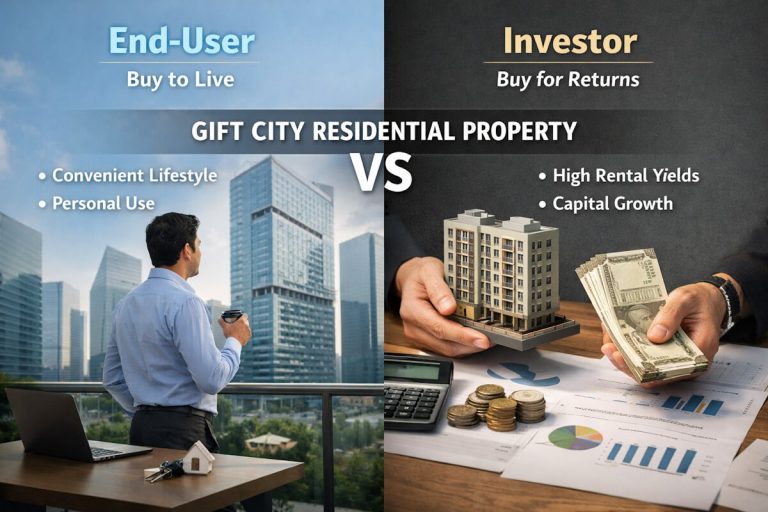

GIFT City is no longer just a blueprint of India’s financial future; it is a rapidly maturing ecosystem that demands a sophisticated approach to real estate investment. For seasoned investors, the question is no longer whether GIFT City is a viable destination, but rather how a gift city residential property fits into a broader, diversified portfolio. Unlike traditional residential markets in Mumbai or Bangalore, which are driven largely by local sentiment and domestic industrial growth, GIFT City operates on a global axis. Its residential market is inextricably linked to the success of the International Financial Services Centre (IFSC) and the influx of multinational corporations, making the investment logic fundamentally different from standard urban housing plays.
The decision to commit capital here should not be based on emotional appeal or architectural aesthetics, but on a clear understanding of who the end-user will be. As the city transitions into its next phase of occupancy, we are seeing a distinct shift in demand patterns. This guide provides a strategic breakdown of the investor profiles that stand to gain the most from this unique economic zone. By analyzing the regulatory framework, the rental demand from high-income professionals, and the scarcity of residential land within the core area, we can determine if your investment objectives align with the trajectory of Gujarat’s premier financial hub.
Understanding the Strategic Value of a gift city residential property
When evaluating gift city residential property, one must first recognize the city’s dual-zone structure: the SEZ (Special Economic Zone/IFSC) and the Non-SEZ area. Each zone carries different implications for ownership, taxation, and potential exit strategies. For an investor, the strategic value lies in the city’s ability to attract a high-density, high-income workforce that requires premium living spaces within a short commute of their global offices. This is not a market for speculative flippers who expect overnight gains, but rather for those who understand the value of long-term capital appreciation backed by institutional growth.
The Role of the IFSC in Driving Residential Demand
The International Financial Services Centre (IFSC) is the engine of GIFT City. As global banks, aircraft leasing firms, and fintech startups establish their presence, they bring with them a workforce that expects international standards of living. This institutional presence provides a layer of security for residential investors that is rarely found in other Indian markets. When a global bank moves 500 executives to a new hub, the demand for high-quality housing is immediate and inelastic.
Liquidity and Market Maturity
Liquidity is often a concern in emerging hubs, but GIFT City is overcoming this through structured development. The government’s commitment to making this a 24/7 city, with social infrastructure such as schools, hospitals, and clubs, ensures that the residential market remains liquid. Investors should look at the absorption rates of current projects to gauge how quickly a gift city residential property can be exited if necessary.
Regulatory Stability as a Value Moat
The regulatory environment in GIFT City is overseen by the IFSCA, which provides a unified framework that reduces the bureaucratic friction often seen in Indian real estate. For an investor, this means fewer surprises regarding land titles, utility provisions, or zoning changes, creating a “value moat” around their investment.
The NRI Perspective: Repatriation and Tax Efficiency
Non-Resident Indians (NRIs) represent one of the most significant investor groups in GIFT City. For an NRI, a gift city residential property is more than just a piece of real estate; it is a dollar-hedged asset in many respects. Because the IFSC operates under a different regulatory regime, certain financial transactions can be handled in foreign currency, offering a unique layer of protection against rupee depreciation. This makes the city an attractive destination for those looking to park global earnings in a high-growth Indian asset.
Favorable Taxation for Global Investors
NRIs often struggle with the complexities of Indian tax laws. However, GIFT City offers specific incentives that can enhance the net ROI of a gift city residential property. From exemptions on certain duties to the potential for simplified capital gains treatments in the IFSC, the tax efficiency here is a major draw. NRIs should consult with advisors to understand how the 10-year tax holiday for units in the IFSC indirectly boosts the surrounding residential ecosystem’s value.
The “Walk to Work” Concept and NRI Preferences
Modern NRIs are moving away from traditional standalone villas in their hometowns toward integrated townships that offer a “walk to work” lifestyle. This urban design philosophy is central to GIFT City. NRIs value the security, the smart city infrastructure, and the high-end amenities that are standard in gift city residential property developments, making it a preferred choice for their Indian portfolios.
High-Net-Worth Individuals (HNIs) and Portfolio Diversification
For HNIs and family offices, diversification is the primary driver of investment. A gift city residential property offers a low correlation with the broader domestic Indian residential market. While the rest of the country may be influenced by local interest rates or regional politics, GIFT City is influenced by global financial trends and trade policies. This makes it an excellent hedge within a diversified real estate portfolio.
Rental Yield Potential from CXO-Level Tenants
One of the strongest arguments for HNI investment in GIFT City is the potential for high rental yields. As major corporations move their headquarters or significant operational hubs to the city, there is an increasing demand for premium housing for CXOs and senior management. These tenants are less price-sensitive and prioritize proximity to their offices, security, and world-class facilities. This demographic ensures a steady stream of high-quality tenants for any gift city residential property owner.
Comparing GIFT City to Other Financial Hubs
When HNIs look at GIFT City, they often compare it to Dubai’s DIFC or London’s Canary Wharf. While the scale is currently different, the trajectory is similar. Early investors in those global hubs saw significant wealth creation as the ecosystems matured. GIFT City represents a similar ground-floor opportunity but within the context of the world’s fastest-growing major economy. Review residential projects in GIFT City to compare current entry points with other global benchmarks.
Institutional Buyers and Employee Housing Requirements
We are seeing an emerging trend where institutional buyers and large corporations are purchasing gift city residential property blocks to house their own senior staff. This move ensures they have guaranteed quality housing in a market where demand is expected to outstrip supply in the core areas. For an individual investor, this institutional interest is a strong signal of long-term market viability.
Supply Constraints and the Scarcity Factor
The amount of land designated for residential development within the core GIFT City area is strictly controlled. Unlike other cities where urban sprawl can lead to an oversupply of apartments, GIFT City has a finite boundary. This scarcity is a critical factor for capital appreciation. As more businesses move in, the competition for a gift city residential property will intensify, driving both prices and rents upward.
The Impact of Infrastructure Completion
The completion of the Metro link, the expansion of the international school, and the operationalization of the city’s social club are all milestones that de-risk the investment. Institutional buyers often wait for these markers before committing, but the most significant gains are often made by those who move in just before full infrastructure maturity. Investing in a gift city residential property now allows you to capture that value gap.
Evaluating Risk and Mitigating Investment Pitfalls
No investment is without risk, and GIFT City is no exception. The primary risk here is the “gestation period.” While the city is operational, full maturity takes time. Investors who require immediate liquidity or short-term gains may find the pace of the market challenging. Understanding the difference between a gift city residential property and a standard apartment in Ahmedabad is crucial for setting realistic expectations.
Selecting the Right Developer and Project
In a specialized market like GIFT City, the developer’s track record is paramount. You need a partner who understands the unique building codes, the smart city integration, and the expectations of a global clientele. Choosing a sub-par project can lead to lower occupancy rates and stagnant resale value, even if the city as a whole is performing well.
Understanding Maintenance and Smart City Charges
GIFT City operates with sophisticated district cooling systems, automated waste collection, and centralized utility management. While these features make a gift city residential property highly desirable, they also come with specific maintenance costs. Investors must factor these into their ROI calculations to ensure net yields remain attractive. Request a consultation for a detailed breakdown of operational costs.
Who Should Move Forward with an Investment?
GIFT City is the ideal destination for investors who prioritize structural growth over speculative hype. If you are an NRI looking for a secure, high-quality asset in India, an HNI seeking to diversify into a global financial ecosystem, or a corporate entity securing future housing needs, then gift city residential property should be at the top of your list. The combination of regulatory support, institutional demand, and strategic scarcity creates a compelling case for long-term wealth preservation and growth.
The window for early-mover advantage is narrowing as major global players solidify their presence. Moving from evaluation to action requires a clear understanding of the current project landscape and the future roadmap of the city. At Gift City Realty, we provide the advisory-led guidance necessary to help you make an informed, confident decision. Whether you are looking for a luxury residence or a high-yield rental asset, the time to analyze the GIFT City residential market is now.
FAQs
1. What is the expected rental yield for residential property in GIFT City?
While yields vary by project and size, the influx of high-income professionals into the IFSC is creating a premium rental market. Investors typically target yields that are higher than the national average for residential real estate, often ranging between 4% and 6%, depending on the entry point and property management efficiency.
2. Can non-residents easily repatriate funds from a GIFT City investment?
Yes, especially for properties within the IFSC zone. The regulatory framework is designed to facilitate global capital flow. However, the specific rules depend on whether the property is in the SEZ or Non-SEZ area and the investor’s residency status. It is always recommended to consult with a tax expert familiar with GIFT City’s unique status.
3. How does the “Smart City” infrastructure affect property value?
The infrastructure—including the district cooling system, automated waste management, and 99.9% power reliability—significantly reduces long-term maintenance issues and increases tenant retention. This makes a gift city residential property more resilient to market downturns compared to properties in cities with less reliable infrastructure.
4. Is there a minimum investment threshold for residential property in GIFT City?
There is no official government-mandated minimum for individuals, but market prices reflect the premium nature of the development. Entry points for quality 2BHK and 3BHK apartments are generally aligned with premium segments in other tier-1 Indian cities, reflecting the high standards of construction and the strategic location.